Can I Make a Workers’ Compensation Claim if I Get Food Poisoning at Work?

Employees can face several risks and dangers at work. From inclement weather and repetitive lifting, to chemicals, crime, heavy machinery, and more, the list of possible dangers is quite broad, and can happen among a wide range of industries. Although the risks for many professions are quite obvious, any place or position of employment can pose certain dangers. One such danger can be food.

One might not generally think that the food they eat at work can put them at risk of getting sick, but the truth is, food poisoning is a very common illness that can cause severe symptoms and high levels of pain for several days or worse; and it can be easily contracted in a workplace setting given certain circumstances.

Indiana Workers' Compensation Lawyers
Indiana Workers’ Compensation Lawyers 317-881-2700

Were You Performing Work-Related Duties?

Sure, there’s is always a risk of getting hurt or being involved in an accident when you step out into the world. But when it happens while you are at work, you may be entitled to compensation for your losses and damages, so long as the injury occurred while you were performing work-related duties. In the case of food poisoning, the contaminated food or drink must have been consumed while you were doing something for work. Because if you were not performing work-related duties while consuming the contaminated food that caused you to develop food poisoning, then you would not have a valid workers’ compensation claim; or, it would be extremely difficult proving that you do.

It can be confusing to understand what constitutes “at work” or “performing work-related duties”, so it is important to contact an experienced personal injury lawyer to determine if your workers’ compensation claim is a valid one or not. They have the resources, knowledge, and experience to assess your case for validity and implement the best strategies for financial recovery. There are 3 helpful examples in which food poisoning would be a valid workers’ compensation claim, and a few more in which it would not.

Examples of Valid Workers’ Comp Claims for Food Poisoning

The contaminated food or beverage must have been consumed while an employee is either performing or participating in work-related activities. Here are some examples below for a better understanding of when food poisoning may be work-related:

Your employer benefited from you eating the food. If your job is to taste food, and your employer benefited from you tasting and eating the food you ate, then you could have a valid workers’ compensation claim. This could apply to food critics, food bloggers, restaurant cooks, servers, bartenders, and other vocations in which food tasting would be common part of the job.

Your employer provided the food. If your employer supplies the food that caused you to develop a food-borne illness, you could easily have a valid claim. For instance, if you were attending a mandatory paid work meeting that the employer had catered, and the food gave you food poisoning, it could be a valid workers’ comp claim. In contrast, if you get sick from your own food you brought from home and ate at your desk, you would not.

You developed food poisoning from a workplace cafeteria that is for employees only. Some workplaces have cafeterias that are strictly for employees to eat in, while others may have one that is open to the general public and employees. If you develop a food-borne illness in a cafeteria setting that is provided by the employer strictly for employees, you could have a valid claim. If the café is public, you would not.

Get a Free Consultation With an Indianapolis Workers’ Comp Lawyer Today

Call the Law Office of Craven, Hoover, and Blazek P.C. at 317-881-2700 for help with a workplace injury claim in Indianapolis, Indiana. Our seasoned workers’ compensation lawyers can help you recover the full and fair compensation you deserve after suffering a serious injury while performing work-related duties. We offer free initial consultations and never collect lawyer fees unless we prevail for you. Schedule your consultation before the statutes of limitations runs out on your claim. We represent injured persons throughout the State of Indiana.

Indianapolis Personal Injury Lawyers 317-881-2700
Schedule a Free Consultation!

What is Maximum Medical Improvement in a Workers’ Compensation Case?

In a past blog, we discussed a legal principle under workers’ compensation law called Maximum Medical Improvement (MMI). Continue below to learn what maximum medical improvement means in a workplace injury case, and what you need to know about recovering from a serious injury after being hurt in an accident while working for your employer.

Indianapolis Workers Compensation Attorneys
Indianapolis Workers Compensation Attorneys 317-881-2700

Maximum Medical Improvement (MMI)

When a worker is injured in a workplace accident, they often end up involved in a workers’ compensation insurance claim. Whether the accident was their fault or not, in most cases, an injured worker will be entitled to compensation for their damages and losses. However, the legal procedures that are involved in personal injury compensation cases are quite specific, and one will only receive such benefits under certain circumstances, and to certain extents.

Injured workers, depending on the scope and seriousness of their injuries and losses, will be entitled to certain types of benefits, such as Temporary Total, Temporary Partial, Permanent Total Disability (PTD), and Permanent Partial Impairment (PPI). See our blog, “What Benefits Can I Get For My Workplace Injury Claim in Indiana?” for a brief explanation of each type of benefit. In Indiana, injured workers can receive benefits for hospital bills, medical expenses, lost wages, permanent disability, wrongful death, medical treatment, vocational rehabilitation, gas mileage for doctor appointments, and much more.

Maximum Medical Improvement (MMI) comes into play when an injured employee is awarded such benefits. In many cases, an injured victim receiving temporary total or partial benefits will only receive their benefits until they are diagnosed as fully-healed or as fully-healed as they are going to get by a licensed physician. This is referred to as Maximum Medical Improvement (MMI), which describes a patient that has reached their optimal recovery point, and no further improvement is possible. Keep in mind that MMI does not translate to healed. It simply means that no further treatment will improve their condition. Once a worker reaches full improvement, their doctor will assign a disability rating, which denotes their work limitations.

Talk to a Workplace Injury Lawyer for Help With Your Claim

For a better understanding of how workers’ compensation settlements work, consult with a trusted and seasoned Indiana workers’ compensation attorney as soon as possible. Indiana does have a statute of limitations that restricts how long you can make a claim for compensation. Be sure to schedule a consultation with a licensed personal injury lawyer who focuses on workplace accident claims before this time limit runs out.

Indianapolis Workers’ Compensation Attorneys

Call Craven, Hoover, and Blazek P.C. at 317-881-2700 to schedule a free consultation with a licensed Indianapolis workers’ compensation attorney who can determine the best strategies for your workplace injury case. Not only does our law firm offer free consultations, we never collect lawyer fees unless we prevail for you! Call 317-881-2700 to get started on your financial recovery, today.  We represent injured workers throughout Indiana and are located in Indianapolis, Indiana.

Indianapolis Personal Injury Lawyers 317-881-2700
Schedule a Free Consultation!

An Explanation of Scheduled and Unscheduled Losses for Workers’ Comp Claims

As discussed in an earlier blog regarding workers’ compensation payments, Indiana provides two forms of Permanent Partial Impairment (PPI) benefits referred to as scheduled loss benefits and unscheduled loss benefits. If you were recently injured at work, and as a result have suffered a permanent disability, these benefits might play a vital role in your future.

Continue reading to learn more about scheduled and unscheduled loss benefits, as well as, how to get a free consultation to discuss your rights to compensation after a workplace injury.

Workers Compensation
Indianapolis Workers Compensation Lawyers 317-881-2700

Permanent Partial Impairment (PPI)

Permanent partial impairment benefits are paid in addition to 125 weeks of total temporary disability (TTD) benefits, however, total temporary disability benefits that are paid over 125 weeks are deducted from permanent partial impairment payments. Furthermore, such benefits are not granted until a patient reaches maximum medical improvement. Maximum medical improvement means the patient has healed as much as possible, and no further treatment will improve their condition.

Scheduled Loss Benefits

Scheduled loss benefits are granted to workers who are subjected to amputation or lose full function of a body part. These benefits are not based on weekly earnings, but rather, each scheduled injury is assigned a “degree” that represents a monetary value to which a person is entitled. Indiana publishes a yearly schedule of degrees for impairment on the Workers’ Compensation Board website. As of 2017, the Indiana schedule of degrees for impairment is the following:

➤ Between 1 and 10 Degrees = $1,750 per degree
➤ Between 11 and 35 Degrees = $1,952 per degree
➤ Between 36 and 50 Degrees = $3,186 per degree
➤ 51 Degrees and Above = $4,060 per degree

The schedule determines how much a victim receives in benefits depending on the body part affected. Common body parts listed on Indiana’s schedule include arms, legs, hands, fingers, thumbs, feet, toes, and ears. Thumbs, for instance, are assigned a 12 degree value. Arms below the elbow are set at 40 degrees, while arms above the elbows are set at 50 degrees. Hands are also 40 degrees, and legs above the knee joint are 45 degrees. To see the full list of scheduled body parts for Indiana, review the state’s workers’ compensation laws in Indiana Code Ann. § 22-3-3-10.

All scheduled loss benefits are paid according to the degree of loss as well. For example, if a doctor determines that a patient has lost 50% use of their arm, the state assigns a 40 degree value, but it would be reduced to 20 degrees to accommodate the ratio.

Unscheduled Loss Benefits

When a worker suffers amputation or loss of function of a body part that is not listed on Indiana’s schedule, it might fall under unscheduled loss benefits. These benefits are calculated based on the extent of loss of function in the body part. Once a patient achieves maximum medical improvement, their physician will assess their level of long-lasting disability, and then assign an actual degree of impairment. So, if your doctor determines that you have lost 10% use of an unlisted body part, this would be assigned a 10 degree value on Indiana’s schedule, which would entitle you to roughly $17,500.

Discuss Your Indiana Workplace Injury Benefits Today

Call Craven, Hoover, and Blazek P.C. at 317-881-2700 to schedule a free consultation with an experienced Indianapolis workers compensation attorney who can determine the best strategies for your Indiana workplace injury case. Not only does our law firm offer free consultations, we never collect lawyer fees unless we prevail for you! Call 317-881-2700 to get started on your financial recovery, today.  We represent injured persons throughout Indiana.

Indianapolis Personal Injury Lawyers 317-881-2700
Schedule a Free Consultation!

What Benefits Am I Owed For My Workplace Injury Claim in Indiana?

Do you know how much compensation you can receive for your recent Indiana workplace injury? Continue reading to find out.

Workers' Compensation Lawyers 317-881-2700
Indianapolis Workplace Injury Lawyers 317-881-2700

Facts For Injured Workers

Here in Indiana, those injured at work are entitled to a certain set of benefits, all of which are incredibly necessary and valuable to the overall recovery of an injured worker. Among the benefits available to injured workers, compensation for wage replacement and medical treatment are the most vital. Many injured workers wonder how much compensation they are owed for their workplace injury claim in Indiana, but the answer varies depending on a wide range of legal factors. Most often, workplace injury claim settlements are influenced by the nature of the victim’s injuries, the extent of their permanent limitations as a result of the workplace accident, their capacity to return to the work field, and much more.

In Indiana Injured Workers Can Receive Benefits For:

➤ Lost Wages
➤ Permanent Disability
➤ Wrongful Death
➤ Medical Treatment
➤ Vocational Rehabilitation
➤ Gas Mileage For Doctors Appointments (depends on conditions)

For a better understanding of how workers’ compensation settlements might be calculated, you must discuss your particular claim with a trusted and experienced Indiana workers compensation lawyer.

Workers’ Compensation Limitations

Although Indiana provides financial relief for injured workers, there are still certain degrees of limitations set on the amount of benefits an injured worker can receive. In fact, starting in July 2016, Indiana enacted a new law that set a maximum weekly worker’s compensation payout of $780 per week. Furthermore, certain types of damages and losses might not be compensated under worker’s compensation law, such as pain-and-suffering or mental anguish.

Temporary Disability Benefits

When an injured worker is recovering from their injuries, they can receive temporary disability benefits since they are temporarily disabled as a result of the workplace accident. In Indiana, there are two types of temporary disability benefits and injured worker might be eligible for: Total Temporary Disability (TTD) and Partial Temporary Disability (PTD).

Total Temporary Disability (TTD) – These benefits make up two-thirds of an injured worker’s average weekly pay. Injured workers continue to receive total temporary disability until they return to work in any scope, achieve maximum medical improvement (MMI), neglect to appear for doctor’s examination ordered by the insurance company, refuse a reasonable job offer, or reach 500 weeks of benefits.

Partial Temporary Disability (PTD) – These benefits are granted to injured workers in the case that they can return to work, but are unable to make the same wages as they did prior to the workplace accident. They make up two-thirds of the difference between a worker’s pre-injury and post-injury earnings. An injured worker can receive up to 300 weeks of partial temporary disability benefits.

Take note that temporary disability benefits are not paid for the first week unless an injured worker must take at least three weeks off work. If you feel that the insurance company cut off disability benefits too early, contact an Indiana workers compensation attorney right away.

Permanent Disability Benefits

Aside from temporary disability benefits, an injured worker might further be entitled to permanent disability benefits. Similar to temporary disability benefits, Indiana provides two distinct types of permanent disability benefits: Permanent Total Disability (PTD) and Permanent Partial Impairment (PPI).

Permanent total disability (PTD) benefits are granted when an injured worker’s resulting condition prevents them performing any type of work. They are two thirds of a worker’s average weekly pay, but only up to the state maximum benefit. In fact, they would be the same as their temporary total disability (TTD) benefit. These benefits are not considered until an injured victim’s doctor determines they have reached maximum medical improvement (MMI). Maximum medical improvement is when an injured person can no longer improve their condition with further medical treatment.

Indiana provides two forms of Permanent partial impairment (PPI) benefits: Scheduled Loss Benefits and Unscheduled Benefits. Injured workers are entitled to permanent partial impairment benefits whether they lose time off work or experience a decrease in earnings. PPI benefits are paid in addition to 125 weeks of total temporary disability (TTD) benefits, however, TTD benefits paid over 125 weeks are deducted from PPI payments. Like permanent total disability benefits, PPI benefits are not considered nor eligible until a patient reaches maximum medical improvement. Stay tuned for an upcoming blog that will cover scheduled and unscheduled workers compensation losses in further detail.

Wrongful Death Benefits

In the case that a workplace accident results in a worker’s wrongful death, their immediate family or dependents are entitled to certain wrongful death benefits in Indiana. Payout for wrongful death benefits are equivalent to two-thirds of a worker’s average weekly pay, or up to the state’s maximum, and they can be paid up to 500 weeks.

How to Calculate Your Workplace Accident Claim Benefits

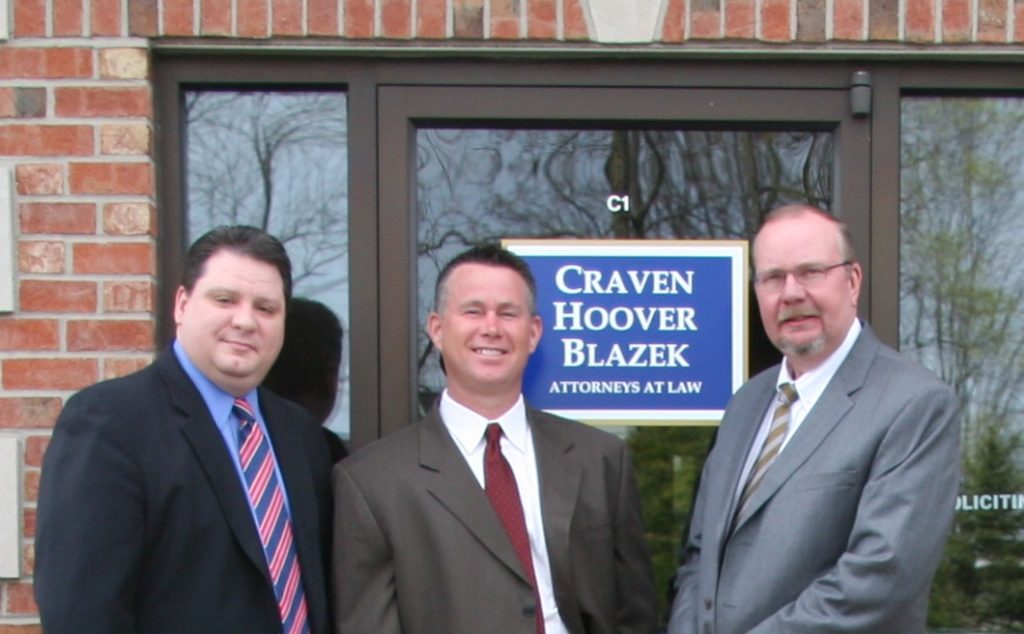
Call the Law Office of Craven, Hoover, and Blazek P.C. at 317-881-2700 to schedule a free initial consultation with a licensed workplace injury lawyer in Indianapolis, Indiana. Seasoned attorneys, Daniel Craven, Ralph Hoover, and Keith Blazek, are ready to help you recover the compensation you deserve after being injured at work. We represent injured workers throughout the State of Indiana.  Best of all, we only collect lawyer fees if we obtain a settlement or judgment for you!
Indianapolis Personal Injury Lawyers  317-881-2700
Schedule a Free Consultation!

Common Examples of Negligent Supervision of Employees

Making a claim for negligent supervision is a common legal remedy used to compensate victims who were seriously injured or killed as a result of another’s failure to uphold their legal responsibility to carefully supervise a person. Those who are often given such responsibility over others include teachers, coaches, daycare providers, babysitters, youth group leaders, camp counselors, foster parents, nannies, and even custodial and non-custodial parents.

Although most cases of negligent supervision involve children and the elderly, it is possible for an employer to have similar liability for their staffs. Continue reading to learn some examples of employer negligent supervision, including what you should do if you are a victim of such carelessness.

Negligent Supervision Lawyer 317-881-2700

Negligent Supervision of Employees

Negligent supervision of employees occurs when an employer or manager fails to ensure that their staff is properly adhering to all company policies, regulations, and safety standards. This responsibility includes avoiding wrongful behaviors themselves, as well as preventing wrongful actions of their employees. If an employer does not take the proper steps or precautions to ensure these standards, and as a result, an employee or customer is injured, they can be held liable for all damage and losses resulting from the accident under the legal principle of negligent supervision.

Examples of Employee Negligent Supervision:

❖ An employer fails to provide and ensure proper training for jobs that require using dangerous weapons, chemicals, tools, or machinery.  Also if they fail to properly supervise the use of such objects.

❖ An employer allows or ignores sexual advances or harassment of another employee.

❖ An employer allows an employee to drive or operate machinery while under the influence of drugs or alcohol.

❖ An employer is responsible for monitoring an employee that works from a satellite office or at home, and that employee is conducting company-related scams or personal scams on company time or while using company property.

❖ An employer chooses to ignore acts of violence or threats in the workplace, or dismisses complaints from co-workers about such behavior.

❖ An employer allows a convicted child sex offender to be alone with minors.

Proving Negligence

As a victim of an accident that resulted from someone else’s disregard to supervise, you have the burden of proving their negligence. There are four elements to proving negligence in a personal injury case. It must be proven that:

➊ The defendant had a duty of care, or legal obligation to monitor the victim.

➋ The defendant failed to uphold their duty of care.

➌ The failure to uphold their duty of care caused the victim to suffer damages.

➍ The injury that occurred as a result of employer negligence was reasonably foreseeable.

In most situations, if a victim can prove that all four of these elements are true, they likely have a basis for a negligent supervision claim. Always talk to a licensed Indiana personal injury lawyer for advice on pursing a claim for negligent supervision. You could be entitled to compensation for your damages and losses.

Indianapolis Negligent Supervision Lawyers

Call Craven, Hoover, and Blazek P.C. at 317-881-2700 to schedule a free consultation with a licensed Indianapolis personal injury attorney who can determine the best strategies for your case. Not only does our law firm offer free consultations, we never collect lawyer fees unless we prevail for you! Call 317-881-2700 to get started on your financial recovery, today.  We represent injured persons throughout Indiana.

Indianapolis Personal Injury Lawyers 317-881-2700

How to Move Forward With a Company Vehicle Accident Claim

Were you recently injured in a car accident while driving your company-appointed vehicle? If so, it is imperative that you discuss your case with a seasoned car accident attorney who can help you get on track to a full and fair financial recovery. After all, you are likely concerned about paying for your hospital bills and medical expenses, as well as, losing money out of your paycheck while in recovery. You might also be worried about your own liability for vehicular damages.

In this confusing time, your best course of action as a victim of a company car accident is to sit down with a legal professional to learn what you need to know about the potential workers’ compensation and car accident claims.

Continue reading for advice on moving forward with a company vehicle accident claim in Indianapolis.

Indianapolis Car Accident/Workers' Compensation Attorneys
Indiana Car Accident/Workers’ Compensation Attorneys 317-881-2700

At the Scene of the Accident

When you were at the scene of the accident, hopefully you exchanged all necessary insurance and contact information with all other drivers involved, and took pictures or video of the accident site. This information will likely be used as evidence to support your claim for compensation when it comes time to negotiate a settlement. If you received medical attention at the scene of the accident, this record can also be used to argue your case. Always, always, always call the police and wait at the scene for the police to show up and write a report.

After the Accident Scene

If your injuries were not evident at first, but are now beginning to appear, you are experiencing an onset of injury, which is common among car accident victims. See our blog, “Did I Forfeit My Right to Compensation By Saying I Wasn’t Injured at the Time of the Accident?” to learn more about these types of claims. In this case, be sure to see a doctor immediately. Have them diagnose your injuries and treat them accordingly. And be sure to follow all doctors’ instructions during your recovery.

Hire a Personal Injury Lawyer

After being injured in a company car accident, your only priority should be to heal. That is why you need a licensed and experienced personal injury attorney who focuses on workers’ compensation and car accident cases. They will handle all aspects of your claim, and ensure you obtain a full and fair settlement. All you have to do is rest and recover from your injuries. Be sure to hire a lawyer before discussing any details of the car accident with anyone.

Indianapolis Personal Injury Lawyers

Call Craven, Hoover, and Blazek P.C. at 317-881-2700 to schedule a free consultation with a licensed Indianapolis personal injury attorney who can determine the best strategies for your case. Not only does our law firm offer free consultations, we never collect lawyer fees unless we prevail for you! Call 317-881-2700 to get started on your financial recovery, today.  We represent injured persons throughout Indiana.

Indianapolis Personal Injury Lawyers 317-881-2700

Helpful Legal Information for Knee Injury Victims in Indiana

Knee injuries are serious medical matters as is, but when they occur as a result of another’s negligence, they can also turn into serious legal matters. If you are a victim of a recent negligent knee injury, you may be entitled to compensation to cover your hospital bills, medical expenses, lost wages, pain suffering, and other damages and losses that resulted from your accident. Your first step is to have your case evaluated by a skilled Indiana personal injury lawyer who can help you understand your rights and determine the best course of action for your claim.

Continue reading to learn more about knee injury claims, including how to get started as soon as today.

Indianapolis Knee Injury Lawyer 317-881-2700

Common Types of Knee Injuries

Knees are one of the most important parts of our body, and unfortunately, they are also quite vulnerable to injury. The severity of knees injuries rests on a vast scope, from minor strains and swelling, to ligament tears, orthopedic fractures, and much more. You will know the scope of your knee injury as a victim because of the amount of pain, money loss, medical attention, inconvenience, and decreased quality of life you experience as a result of your injuries.

Some of the most common types of serious knee injuries include the following:

❖ Arthritis
❖ Blunt Force Impacts
❖ Broken Knee
❖ Cartilage Injuries
❖ Dislocated Knees
❖ Fractured Patella
❖ Knee Fractures
❖ Meniscus Tears
❖ Muscle Tears
❖ Ripped Tendons
❖ PCL Tears (Posterior Cruciate Ligament)
❖ Severe Knee Trauma
❖ Synovitis (Inflammation)
❖ Tibial Plateau Fractures
❖ Torn Knee Ligaments

Recovering From a Knee Injury

Knee injuries are medically treated in a number of ways depending on the extent of damage. Some common treatments for knee injuries include surgery, bed rest, physical therapy, and more. The recovery time also differs among victims, however, most knee injuries typically require long-term rehabilitation. This period of time can greatly affect a victim’s life, especially when it comes to finances. Not only do knee injuries result in hospital bills and medical expenses, they also lead to time off work, which lowers the monthly expected income family’s rely on for mortgage, groceries, fuel, and more.

Starting Your Knee Injury Claim

Because of the potential physical, emotional, and financial impact a serious knee injury can have on a victim’s life, it is vital to retain professional legal representation to protect your rights to being compensated for your losses. The negligent party that caused your knee injury accident, whether a person, manufacturer, or business, may be liable for your damages and losses due to legal principles like premise liability, medical malpractice, negligence, comparative fault, and more. An experienced personal injury lawyer is the helping hand you need to get back you on your feet after a knee injury.

Indianapolis Knee Injury Lawyers Who Can Help

Contact the Law Office of Craven, Hoover, and Blazek P.C. at 317-881-2700 to speak with a licensed knee injury lawyer in Indianapolis, Indiana. We understand the serious nature of knee injuries, which is why we work hard to recover the full and fair amount of compensation you truly deserve. Call our office today to schedule a free initial consultation to discuss your knee injury case that occurred anywhere in Indiana.

Indianapolis Personal Injury Lawyers 317-881-2700

Personal Injury Accidents That May Also Have Criminal Penalties

Criminal law involves crimes prosecuted by the state or federal government, rather than a private party or person. Criminal violations, like felonies and misdemeanors, are subjected to state and federal punishment; therefore, guilty individuals face jail time, probation, governmental fines, and in extreme cases, the capital punishment.

In contrast to criminal law, civil law is the area of the American legal system that manages disputes or wrong-doings between private parties and prosecuted by private parties most usually. A common example of such cases involve personal injuries. If someone is wrongfully injured by another person demonstrating negligence or malicious intent, they can ask the court or jury to decide who is at-fault and if the negligent party should pay remuneration to the injured person.

When it comes to tort law, or personal injury law, some accidents can render both civil and criminal consequences for the at-fault party. Continue reading to learn some examples of when an individual may also face state or federal charges for carelessly causing an accident that results in someone’s injury or harm.

Personal Injury Attorney Law Firm
Personal Injury Attorney Law Firm 317-881-2700

Civil and Criminal Lawsuits

Although murder is a crime against a person, the crime itself goes against state and federal law, therefore making it a criminal case, in addition to a civil one. These cases usually go to a jury trial where defendants are prosecuted by the state. In criminal litigation, defendants are allowed to appoint their own attorney, or have one appointed to them by the state if they cannot afford to pay for one themselves.  In the case of murder or homicide, the family of the victim may be able to pursue a wrongful death claim in civil court, and collect compensation for their loss, whether a child, spouse, or relative.

Additional Examples:

Car Accidents – If a person is driving recklessly or illegally, such as underage or intoxicated, and they seriously injure or kill another person as a result, the victim or their family can seek compensation for their losses and damages in civil court. Furthermore, the state may choose to press charges against the driver for criminal offenses, including operate a vehicle under the influence and causing bodily injury.

Negligent Supervision – If someone is guilty of negligent supervision, they may face both civil and criminal penalties if their actions are deemed criminal, such as in the case of child abuse, child negligence, manslaughter, nursing home abuse, and more.

Sexual Harassment at Work – If a person is being sexually harassed at work, they may be able to pursue a claim if the situation was ignored or not properly addressed by management. Furthermore, the wrongful party could face criminal penalties if the sexual harassment was criminal in nature, such as rape, sexual misconduct, voyeurism, and more.

Medical Malpractice – If a doctor or clinic negligently causes injury or death to a patient, they could be sued in civil court by the victim or their family, as well as, be charged criminally if their offense was intentional, egregious, or falls under manslaughter.

The circumstances among each case of personal injury victims vary greatly, especially when it comes to penalizing an at-fault party criminally. Always discuss your questions and concerns with a seasoned Indiana personal injury lawyer you can trust. They will be able to provide the best advice on which course of action you and your family should take after suffering the consequences of a serious injury.

Indiana Personal Injury Attorneys

Contact the Law Office of Craven, Hoover, and Blazek P.C. at 317-881-2700, and located in Indianapolis, Indiana, if you or a loved one was recently hurt in a serious accident in Indiana. Our personal injury attorneys offer free initial consultations to sit down and assess your case. If we feel that you are entitled to compensation for your injuries, we begin working on your case immediately, without charging a dime. If we do not prevail for you, you will not owe our law firm any payment. We are the strong voice and immediate action you need for your personal injury lawsuit.

Indianapolis Personal Injury Lawyers 317-881-2700

Standard Workers’ Compensation Benefits You Can Expect

Workers’ compensation is usually a blessing for those injured on the job. Learn what to expect from standard workers’ compensation benefits, and what you can do if your expectations are not sufficiently met.

Indiana Workers' Compensation Lawyers 317-881-2700
Indiana Workers’ Compensation Lawyers 317-881-2700

It is common for people who are injured on the job through no fault of their own to collect workers’ compensation benefits. The amount of compensation and extent of benefits awarded to injured workers largely depends on the degree of their injuries and damages. Damages can include but are not limited to lost wages, medical expenses, hospital bills and set sums for any impairment. If you were recently injured at work, it is strongly suggested to hire a seasoned personal injury attorney who concentrates on workers’ compensation claims to help you recover the full and fair settlement you deserve.

Common Workers’ Compensation Benefits

Not all workers’ compensation claims are for physical injuries. Although most involve some sort of bodily harm, mental anguish or trauma can be just as damaging. Personal injury/worker compensation cases can involve assault, battery; or even contracting a work-related illness or disease, experiencing an armed robbery, and much more.

Regardless of the actual cause of a worker’s injuries and resulting damages, the common coverages and benefits received from workers’ compensation claims generally include:

☑ Paid hospital bills, medical expenses, physical therapy, medical and vocational rehabilitation, doctor visits, counseling, prescriptions, etc…;

☑ Paid weekly earnings for time off work longer than one week (2/3 of average weekly pay-but has limits);

☑ Benefits for dependents in the case of a wrongful death at work;

☑ Travel expenses (if applicable);

☑ Benefits for any permanent total or partial disability.

There are several other types of benefits available to those injured on the job, however, they vary depending on the company’s policies, insurance coverage, the extent of injury, and much more. It is encouraged to discuss your recent work injury with a licensed Indianapolis workers’ compensation lawyer for accurate case assessment and legal guidance. They have the proper resources, experience, and knowledge to navigate your workers’ compensation claim.

In order to recover the full and fair compensation deserved to an injured victim and their family, a personal injury lawyer is the path to take. Be sure your personal injury law firm employs attorneys with extensive trial and litigation experience in workers’ compensation cases. This will further ensure you are choosing a lawyer that can successfully navigate your claim and have a better chance of recovering for your damages and losses.

Indianapolis Workers’ Compensation Claims

Indianapolis Personal Injury Lawyers 317-881-2700

Contact the Law Office of Craven, Hoover, and Blazek P.C. at 317-881-2700 to learn the best course of action for your Indianapolis workplace injury claim. Our seasoned personal injury lawyers can obtain the full and fair compensation you deserve for your resulting damages and losses, including hospital bills, medical expenses, lost wages, and more. Additionally, we offer free initial consultations and never collect attorney fees unless we prevail for you.

Can I Make a Workplace Injury Claim for Hearing Loss?

From the beginning days of workers’ compensation law, people who have suffered hearing loss due to their job have been making injury claims with their employers insurance carriers. If you believe you are a victim of workplace-induced hearing loss, this blog is for you. Continue reading to learn what you need to know about making a workers’ compensation claim for hearing loss in Indiana, including who to trust to represent you and your case and how to get started.

Indiana Workers' Compensation Lawyers 317-881-2700
Indiana Workers’ Compensation Lawyers 317-881-2700

Defining Hearing Loss

Workers’ compensation claims for hearing loss are complex since the technical definitions, methods of evaluating its severity, and approaches to compensate for it, differ among states. It is important to meet with a licensed Indiana personal injury lawyer for professional and accurate legal advice regarding your hearing loss injuries. It is also wise to learn what you can about making a workers’ compensation claim for hearing loss, what the laws say about such workplace injuries, and more.

Measuring Sound

Standard sound is measured in decibels (dB). For a better understanding of decibels, consider these examples: A pin dropping is 10 decibels; conversational speech is around 60dB; flushing a toilet is 75dB; a lawn mower is 90dB; a table saw is 105 dB; a jackhammer is around 110dB; the sound of an emergency siren is 115dB; peak stadium crowd noise is around 130dB; a shotgun is 160dB. As you can gather, many of these noises are part of everyday jobs, like construction workers, landscapers, first responders, stadium staff, factory workers, subway workers, and more.

Types of Noise Exposure

Depending on the type of vocation, the level of noise can vary, thus resulting in varying effects. A person can suffer injuries from common noises, whether exposed just one time or over a long period of time. Both long-term low noise levels and short-term high noise levels can cause damage to the inner ear where the hair cells are found. The trouble is, once these inner ear hair cells are damaged, they cannot be restored.

Because of the real potential damage to hearing, the Occupational Safety and Health Administration (OSHA) sets limits for employee noise exposure. These limits are 90dB for 8 hours a day, and 2 hours of exposure to 100dB. Think back to the examples of noise levels discussed before; a police siren is 115 decibels, while a jackhammer averages around 110 decibels. Although the Occupational Safety and Health Administration (OSHA) also requires employers to equip their staff with the proper protective gear, ear damage can still occur.

Recovering Compensation for Workplace Hearing Loss

Different states have different formulas and procedures for compensating injured workers for hearing loss. Furthermore, various factors influence eligibility and max limits for compensation. For instance, states like Pennsylvania and Delaware commonly compensate injured victims with Temporary Total Disability, Partial Disability, or Permanent and Total Disability benefits, but they use different formulas for providing such benefits. See our blog, “A Brief Explanation of Temporary Total, Temporary Partial, and Permanent Total Disability Benefits” to understand these types of benefits.

Here in Indiana, injured workplace victims may be awarded Temporary Total Disability (TTD), Temporary Partial Disability (TPD), Permanent Total Disability (PTD), and even Permanent Partial Impairment (PPI) benefits, which is when an injured person will not attain 100% recovery. As for hearing loss, it may help to know that, according to Worker’s Compensation Act, “An injury “arises out of the employment” when there is some causal relationship between the injury sustained and the duties or services performed by the employee. This causal relationship is established when a reasonably prudent person considers an injury incidental to employment at the time of entering into it or when the facts indicate a connection between the condition under which the employee works and the injury.”

Keep in mind, your rights to compensation for workplace hearing loss will be dependent on various specific factors, which is why it is necessary to consult with a reputable personal injury lawyer who is well-versed in Indiana workers’ compensation law.

Did You Suffer Hearing Loss at Work?

Hearing loss is one of several occupational conditions that can be sustained by employees here in Indiana. If you believe you are a victim of workplace-induced hearing loss or ear damage, contact the Law Office of Craven, Hoover, and Blazek P.C. at 317-881-2700 to learn you rights and eligibility for compensation. We offer free initial consultations so you can discuss your workplace injuries with a seasoned Indiana personal injury lawyer, in person.