Who Takes the Blame for a Chain Reaction Car Accident?

One of the most fundamental elements of an auto accident claim is determining liability. In most car accident cases, the at-fault party is fairly easy to point out. In such cases, the driver to blame for an accident would be responsible for the other driver’s resulting damages, such as auto repairs, medical expenses and pain and suffering. The at-fault driver’s insurance carrier would have to pay for the damages the at-fault driver caused.

But when a car accident starts with one driver and continues down a line of other drivers in a chain reaction, who would be liable then? Would each driver that comes into contact with the vehicle in front of them be held liable? What if the driver in the back started the damaging domino effect?

Well, there is no straight answer really. These kinds of auto accidents can become complex, and therefore, require the guidance of a seasoned accident attorney. In the meantime, continue below to review some basic facts about chain reaction car accidents and liability, plus information on how to move forward with an Indiana auto accident injury claim.
Auto Accident Lawyers Indianapolis Indiana 317-881-2700

Chain Reaction Auto Collisions

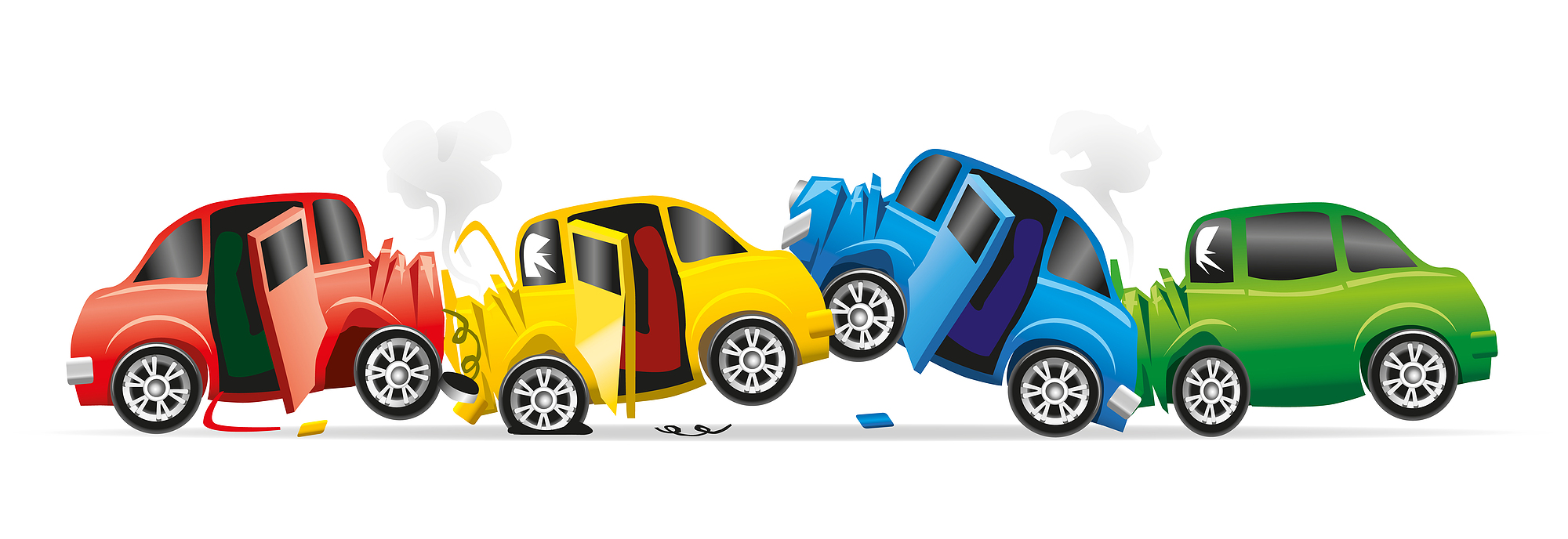
Domino-effect car collisions usually happen from the back and impact cars in the front. Imagine two cars are parked at a stop light and a drunk driver or inattentive driver approaching the light does not stop, or is unable to stop in time, thus colliding into the back of the second car in line, which causes that driver’s car to rear end the first car in line.

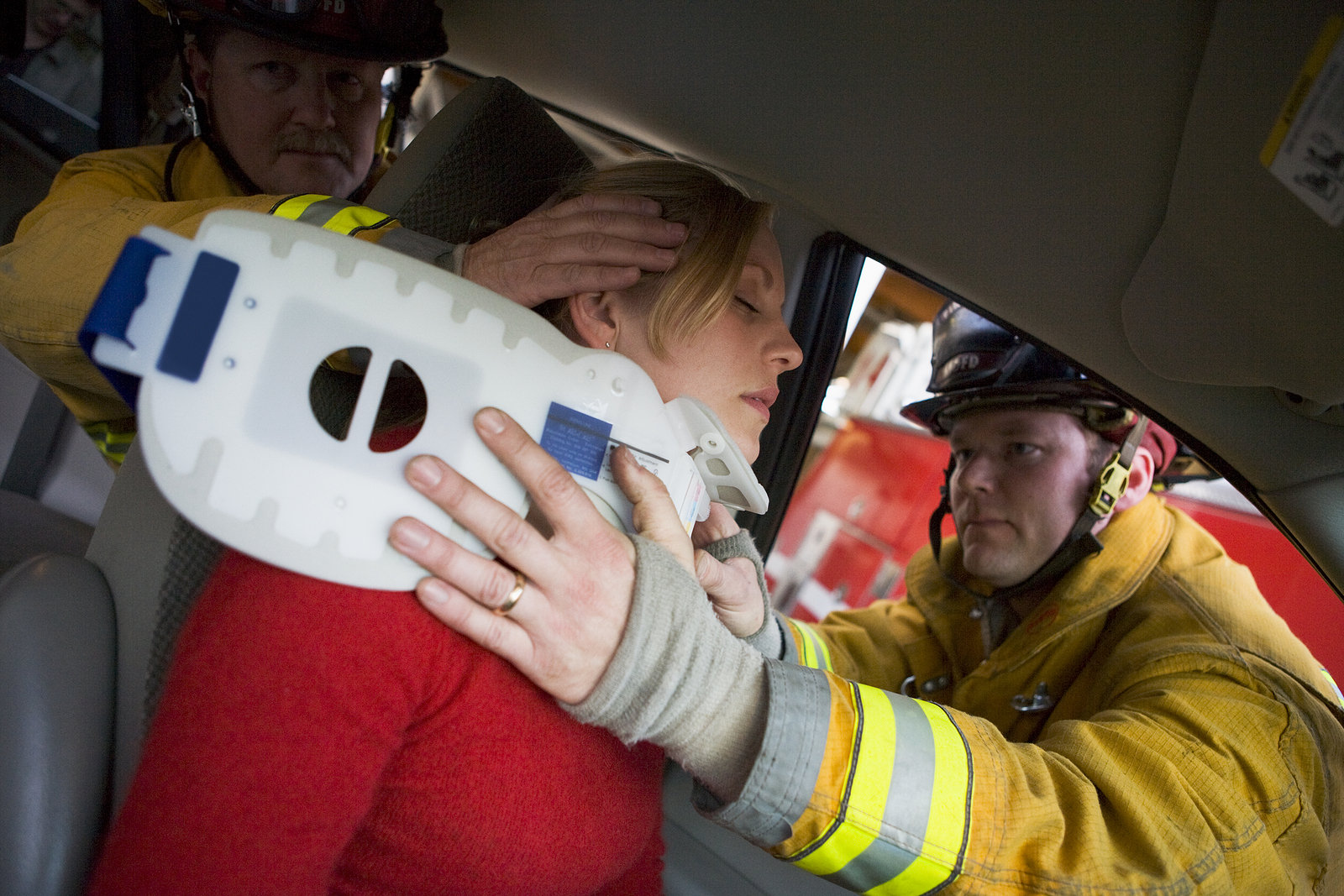
When the sudden and unexpected impact coming from the rear of a vehicle is so strong that it causes the vehicle to jerk forward and hit the vehicle in front of them, bodily injury sometimes occurs to everyone involved, including passengers. The most common types of injuries that result from chain reaction car accidents include whiplash, neck injuries, back injuries, hip injuries, spinal injuries, child injuries, concussions, and orthopedic injuries.

Assigning Liability in a Domino Effect Car Accident

When a person is wrongfully injured in a chain reaction car accident, they deserve justice in the form of compensation regardless of how many drivers were involved. Although such cases are sometimes challenging, it is possible for injured victims to recover damages with the help of a seasoned auto accident lawyer in Indiana.

As for assigning liability in a chain reaction car accident or pileup, Indiana uses a lengthy investigatory process to examine the details of the accident and each driver’s contribution. Here in Indiana, the most common causes for domino effect car collisions are impaired driving, speeding, and following too closely to the car in front. If you can avoid these behaviors, you can reduce your chances of being involved in a car accident of any fashion.

If you were recently hurt in a car accident that involved other drivers, seek out professional advice on your rights to pursing full and fair compensation through a personal injury claim. Contact the Law Office of Craven, Hoover, and Blazek P.C. at 317-881-2700 to schedule a free case evaluation with an experienced and compassionate auto accident lawyers in Indianapolis, Indiana. We represent clients throughout the state of Indiana, and can meet over phone, video, or in-person at our Indy-based office.

Related Posts:

Which Driver is Liable for a Rear End Accident in Indiana?
Who is Liable for Driveway Backup Accidents?
Types of Legal Liability for Driving Another’s Vehicle
Who is Liable When a Driver Hits a Pedestrian?
Local Indianapolis Personal Injury Law Firm 317-881-2700
Schedule a Free Consultation!

Most Common Auto Accident Injuries and What Causes Them

In 2019 alone, statistics revealed that there were an estimated 230 million licensed drivers in our country. With so many people driving a wide array of motor vehicles on the road, car crashes are bound to happen, and some of them are very serious and deadly.

According to the Environmental Protection Agency (EPA), a 2020 report suggests that the average motor vehicle weighs 4,156 pounds. Larger-than-average vehicles are even heavier, and when coupled with high speeds, are essentially the equivalent of a deadly weapon. As a result, car accidents tend to cause a lot of damage, both property damage and bodily injury, and in worst-case scenarios, fatalities.

Continue reading to learn the common kinds of auto accident injuries, what causes them, and how to verify your eligibility to pursue legal action against a wrongful driver or automaker.

Traffic Accident Lawyer Indianapolis Indiana 317-881-2700

Typical Causes of Traffic Accidents and Fatalities

The National Highway Traffic Safety Administration (NHTSA) reports that in the year 2018, more than 2.7 million car crashes occurred, 36,000 of which resulted in a fatality. This devastating statistic shows how real the risks are when it comes to accidents involving motor vehicles. The most common causes of car accidents include reckless driving, distracted driving, intoxicated driving, and speeding.

Distracted Driving

Distracted driving is a serious cause of motor vehicle accidents and car crashes in the United States, and even all across the world. Common examples include texting, making phone calls, changing the GPS settings, applying makeup, looking through briefcases/purses, grabbing items from the backseat, and similar behaviors that take drivers’ eyes off the road for more than a second. Fatigued driving is another common type of distracted driving but may also be categorized as reckless driving depending on the circumstances.

Reckless Driving

Reckless driving is considered a more serious offense because it is typically a conscious choice. Those who drive recklessly are generally aware that their behavior is reckless or negligent. Common examples of reckless driving include speeding, running red lights, changing lanes abruptly without using signals, cutting off other drivers, driving with no hands on the steering wheel, driving at night without headlights on, tailing other cars, driving over sidewalks, ignoring traffic signs and signals, and similar careless behaviors.

Intoxicated Driving

Intoxicated driving is illegal and can lead to both criminal and civil penalties. Furthermore, intoxicated driving refers to driving under the influence of alcohol, illicit drugs, or controlled substances. Drunk drivers have a blood alcohol level (BAC) of 0.08 or higher. Driving under the influence of drugs like marijuana, methamphetamines, opiates, and hallucinogens is also considered intoxicated driving. Controlled substances are OTC and prescribed medications like prescription pain killers, sleeping pills, anxiety medications, and similar medicines that cause drowsiness and/or inebriation.

Speeding

Speeding can also be considered a form of reckless driving. It is a top cause of serious car accidents and fatalities. In fact, the National Safety Council reports that 26% of the total traffic fatalities occurring in 2018 involved speeding. Speed limits are set because they are the safest speed to operate a vehicle while remaining in full control. At higher speeds, driver control is significantly reduced, which can lead to serious auto collisions.

Common Auto Accident Injuries

Although every motor vehicle collision is different, most car crashes tend to result in the similar of injuries. The most common auto accident injuries include whiplash, as well as injuries to the head, chest, arms, and legs.

Whiplash is by far the most common resulting car accident injury. Collisions tend to cause the neck and head to whip forward and backward and side to side very quickly. The severity of whiplash can vary on a spectrum from minor injuries, like stiffness or soreness of the neck and headache, to more serious and concerning injuries, like significant neck pain, permanent neck pain, dizziness, tinnitus, migraines, loss of vision, back pain, and neck injuries.

Head injuries are unfortunately common when it comes to serious car accidents. Head injuries can range from minor to major. Minor head injuries caused by car accidents may include headaches, dizziness, nausea, vomiting, and light sensitivities, although these can be more serious depending on how long the symptoms last. More serious car accident head injuries include concussion, loss of consciousness, traumatic brain injuries, impaired thinking, loss of movement control, and loss of sensations.

Injuries to the chest, arms, and legs are another common result of auto accidents. Chests are often impacted by air bag deployment, which can lead to minor injuries like burns, bruises, or soreness, again, depending on how long the symptoms last. Chests of drivers and passengers can also be injured by blunt force trauma from an impact with another vehicle or structure. More serious chest injuries include broken ribs, lung punctures, organ ruptures, and other internal injuries or bleeding. Arms and legs can be severely burned, maimed, disfigured, or severed in serious car crashes. Orthopedic injuries, like shoulder and pelvic injuries, are also common in car accidents.

Are you a victim of a reckless or negligent car accident in Indiana? Contact the Law Office of Craven, Hoover, and Blazek P.C. at 317-881-2700 to schedule a no-risk, no-fee personal injury consultation with an experienced car accident attorney in Indianapolis, Indiana. We also represent injured persons throughout the state of Indiana and Indiana residents injured in other states.

Related Posts:

How to Make an Injury Claim Against a Drunk Driver
Can I Receive Personal Injury Compensation Without Filing a Lawsuit?
Top 5 Tips for Safe Driving in Indianapolis

Local Indianapolis Personal Injury Law Firm 317-881-2700
Schedule a Free Consultation!

Were You Involved in an Accident While Driving Your Company Car?

When it comes to work, there are okay workdays, good workdays, and even great workdays, but then there are those occasional bad ones, like being involved in a company car accident. Below you will find a guide on what you need to do if you are ever in an accident while driving your company car.

Company Car Accident Lawyer Indianapolis Indiana 317-881-2700

Company Car Auto Accident Help

Driving from location to location for work poses the risk of being in an auto accident. If you are involved in a car accident in your company vehicle, there are some important steps you need to take. Before reviewing the guide to company car accidents, it is necessary to note that you should always have your updated car insurance documents in your vehicle at all times.

What to Do After a Company Vehicle Accident:

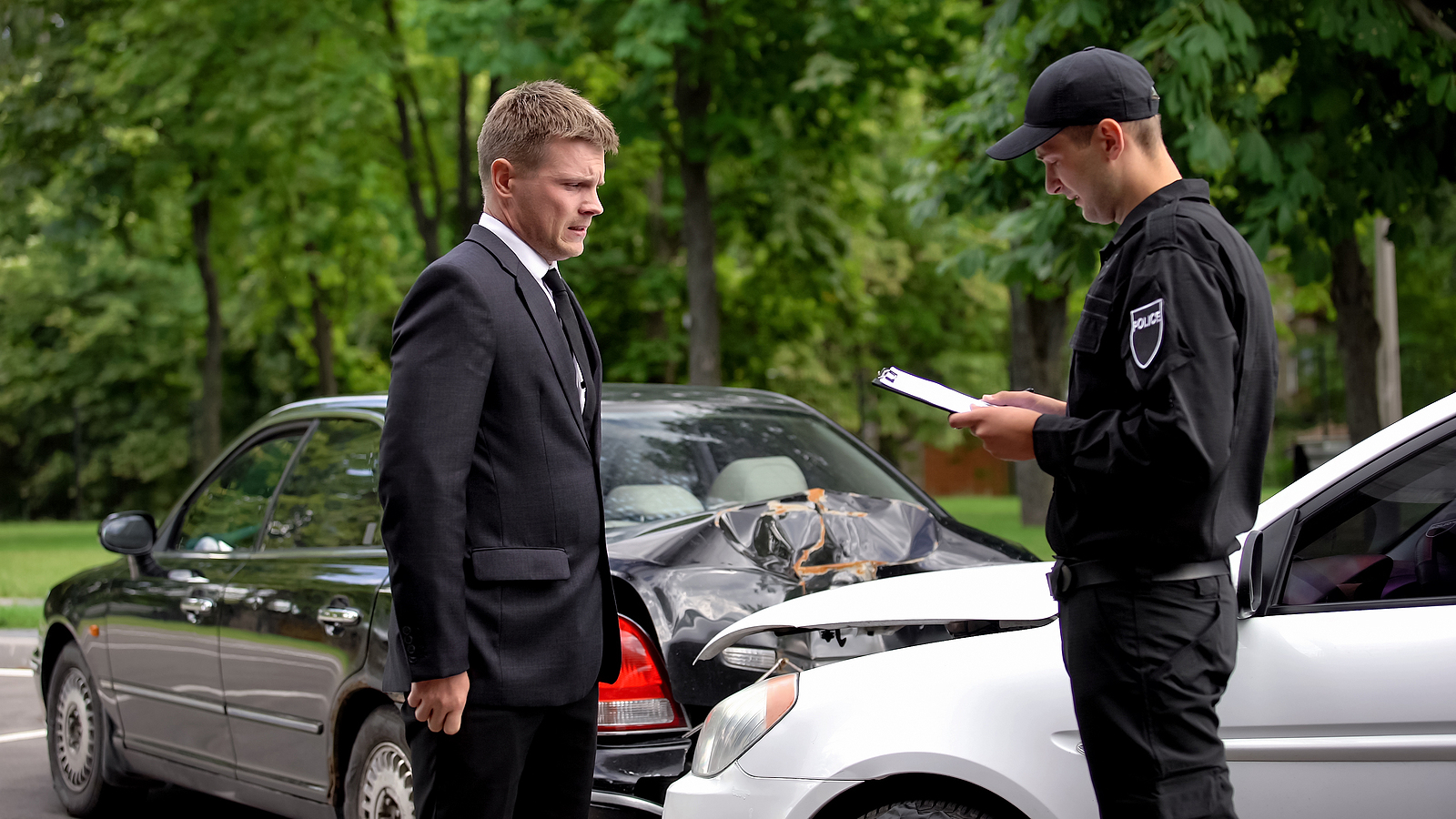
First, ensure that yourself and all other parties involved in the accident are not injured or still in harm’s way. Even if no one seems injured, contact 911 and request law enforcement to the scene. Try to get to a safer location, out of the way of traffic.

While waiting to police and medical technicians to arrive, use your cell phone to take pictures of the scene of the accident, including all property damages, intersections, road signs, and injuries. If you are too injured to do this, you can ask an officer, paramedic, or bystander to help.

When authorities arrive, accept medical examination and treatment from the paramedics, if necessary, then make a police report. Ask for a copy of the police report.

If you are capable, begin asking the other parties involved for their insurance and contact information. Take a photo of their insurance card to ensure accuracy. Do not talk about the accident to the other drivers or involved parties as everyone is not having a good day after a collision so tempers may exist.  It is better just to talk to the investigating officer and tell them what happened.

Next, notify your employer of the accident. Do this as soon as possible. Because your company likely has their own procedures, insurance, and legal teams for these matters, you will need to communicate with them at the scene and see what they want you to do. If the car can be driven, they may have you return it right away. If it is not drivable, your employer will probably arrange a tow truck to collect the company car.

Your employer may require you to hand over all related documents and evidence, like photos, videos, police reports, witness statements, and more. Cooperate with these requests but try to keep copies for yourself.

Were You Injured and the Accident Was Not Your Fault?

If you were injured in a company car accident, seek medical treatment right away. See a licensed medical practitioner for your injuries and retain all documents supporting your medical diagnoses and treatment.

Your company may offer workers’ compensation benefits. If they do, explore these benefits. If they take too long to complete your claim, reduce the value of your claim, refuse to cover additional medical treatments ordered by your doctor, you have suffered permanent disabilities, or deny you benefits altogether, it is important to hire a licensed workplace injury lawyer in Indiana. They can ensure that your rights to being fully compensated for your damages and losses are preserved. You are entitled to reimbursement for medical bills, hospital bills, lost wages, and more.

Are you ready to protect your rights to being fully compensated after being injured in a company vehicle accident in Indiana? Contact the Law Office of Craven, Hoover, and Blazek P.C. at 317-881-2700 to speak with a seasoned workplace injury attorney in Indianapolis. We represent a wide range of cases for clients all across the state.

Related Posts:

Is My Job-Related Injury Covered By Workers’ Compensation?
Are Police Reports Important to an Auto Accident Claim?
Who is Liable After an Uber or Lyft Accident?

Local Indianapolis Personal Injury Law Firm 317-881-2700
Schedule a Free Consultation!

Evidence That Can Be Used in a Personal Injury Car Accident Claim

Serious car accidents generate serious damages and losses for wrongfully injured victims. Factors like hospital bills, medical expenses, and missed work can leave a car accident survivor drowning in out-of-pocket costs and payment responsibilities. Managing post-accident debt or financial struggles while physically and emotionally suffering and recovering from injuries makes the legal process even more stressful and confusing for car accident victims.

Sadly, car accident victims must fight for their rights to being fully compensated by the at-fault driver’s insurance company, especially since insurance companies always fight to pay out as little as possible. In order to do so, they will have to prove their losses by providing evidence to support their claim.

Continue reading to learn some examples of evidence that can be used in a personal injury car accident claim, plus how to ensure your case is successful.

Car Accident Law Firm Indianapolis Indiana 317-881-2700

Personal Injury Evidence for Car Accidents

When it comes to recovering a settlement for your damages and losses after being injured in a car accident that was not your fault, it is important to understand that you, the claimant, hold the burden of proof. This means you are responsible for proving the extent of your damages and losses, including your medical bills, related medical expenses, missed paychecks at work, and so forth.

Although some of these are evidence in and of themselves, there are other types of evidence you will need to gather and have available for your Indiana car accident lawyer in order to prove your personal injuries and recover a settlement that is appropriate for your claim. It is vital to hire a skilled and qualified personal injury law firm to represent your case. They will have the knowledge and resources to gather all available kinds of evidence relevant to your case and recover the full and fair settlement you deserve for your damages and losses.

Approved Forms of Car Accident Evidence

Personal injury evidence that works well to support a victim’s claim are tangible, certified, quantifiable, and official. These can be things like records, documents, videos, photos, witness statements, interrogatories, depositions, and more.

Police Reports

In a recent blog, we discussed the importance of always making a police report after car accident. A police report is one of the most useful types of personal injury evidence because it is written objectively by a trusted and qualified authority. It helps to prove fault in a car accident, plus confirm other details of an accident that are pertinent to an injured victim’s personal injury claim. Police reports and car accident reports are important records to have in a personal injury case, regardless of which side you are on.

Medical Records and Payment Receipts

Along with police and car accident reports, more critically important types of personal injury evidence to organize and gather for your case are medical records and medical payment receipts. Not only do you need to prove that your injuries are legitimate, and you’ve been taking the responsible actions to have your injuries treated by certified medical professionals, but you also want to demonstrate that you been paying out-of-pocket for your medical expenses and hospital bills. Your medical payment receipts will be a quantifiable catalog of evidence that you can apply to your case to prove your damages.

Videos and Photographs

Scene of the accident evidence is also important in a personal injury car accident case. Videos and photographs of the surrounding road and landscaping, street signs, property damages, vehicular damage, physical and visible injuries, and anything else related can be useful for proving an injured victim’s car accident claim. Another type of video evidence commonly used in personal injury car accident cases is surveillance video. Local gas stations, retail stores, shopping centers, and office buildings that are equipped with 24 hour surveillance can catch accidents in live action.

Injury and Property Damage Documentation

As just described, documentation of the scene of the accident is important evidence to have a personal injury car accident case. Injury documentation can include pictures and videos of your physical injuries or related struggles, as well as your medical records and hospital bills. Property damage documentation will include police report, pictures of vehicular damage, and appraisals for repair or replacement of the damaged vehicle.

Eyewitness Testimonies

Another type of personal injury car accident evidence is eyewitness testimony. Therefore, it’s important to gather contact information from onlookers who saw your car accident. This includes their name, address, phone number, email address, and if willing, even their place of employment. Witnesses can provide testimony to support your damages and losses following a wrongful car accident.  Expert witnesses, like accident reconstruction specialists, engineers, physicians, and similar professionals, may also be asked for their testimonies. Your lawyer will determine if expert witnesses are necessary for your claim.

Interrogatories and Depositions

Personal injury witness testimony does not always stop at eyewitnesses and reconstruction specialists. In some car accident cases, lawyers will use interrogatories to get information, truthful information under oath, from the other driver in the accident. This is considered a type of witness testimony used as evidence in a personal injury car accident case. Depositions are another form of out-of-court testimony approved as reliable evidence in an accident case. They are given under oath, plus recorded by a court transcriber.

Talk to a Personal Injury Lawyer in Indiana

Keep in mind that every personal injury case is different, and not all forms of car accident evidence will be approved as proof of a claimant’s damages. Again, this is why it’s important to have a seasoned Indiana car accident lawyer working your case; they know exactly how to identify the best types of personal injury evidence for a victim’s claim and apply it to the best of their benefit.

Are you an injured victim of a wrongful car accident in Indiana? Contact the Law Office of Craven, Hoover, and Blazek P.C. at 317-881-2700 to schedule a no-risk, no-fee personal injury consultation with a skilled car accident attorney and discuss your rights to pursue legal action against the at-fault driver. We represent clients all throughout the state, and there is no need to travel. We can hold consults over the phone or via online video conference.

Related Posts:

What To Do and Not To Do After a Car Accident
What Do I Say to Insurance Adjusters After Being Injured in a Car Accident?
Can I Still Sue the Other Driver if My Car Accident Injuries Were Not Apparent at the Scene?

Local Indianapolis Personal Injury Law Firm 317-881-2700
Schedule a Free Consultation!

Examples of Vicarious Liability in a Personal Injury Claim

In simplest terms, vicarious liability is when one party is held legally accountable for another party’s negligent or unlawful actions.

Although the first party is legally responsible, the law holds the secondary party accountable as well. Vicarious liability, also referred to as principle’s liability or imputed negligence, comes to play in situations where a person or corporation is supposed to be responsible for another person or thing but acts negligently instead.

Continue reading for more examples of this type of legal liability, plus who to contact in Indiana for skilled car accident or personal injury representation that will protect your rights to being fully compensated.

Vicarious Liability Lawyers Indianapolis Indiana 317-881-2700

Vicarious Liability  

To best understand how vicarious obligation works, it is good to review some generic cases in which it would come into play. For example, if an employer retains a staff of employees that act negligently while working for the company (i.e. sexual harassment, discrimination, driving a company vehicle, etc.), the employer can be held accountable for the resulting damages in a court of law.

Victims of this negligent behavior can file a lawsuit to pursue compensation for pain, suffering, and more from the employer, as well as the individual guilty employees. Employers in this situation are considered responsible because they have the duty to prevent and be aware of negligence in the workplace. By law, they should have stopped or prevented harmful behavior on the job.  In addition, employers are generally liable under law for any negligent acts performed by their employees anywhere while they are in the course and scope of their employment.

Car Accident Vicarious Liability and Negligent Entrustment

Driving another person’s car can also involve vicarious liability. A child that drives and wrecks their parent’s vehicle, causing serious injury or death to another driver, may put their parents in legal tribulation. Parents, or guardians, have the responsibility to properly instruct their adolescent how to drive safely, and only loan their vehicle during appropriate times. So, if a parent entrusts their minor to drive their vehicle, and an accident occurs, the parent (or person) who signed the minor’s driving application, is held responsible for the damages. In such cases, the insurance carrier for the parents would also be involved.

The law deems a parent or guardian, also known as an entruster, negligent if they allow their teen to drive a vehicle in their name knowing that their child is reckless, untrustworthy, inadequate at driving, or unlicensed. If a child falls under any of these descriptions, and subsequently causes a serious accident, the guardians or guardians can be held accountable for the damages under the principle of negligent entrustment.

Are you looking for skilled personal injury law firm to represent you in your negligence case in Indiana? Contact the Law Office of Craven, Hoover, and Blazek P.C. at 317-881-2700 to schedule a free consultation with our personal injury attorneys in Indianapolis, Indiana. We also represent injured victims all across the state.

Related Posts:

Are Personal Injury Lawyers Expensive?
The Most Common Types of Damages Awarded in Personal Injury Lawsuits
Top 3 Things You Can Do to Maximize Your Accident Settlement

Who is Liable After an Uber or Lyft Accident?

There are many reasons why ridesharing has become such a popular asset within our communities. Last week, New Year’s Eve celebrations increased Uber and Lyft requests significantly because responsible drinkers wanted to avoid intoxicated driving and subsequent penalties like DUIs or drunk driving accidents. In addition to opting for a sober ride, people use Uber and Lyft services to avoid rental car costs when visiting a new city, to avoid the hassle of airport parking, and more.

Overall, ridesharing services have proven to be highly advantageous and cost-effective. In fact, Uber currently has more than 160,000 active drivers. But, with the increase of popularity in Uber and Lyft services, there has also been an increase in car accidents.

When a passenger is injured in rideshare car accident, who is liable for their damages and losses? Injured passengers in rideshare car accidents can suffer hospital bills, medical expenses, lost wages from time off work, pain-and-suffering, prolonged physical therapy, disability, and much more. Who is responsible for compensating an injured rideshare passenger for these compensatory losses?

Continue reading to learn more about Uber and Lyft car accident insurance coverage, accident claims, and compensation recovery following a wrongful rideshare accident.

Rideshare Accident Lawyers Indianapolis IN 317-881-2700

Rideshare Car Accident Liability

Because of the Uber and Lyft business models, there can be multiple insurance parties liable after a rideshare accident. At-fault parties may include the rideshare driver, the rideshare company, a third-party driver, or even a government agency.

Rideshare companies attempt to evade liability for accidents by classifying drivers as independent contractors rather than employees. Fortunately, many courts are not motivated to protect rideshare companies from car accident liability. Still, in most cases, it is the rideshare driver who is deemed liable after a wrongful or negligent car accident.

Uber and Lyft Auto Insurance Coverage

Rideshare companies, including Lyft and Uber, make it mandatory for their drivers to maintain their own personal auto insurance liability coverage that meets the state minimum requirement. In addition to requiring their drivers to have their own personal liability insurance coverage at the state minimum, Uber provides a $1 million commercial insurance policy to cover drivers and passengers in motor vehicle collisions. But this coverage only applies if the accident occurs while the Uber app is active and turned on.

Although rideshare companies like Uber and Lyft require their drivers to maintain the state-mandated minimum car insurance coverage, it is possible for a rideshare driver to have insufficient coverage, and therefore, not be able to compensate victims for their damages and losses. Furthermore, many private insurance companies are unwilling to pay out victims for their damages and losses that occur as a result of a rideshare accident. For this reason, the most common liable party in rideshare car accident is the commercial insurance policy coverage.

Additional Scenarios That Might Change Liability Coverage in a Rideshare Car Accident

In the case that a rideshare driver is on duty but has no customers in their car, then causes an accident that harms someone, it is generally their own personal car insurance policy that will pay out damages to an injured victim. Companies like Uber may offer a small portion of contingent coverage, but only up to $50,000 per injured person, and up to $100,000 total per accident.

If a rideshare driver has their app on, has accepted a ride, and is on their way to go pick up a passenger (or already has a passenger in the vehicle), then a car accident occurs, the rideshare company’s full insurance coverage policy may apply.

The legalities surrounding liability and injury claims are complex, making it critical to consult an Indiana accident attorney for expert legal advice after being wrongly injured in a rideshare accident.

Are you looking for personal injury law firm in Indiana that can help you recover the full and fair compensation you deserve after suffering damages caused by an Uber or Lyft rideshare car accident? Contact the Law Office of Craven, Hoover, and Blazek P.C. at 317-881-2700 to schedule a no-risk, no-fee personal injury consultation with an experienced car accident attorney in Indianapolis, Indiana. We also represent injured persons throughout the state of Indiana and Indiana residents injured in other states.

Related Posts:

Steps to Take After Being Injured in a Ride Share Accident
Can I File a Personal Injury Claim if I Was Hurt in an Uber Accident?
Can I Sue Lyft or Uber for Getting into a Car Accident?
Common Carrier Accidents and Liability

Do I Have to Make a Police Report After a Car Accident?

You Should Always Make a Police Report After a Car Accident

Many people assume that the first step to take after a car accident is to contact their insurance company. But depending on the details surrounding the accident, in most cases, the first call to make is to the local police. Filing a police report after a car accident is one of the most responsible protections you can take. Having such documents on record can better streamline the claim and settlement process.

Continue reading to learn what you need to know about making a car accident report in Indiana, including who to contact if you were seriously injured by a negligent driver.

Car Accident Law Firm Indianapolis Indiana 317-881-2700

Indiana Laws and Procedures for Car Accident Reporting

In many cases, the law allows drivers to decide on their own if they want to contact the police after a car accident. In more serious cases, the law mandates that law enforcement is called to the scene. These laws and regulations vary among states. Here in Indiana, drivers are required by law to contact local law if certain conditions exist.

Indiana drivers involved in a car crash must call the police to report the accident if:

…the property damage is $1,000 or more.
…anyone dies or suffers an injury.
…the insurance carrier requires it in all cases.
…the other involved vehicle is unattended.

Indiana Code § 9-26-1-1.1

Failing to make a police report after a car accident that meets these car crash reporting rules can possibly result in criminal penalties, as well as vehicle registration revocation, fines, and loss of driving privileges.

How to Make a Car Accident Report in Indiana

It is always best to report all car accidents to the police as this will allow you and your insurance carrier to obtain necessary documentation and information regarding both drivers.  You should call 911. You can also contact the local police department or sheriff’s office in the municipality of your accident and sometimes they will have non-emergency numbers you can call to have an officer come out and make a report.

Following a police report, you would contact your insurance company to commence the claims process. Within 10 days’ time of the accident, you and the other driver or vehicle owner are required to have your respective insurance carriers electronically file a Certificate of Compliance with the Indiana BMV, which verifies that both parties have state minimum insurance coverage.  Failure to do this can result in your driver’s license being suspended for a time.

The Importance of Making a Police Report After a Car Accident

Making a police report at the scene of a car accident is important for many reasons, whether the law mandates it for your particular incident or not. This is especially true for car accidents that result in bodily injury. For starters, your injuries may not manifest until later. These are known as late-appearing car accident injuries or an onset of symptoms.  Delayed onset of symptoms is very common.

Additionally, your property damages might be more severe than you expected them to be, or worse, the other party involved could make false claims against you in an effort to evade liability for the accident. This is especially frustrating when you are not at fault in causing the car accident. Police reports can protect you from such complexities that can occur during the car accident claim process.

After being involved in a car accident in Indiana, not only is it encouraged to call the police to the scene so the officer can do his own police report, but it is also recommended to make your own car crash accident “report”. Do this by collecting the following information:

❒ Full Contact Information (Drivers and Passengers)
❒ Drivers’ License Number
❒ Car Insurance Details
❒ License Plate Number
❒ Photos of the Scene
❒ Photos of Registrations, Insurance Cards and Drivers Licenses
❒ Photos of Property Damage (both parties)
❒ Witness Contact Information
❒ Office Names and Badge Numbers

What To Do After Being Injured in a Car Accident That Was Not Your Fault

If you were injured in a car accident that was caused by the negligence or recklessness of another driver, you could be entitled to compensation for your damages and losses. Damages and losses may include hospital bills, medical expenses, property damages, lost wages, prolonged physical therapy, disability, pain-and-suffering, and much more. It is important to consult with the season Indianapolis personal injury lawyer to determine if your case is worthy of pursuing legal action against the other party involved in your car accident.

Have you been seriously and wrongly injured in a car crash in Indiana? You deserve aggressive legal representation to ensure you receive the maximum compensation for your damages. Contact the Law Office of Craven, Hoover, and Blazek P.C. at 317-881-2700 and schedule a free case evaluation with a seasoned Indianapolis car accident attorney, today.  We represent injured persons throughout the state of Indiana.

Related Posts:

What Kind of Evidence Should I Collect After a Car Accident?
The Importance of Witness Statements After a Car Accident
Were You Injured Because Someone Ran a Red Light?

Can I Still Sue the Other Driver if My Car Accident Injuries Were Not Apparent at the Scene?

Injuries commonly appear directly after being involved in a serious car accident. But there is another common medical term known as delayed onset of injury, in which vehicle accident injuries present themselves through pain and problems days, weeks or even later following a collision or fall. If you were involved in a car accident that was not your fault and now you are experiencing pain and problems due to your injuries, it is important to know how to protect yourself, both physically and legally.

Continue reading to learn more about later appearing vehicle accident injuries, including what to do if you have an onset of injuries, pain and problems following a car accident in Indiana.

Car Crash Lawyer Indianapolis Indiana 317-881-2700

Common Causes of an Onset of Injury After a Car Accident

When humans are faced with distressing physical or emotional challenges, our bodies can become shocked or stimulated, which can actually help us manage the traumatic situation. Take professional athletes for instance; they often get injured during a big game but will continue to play anyway. This is usually explained by a triggered biological response of adrenaline and endorphin production, which helps mitigate pain, and even fear.

Just like professional athletes who get injured on the track or field, our bodies are significantly stimulated after a traumatic car accident, which can lead to physical shock and block pain. This biological response is a common reason why car accident survivors often do not feel injured directly after an accident, but rather, later that day, days later, weeks later or even longer.

Injuries That Can Appear After a Car Accident

After being in a car accident, your body will become exited or stimulated, and generate higher levels of adrenaline and endorphins. This biological response can make you feel like you are not hurt. But once the triggered stimulation wears off, which can be a matter of hours, days, weeks, or even longer, your body can begin to feel the effects of the injury. Do not assume that you are not hurt after a car accident.

The most common types of later-appearing car accident injuries are ligament, tendon, spinal and muscle and tissue related injuries. Head injuries like concussions are also known to arise after a car accident. When it comes to car accident head injuries, the signs to look out for include cloudy thinking, foggy or blurred vision, slurred speech, memory loss, sensitivity to light or sound, inability to focus, headaches, nausea, dizziness, lethargy, loss of focus and concentration and irregular sleep patterns.

It is vital to see a doctor as soon as you begin to experience any degree of symptoms from injuries following a car accident. While most people wait to see if their symptoms will resolve on their own with time, rest and over-the-counter medications and heat and ice treatments at home, it is always better to be seen by a trained doctor as soon as possible to get good advice and to make sure you are doing everything you can to get better as soon as possible. Not only is medical treatment important for protecting your health and well-being, but it also provides evidence to support your personal injury car accident claim.  Insurance adjusters for at-fault defendants want to see medical records.

Claims For Later Appearing Car Accident Injuries and Symptoms

If a car accident survivor who was injured by a negligent driver experiences late-appearing symptoms and injuries, it is not too late to make a personal injury claim. There is still opportunity to pursue legal action and claim payments for your damages and losses. Car accident personal injury claims usually have a statute of limitations of 2 years, depending upon who the at-fault party is.

Claims against governmental entities, including but not limited to a City, County or State must be made in as little as 6 months so it is best to hire an attorney immediately following your auto collision so you can get good advice and not miss any deadlines, as well as to enable your attorney to obtain evidence before it disappears. 

This means that from the date of the accident, in most cases, a wrongfully injured car accident victim has 24 months to file suit against the at-fault driver in order to eventually receive a payment on a settlement or judgment from the at-fault driver’s insurance company. Settlements can cover damages like hospital bills, medical expenses, lost wages, and more.

Are you a recent car accident survivor who has suffered damages because of a wrongfully caused motor vehicle collision in Indiana? Contact the Law Office of Craven, Hoover, and Blazek P.C. at 317-881-2700 to schedule a free consultation with our car accident injury lawyers in Indianapolis, Indiana. We represent clients throughout the state of Indiana.

Related Posts:

Information About Being Injured By a Driver Who Ran a Red Light
Can I File a Personal Injury Claim After a Rental Car Accident?
Steps to Take After Being Injured in a Ride Share Accident
Can I Sue if the Airbags Did Not Deploy in My Car Accident?

Local Indianapolis Personal Injury Law Firm 317-881-2700
Schedule a Free Consultation!

Can I Sue if the Airbags Did Not Deploy in My Car Accident?

If you were recently severely injured in a car accident that was not your fault, and the car airbags did not deploy, you may be wondering if you have any legal recourse against the manufacturer of the automobile or the airbags themselves. Continue reading to learn what you need to know about filing suit against an automotive manufacturer for defective airbag systems that did not work in a car accident that you are seriously injured in.

Airbag Car Accident Lawyer Indiana 317-881-2700

Defective Airbag Systems

Airbag systems are standard in most modern vehicles. Although they are designed to save lives and significantly reduce injuries to drivers and passengers, airbags are not always 100% reliable. When automotive airbag systems fail to deploy or deploy defectively in a motor vehicle collision, injured victims may have a valid product liability claim if they suffered damages as a direct result of the product defect. In a typical car accident situation, the legal recourse would be pretty straightforward: the injured victim would file a personal injury claim with the at-fault party’s insurance company, and with success collect compensation for their damages and losses.

However, some car accidents are more complex than this. Sometimes, third-party car accident injury claims can have more than one at-fault party to blame for the accident, like in the case of a multi-car accident or automotive manufacturing defect. More specifically, when defective airbag systems fail to do their job, and as a result, a driver or passenger is severely injured more so than they would have been had the airbag deployed and done its job.

Product Liability Lawsuits

In the case that an injured driver or passenger suffers damages and losses as a result of another driver’s negligence, they could file a claim with that driver’s insurance company to collect compensation for medical expenses, hospital bills, lost wages at work, pain-and-suffering, property damages, and much more.

However, if during the accident the airbags did not deploy or deployed wrong because of a manufacturing defect, and as a result the driver or passenger was injured more severely, they could also potentially pursue a product liability lawsuit against the automaker or the manufacturer of the airbag system in addition to their car accident injury claim.  In order to do this though, you would need evidence that the airbag was defective.

Most common kind of product liability lawsuits involving airbag systems:

Design Defects – Before the manufacturing process can begin, the design phase must take place. Sometimes, especially in the case of defective airbag systems, the design of a product is flawed, which can lead to product liability lawsuits.

Manufacturing Defects – Manufacturing defects are one of the most common types of product liability cases within the airbag and automaker industry. Although the design of the product may be sound, negligence can occur or mistakes can be made in the manufacturing process, which later can cause defective airbag operation.

“Failure to Warn” Negligence – Manufacturers have a duty of care to warn consumers of any foreseeable dangers and hazards with their products. When it comes to airbag systems, some product liability cases arise because the airbag manufacturer failed to place a warning on the airbag against children sitting in the front seat of vehicles.

Are you a victim of a wrongful car accident or defective product in Indiana? Contact the Law Office of Craven, Hoover, and Blazek P.C. at 317-881-2700 to schedule a free personal injury case evaluation with a seasoned Indianapolis accident lawyer you can trust. We represent clients throughout the state of Indiana.

Related Posts:

Who Do I Sue For a Defective Product That Injured Me?
Top 5 Ways to Avoid a Serious Car Accident
Who is At Fault in a 3 Way Car Accident?

Local Indianapolis Personal Injury Law Firm 317-881-2700
Schedule a Free Consultation!

FAQS About Car Crash Personal Injury Lawyers

After being injured in a car crash in Indianapolis, you are likely wondering how to get started with the process of hiring an Indiana personal injury lawyer. After all, the thought of paying out of pocket for all your past, current, and future damages can be a scary one. Fortunately, there are plenty of qualified resources to rely on for answers to your auto accident personal injury questions.

Continue reading to review some frequently asked questions about car crash personal injury lawyers in Indiana, and even learn how to get started on a case evaluation soon.

Car Crash Accident Lawyers Indianapolis IN 317-881-2700

Frequently Asked Questions About Car Accident Personal Injuries

Do I Need to Hire an Indianapolis Car Accident Attorney?

Regardless of how minor the insurance adjuster for the at-fault party claims your car accident injuries or damages might be, it is vital to retain professional legal representation from an experienced personal injury lawyer who concentrates on motor vehicle accidents.

Many car accident victims make the mistake of believing they can represent themselves in a car crash personal injury claim; only later to discover that their case was worth much more than what they eventually settled for. A skilled and seasoned car crash attorney in Indianapolis will use every resource in their power to obtain the maximum settlement or verdict for you.

Can Wrongful Death Car Crash Victims File an Accident Claim in Indiana?

If you are a spouse or next of kin who has just suffered the wrongful death of a loved one, an Indiana auto accident lawyer will protect your rights to compensation for all of the resulting damages and losses incurred to the family, including medical expenses, hospital bills, loss of social security benefits, loss of income, loss of consortium, pain, suffering, and more.

What Will a Car Accident Attorney Do?

Not only will a car accident attorney in Indiana support you through your recovery process from start to finish, they will also navigate all elements and aspects of your personal injury claim. This includes recovering and scrutinizing all gathered evidence surrounding your case, interviewing any eyewitnesses or involved parties, documenting all testimonies, obtaining photographs, videos and other evidence, conferring with your medical professionals in regard to your injuries and recovery process, and if necessary, obtaining the services of an accident reconstruction specialist to assist in proving the fault of the other driver if necessary.

How Much Does it Cost to Hire a Car Crash Lawyer in Indianapolis?

Personal injury law firms in Indianapolis may differ in terms of their payment arrangement and business model, but most work on contingency. This means that clients do not pay any upfront lawyer fees or costs. In fact, clients do not pay at all unless their personal injury lawyers recover a settlement or verdict for them.

Once a settlement or verdict is obtained, then clients will pay the lawyers a previously agreed upon percentage of their compensation from the defendant’s insurance company. Furthermore, we offer free initial case evaluations to determine your eligibility for pursuing legal action against an at-fault party.

Where Can I Find the Best Car Crash Personal Injury Law Firm in Indianapolis?

The Law Office of Craven, Hoover, and Blazek P.C. is ready to fight for your rights in an Indiana personal injury car accident case. We begin with a thorough review and assessment of the circumstances surrounding your auto accident so that we can document a strong case against the negligent party or involved third parties.

If we cannot get insurance companies or opposing parties to settle out of court and provide you the compensation you deserve and are owed, we take the lawsuit to court. Our Indianapolis Indiana car accident attorneys offer free case evaluations and do not collect lawyer fees unless we recover a settlement or verdict for you so there is no reason not to contact us today.

Are you ready to get started on your auto accident personal injury claim? Contact us directly at 317-881-2700 to schedule a free initial consultation with a licensed Indianapolis Indiana personal injury lawyer, today. We represent injured victims all throughout the state of Indiana.

You Might Also Read:

Auto Insurance Terms You Need to Know as a Car Accident Victim
FAQS About Commercial Truck Accident Claims
Tips for Documenting Your Injuries After a Car Accident

Local Indianapolis Personal Injury Law Firm 317-881-2700
Schedule a Free Consultation!