Who is Liable When a Driver Hits a Pedestrian?

In most cases of pedestrian car accidents, the ultimate cause is negligence. Common acts of negligence in such cases include reckless driving, intoxicated driving, underage driving, failing to keep a proper lookout and speeding. On the other end of the spectrum, a pedestrian can also be negligent in some motor vehicle accident situations.

Continue reading to learn who is liable when a driver hits a pedestrian, as well as additional frequently asked legal questions about such incidents and injuries.

Indianapolis Pedestrian Accident Lawyers
Indianapolis Pedestrian Accident Lawyers 317-881-2700

Below, please review some frequently asked legal questions about driver-pedestrian car accidents in Indiana. If you have not yet spoken with an Indiana personal injury lawyer about filing a claim against the at-fault party, be sure to do so immediately. There are time limits on making accident claims in Indiana, so do not hesitate to learn about your rights to recovering full and fair compensation for your losses.

Who is Held Responsible in a Car and Pedestrian Accident?

The state of Indiana uses a comparative negligence analysis to determine who is liable for an accident, and by how much. See our blog, “What is Comparative Fault Analysis in a Personal Injury Case?” to learn more about this legal principle and how it works. Essentially, whichever party is less than 51% at-fault for the accident is the party who can potentially recover damages in a personal injury lawsuit. Liability in pedestrian car accident cases vary depending on the unique facts and circumstances of each case, so in order to know where you stand, you must speak with a licensed Indiana car accident lawyer for personalized guidance.

Can a Pedestrian Sue a Driver for Hitting Them?

As discussed in the last question, Indiana is a comparative fault state, which means that if a driver is 51% at-fault or more for a pedestrian accident, they are likely to be the liable party. For instance, if you cross a major intersection outside of an established crosswalk, and a driver hits you as they were speeding under the influence of alcohol, you may still be able to file a claim with the driver’s insurance carrier and recover certain damages. In an opposite example, if a pedestrian is under the influence of drugs or alcohol, and wanders out into the middle of traffic, they would likely not recover damages in the case of a car accident.

Who Pays the Verdict or Settlement?

In nearly all situations, when a plaintiff/pedestrian receives a settlement or verdict from an at-fault driver, it is the at-fault driver’s insurance company that pays the verdict or settlement amount.  In Indiana, there is a judge made rule that seeks to keep the jury from hearing this fact and keeps the jury from hearing that the at-fault driver had auto insurance at all.

Can a Driver Be Arrested and Charged for Hitting a Pedestrian?

There are many situations in which a driver might face criminal charges if they hit a pedestrian. Circumstances that might render these legal repercussions include fatalities, intoxicated driving, high driving, etc…

How Do I Make a Personal Injury Claim as an Injured Pedestrian?

Call the Law Office of Craven, Hoover, and Blazek P.C. at 317-881-2700 to schedule a free consultation with our licensed Indianapolis accident injury attorneys who can determine the best strategies for your pedestrian accident claim. Not only does our law firm offer free consultations, we never collect lawyer fees unless we recover a settlement for you! Call our personal injury law firm to get started on your pedestrian car accident claim, today.  We represent clients throughout the State of Indiana.
Personal Injury Law Firm Indiana
Personal Injury Law Firm 317-881-2700

Common Slip and Fall Code Violations

Here in Indiana, all entities and persons are legally required to construct and maintain their properties at a certain level of safety. This means that any place that welcomes the general public, such as office buildings, grocery stores, movie theaters, hotels, public parks, and malls, must take the proper actions, inactions, and precautions to ensure there are not any dangerous conditions on their premises. This legal principle is known as premise liability, and it is what you will want to learn more about in the case that you or someone you love is injured as a result of a municipal code violation.

Code violations are serious, as you have probably heard stories about accidents that happen when something is not “up to code” or within legal standards. One type of accident that tends to occur more often as a result of code violations are slip, trip, and fall accidents. Continue reading to review some of the most common slip and fall code violations seen in personal injury cases, as well as, what to do if you’ve been injured as a result of inadequate building codes in Indianapolis.

Indianapolis Premise Liability Attorneys 317-881-2700

Indiana Building Code Violations

⚖ Here in Indiana, you can peruse a comprehensive list of building codes by downloading the Indiana Amendments of IBC 13 document.

Common Slip and Fall Code Violations

There are several types of code violations; thousands in fact. But when it comes to slip, trip, and fall accidents, some of the most common violations behind them include:

✒ Missing or broken hand rails on stairs and slopes;
✒ Crumbled, warped, or rotted stairs;
✒ Unleveled curbs;
✒ Insufficient lighting (stairs, sidewalks, streets, etc.);
✒ No security for slick surfaces (slip-resistant mats, wet floors signs, etc.);
✒ Broken or missing downspouts that cause pooled water or ice patches;
✒ Insufficient or incorrect maintenance of elevators and escalators;
✒ Unmarked construction zones;
✒ Unmanaged ice and snow accumulations;
✒ Torn or ripped carpeting;
✒ Grease or chemical spills;

Premise Liability

A premise liability, slip and fall case will depend on several factors. But one of the most influential will be whether or not the property owner knew or should have known about the hazard that caused the accident, and whether or not the hazard was something that should have been reasonably foreseen to cause injury to a person.

For example, a landlord for an apartment building is informed that the lighting in the stairwell has gone out. The landlord fails to replace the light bulbs within a reasonable amount of time, and as a result, an elderly tenant trips and falls down them on their way to their apartment unit, and suffers serious injuries. In this case, the landlord would likely be held responsible for all damages and losses resulting from the tenant’s accident and subsequent injuries. This includes hospital bills, medical expenses, lost wages, pain and suffering, and more.

How to Get Legal Help For Your Slip and Fall Claim

If you or someone you loved was recently injured in a slip and fall accident, contact the Law Office of Craven, Hoover, and Blazek P.C. at 317-881-2700 before the Indiana statute of limitations runs out for your claim. Our Indianapolis slip and fall lawyers work hard to recover full and fair compensation for all injury victims.  We have even successfully represented premises liability cases for big box stores like Walmart, Lowes, and Menards. Contact us today to schedule a free initial consultation with a licensed and experienced premise liability attorney who can help you recover financially from a slip and fall accident.

Indianapolis Personal Injury Lawyers 317-881-2700

What Kind of Evidence Should I Collect After a Car Accident?

After being involved in a car or truck accident, there are many important steps to take in order to protect yourself from the negligent party and their insurance carrier denying liability. The first and most important step is to contact the police and emergency services and obtain medical attention.

From there, if physically possible, it is wise to collect a fundamental amount of evidence from all parties involved to ensure you are well-prepared for an impending insurance or personal injury claim. The evidence will be used by both parties’ insurance companies to determine which company should be responsible for paying the other party’s vehicle damages and personal injury damages. 

Continue reading to learn what kind of evidence you need to collect after a car accident.

Indianapolis Car Accident Attorneys
Indianapolis Car Accident Attorneys 317-881-2700

Car Crash Evidence to Collect

Once you receive medical care from on-scene emergency personnel, you should gather up as much evidence as you can from all drivers and passengers involved in the accident, as well as, potential witnesses. If you are not physically capable of doing so, you can ask a police officer to assist you, or delegate the task to someone else at the accident site. If these options are not available to you, an attorney can possibly provide assistance. 

The investigating officer will also obtain some of this information so it is always vital to call 911 after being involved in a collision and always wait for an officer to arrive at the scene to write the report.

✒ Driver’s Information
The first piece of evidence you should collect is the at-fault driver’s information.

✒ Full Name

✒ Contact Information

✒ Drivers’ License Number

✒ Insurance Information

✒ Vehicle Information

✒ CDL Number (if a truck driver)

✒ Company Name (if a commercial vehicle)

✒ Cargo Being Transported (if a commercial truck)

✒ Photographs
Using your phone or a camera, take as many pictures of the accident site as you can.

✒ Vehicle Damages (all vehicles involved)

✒ Nearby Street Lights, Signs & Intersections

✒ Personal Injuries

✒ Insurance Cards

✒ Other Involved Drivers

✒ Witnesses
Witness statements and testimonies are key in any type of accident claim. Do not be shy or scared to ask onlookers for their contact information, as their statements might be needed to prove the facts of your case later on. Witnesses can be other drivers, pedestrians, store clerks, onlookers, and anyone else that happened to see the accident happen.

Indiana Car Accident Attorneys

Call The Law Office of Craven, Hoover, & Blazek P.C. at 317-881-2700 to make a car accident claim in Indianapolis, Indiana and throughout Indiana. Our seasoned car accident attorneys are prepared to recover the full and fair compensation you deserve after being injured in an accident that was not your fault. Not only do we offer free consultations, we never collect lawyer fees unless we recover a settlement for you.

Indianapolis Personal Injury Lawyers 317-881-2700

What Type of Doctor Do I See After a Personal Injury?

Being injured in a serious accident is a shocking time in a person’s life. So naturally, injured victims are often overwhelmed with fears, anxieties, questions, and uncertainties. This confusion is quite normal, but can be mollified with the help of a seasoned personal injury lawyer. They can help you understand which course of action is best for your situation, including recovering compensation for your resulting damages. The very first step to take after being injured in an accident is to obtain medical attention for your injuries.

But many victims are not sure which type of doctor to see. Should they visit the emergency room and see an ER doctor? What if their injuries appear days later? Who do they see then? These are important questions to ask yourself as a victim of a personal injury accident.

Continue reading to learn what you need to know about finding and receiving medical care after sustaining serious injuries as a result of another’s negligence.

Personal Injury Attorney Law Firm 317-881-2700

Medical Care for Personal Injuries

There are various fields of medicine, and therefore, various kinds of doctors. Some doctors specialize in certain areas of the medical field, while others practice generally. The type of doctor you need to see after sustaining injuries in a serious accident will depend on a few factors, including when your accident takes place, where it takes place, and when your injuries are apparent to you.

Instant Injury

In emergency situations in which an injury occurs instantly, such as broken bones, 3rd degree burns, or serious lacerations, it is common to go to the emergency room and be seen by a licensed ER doctor and their medical team. You would likely be transported by ambulance, or have someone drive you to the emergency room at the nearest hospital.

Onset of Injury

In the case that you experience an onset of injuries, meaning your injuries are not apparent right away, but appear and worsen days, weeks, or months later, you must see a doctor on your own. If the injury is serious, go to the emergency room. But if you are not sure of the extent of severity, you can start by contacting your primary care physician, or family doctor.

A general practice doctor can give you an initial medical assessment consisting of some basic checks like blood pressure, temperature, mobility, blood work, and even x-rays. From there, they can refer you to a specialist to address your injuries more specifically, such as back injuries, head injuries, and orthopedic injuries. These doctors will likely order more tests, such as MRIs, CAT scans, and more. Afterwards, you will need to obtain follow-up care, which your specialist or PCP will arrange for you. You may even be referred to mental health services from a licensed counselor, psychologist, or psychiatrist.

Have more questions about the onset of injuries? See our blog, “Do Not Assume That You are Not Hurt After an Accident” to learn more. If you are still unsure about which doctor you should see regarding your injuries, it is helpful to contact a personal injury lawyer to assist you. They have the knowledge and experience to give you personalized advice for your unique case.

Indianapolis Personal Injury Lawyers Who Can Help

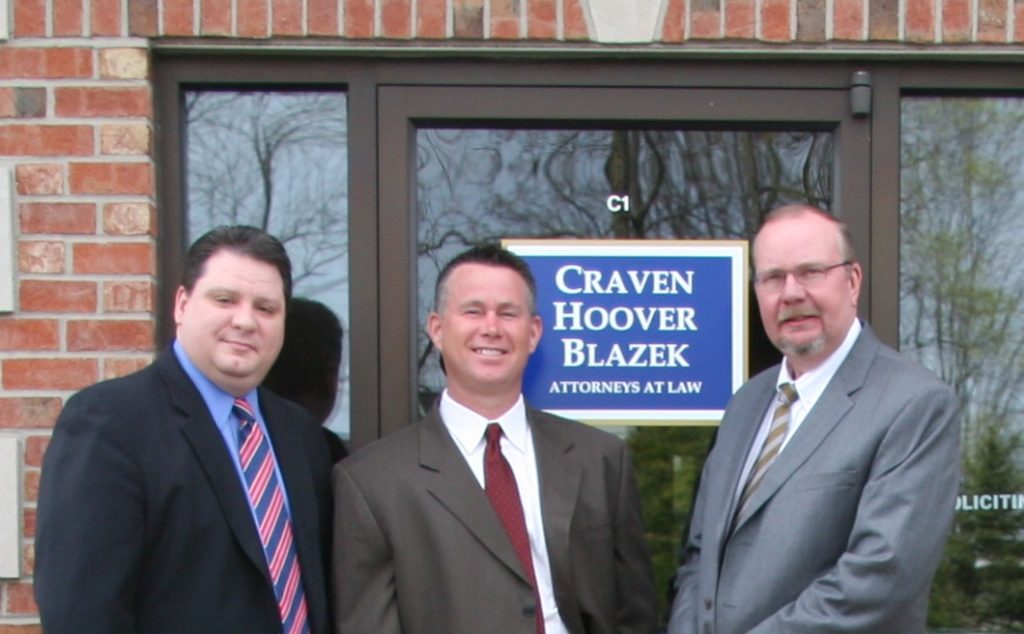
Call The Law Office of Craven, Hoover, and Blazek P.C. at 317-881-2700 for help filing a negligent action claim in Indianapolis, Indiana. Our seasoned accident lawyers, Daniel Craven, Ralph Hoover, and Keith Blazek, can help you recover the full and fair compensation you deserve after suffering a serious injury. We offer free initial consultations and never collect lawyer fees unless we prevail for you. Schedule your consultation before the statutes of limitations runs out on your claim.

Indianapolis Personal Injury Lawyers 317-881-2700

Did You Recently Lose a Loved One to a Wrongful Death?

The loss of a loved one is a very difficult time in any person’s life. But when a loved one’s passing is unjust, the severity of grief and suffering can be vastly deeper, and therefore, even more difficult to cope with. If a close family member, relative, child, or spouse recently died as a result of another’s negligence, you may be entitled to certain compensation for your losses and damages, including the emotional pain and suffering and lost income you have experienced since the passing of your family member.

Start by calling the Law Office of Craven, Hoover, and Blazek P.C. at 317-881-2700 for information about wrongful death personal injury claims in Indiana. Continue reading to learn how to get started.

Personal Injury Law Firm 317-881-2700

Indiana Wrongful Death Law

Under Indiana Code Title 34. Civil Law and Procedure § 34-23-1-1, “When the death of one is caused by the wrongful act or omission of another, the personal representative of the former may maintain an action therefor against the latter, if the former might have maintained an action had he or she, as the case may be, lived, against the latter for an injury for the same act or omission.” A “personal representative” might be a husband, wife, daughter, mother, son, grandchild, or any other person that is listed as a co-manager, owner, or speaker of the household. 

Statute of Limitations

In all cases of filing a civil claim against another person or entity, there is a legal time limit to do so, which is regulated by state law. These time limits differ from state to state and from case to case, but all statute of limitations begin on the day of the incident. Once the statute of limitations have expired, the opportunity of pursuing a claim does as well. 

When it comes to wrongful death statutes of limitations, Indiana Code § 34-23-1-1 goes on to say, “(…) the personal representative of the decedent within two (2) years, and the damages shall be in such an amount as may be determined by the court or jury, including, but not limited to, reasonable medical, hospital, funeral and burial expenses, and lost earnings of such deceased person resulting from said wrongful act or omission.”

However, claims against governmental entities have prerequisites that must be met and a much shorter deadline so obtaining a personal injury attorney quickly is vital, especially considering that a complete investigation should be done immediately.

Wrongful Death Claims

Because of the statute of limitations and other contributing factors, it is important to act fast following a wrongful death in the family. To get started, schedule a free initial consultation with one of our experienced Indiana personal injury lawyers who focuse on wrongful death claims. There is no fee for this consultation, nor will you have to pay any upfront lawyer fees. You only pay your lawyer if they recover a settlement for you.

The following compensation is recoverable if your wrongful death claim is successful:

✔ Funeral Arrangement Expenses
✔ Burial Arrangement Expenses
✔ Hospital and Medical Bills
✔ Lost Wages
✔ Lost Benefits
✔ And More

How to Get Started

Talk to an Indianapolis wrongful death lawyer for help with your claim, today. Contact the Law Office of Craven, Hoover, and Blazek P.C. at 317-881-2700 to learn the best course of legal action after your devastating loss. We represent injured persons throughout the State of Indiana regardless of how the injury occurred, so long as the person was injured as a result of the negligence or “failure to use reasonable care” of another person or entity. We also offer free initial consultations and never collect lawyer fees unless we win a settlement or verdict.

Indianapolis Personal Injury Lawyers 317-881-2700

How Much Compensation Will I Get in a Personal Injury Lawsuit?

If you have been seriously hurt in an accident as a result of another’s negligence, you are most likely entitled to compensation for your subsequent damages and losses. You will need to retain the services of a seasoned personal injury law firm that can prove in a court of law that you are owed remuneration for your medical bills, hospital bills, lost wages, pain and suffering, and all other related losses, and ultimately, ensure that you receive a full and fair settlement. But you are probably eager to know how much can you expect to get paid in a personal injury settlement? Well the answer is much more complex, and varies from case to case.

Continue reading to learn which factors and formulas are used by the court and jury to determine what a fair settlement for a personal injury lawsuit would be, as well as, what you can expect to pay your personal injury lawyer once you are awarded compensation.

Personal Injury Attorney Law Firm 317-881-2700

Damages and Losses After a Personal Injury

Under tort law, when a person is a victim of a civil wrong-doing, a court or jury may award damages to compensate them for their injuries and losses. Damages vary, but commonly include lost wages, medical expenses, hospital bills, pain and suffering, mental anguish, prolonged rehabilitation, loss of consortium, and various other economic and non-economic losses.  

Economic damages are for tangible financial losses, like bills and lost wages, while non-economic damages might include pain and suffering, mental anguish or illness (i.e. depression, anxiety, etc.), loss of companionship (i.e., wrongful death, brain damage to loved one, paralysis of loved one that changes or prohibits the relationship, etc.), long-term medical care or medication dependencies, diminished quality of life, permanent disabilities, loss of ability to work, and more.

Assessing the amount of damages is often a difficult and complex process since many variables influence the final determination. A court or jury must consider the losses or injuries of a victim’s person, property, and overall quality of life. Personal injury cases generally address three primary issues that ultimately determine what the fair and full payment would be for a victim’s injuries, which are as follows:

LIABILITY – Establishing the degree of negligence of another person or entity;

DAMAGES – The amount of compensation that fairly acknowledges compensates for and covers a person’s injuries;

SOURCE OF COLLECTIONS – Insurance or additional assets to cover the award of damages;

Paying for a Lawyer

If you have asked yourself if you can afford an accident lawyer, the answer is, “yes!” Anyone can afford a personal injury attorney if they have a valid claim and case. They can even have their claim examined by a licensed attorney for free, to determine if they have a valid claim. You see, most personal injury law firms do not collect attorney fees unless they recover a settlement for you. This is why they offer free initial consultations. The consultation gives them an opportunity to discuss a client’s case without obligating them or you to pay anything out of pocket.

Following the consultation, a personal injury lawyer will evaluate the client’s claim to determine if the case is strong enough to pursue. If they believe their client is entitled to compensation, they will take on their case and work toward obtaining a full and fair settlement for their damages. The more a lawyer can recover for you, the more they get paid, which motivates them to work even harder on clients’ cases. A personal injury attorney makes it easy for victims to pursue an accident claim or lawsuit, without risking thousands of dollars of their own money and the chance they may lose their case. 

How to Get Started on Your Claim Today

Call The Law Office of Craven, Hoover, and Blazek P.C. at 317-881-2700 to make a personal injury claim anywhere in Indiana. Our firm is located in Indianapolis, Indiana. Seasoned attorneys, Daniel Craven, Ralph Hoover, and Keith Blazek, have a focus on accident law and retain extensive trial and litigation experience. Not only do we offer free initial consultations, we never collect lawyer fees unless we recover a settlement for you. Get started by scheduling your consultation, today.

Indianapolis Personal Injury Lawyers 317-881-2700

An Overview of Personal Injury Basics

Personal injuries fall under an area of law known as tort law. Under tort law, anyone injured at not fault of their own, but rather, the fault of another person or entity, is entitled to recover compensation for various types of damages. If you or someone you love has suffered losses as a result of a negligent accident, continue reading to learn some basic terms and information that will help you get started on your personal injury claim.

Indiana Personal Injury Attorneys 317-881-2700

Statute of Limitations

An important factor to consider when facing a potential personal injury claim is time. There are set time limits on how long a personal injury victim has to make a claim against a negligent, at-fault party. The amount of time set for such cases depends on a few factors, primarily the type of injury and state laws. See our blog, “Can a Personal Injury Statute of Limitations Be Extended?” to learn more about personal injury claim timelines.

Negligence

Under tort law, negligence is defined as a failure to possess or demonstrate a level of care, expected by all persons under law, which protects another person, reputation, or property from harm or foreseeable and unreasonable risks. The burden of proving negligence in a personal injury case falls onto the plaintiff, who must show that the defendant 1) owed a legal duty of care, 2) breached that duty of care, 3) the breach directly caused the accident, and 4) the accident resulted in losses and damages.

Damages and Losses

There are various types of economic losses a victim can suffer as a result of a serious accident or injury. Common damages awarded to personal injury victims include compensatory, nominal, and punitive damages such as hospital bills, medical expenses, lost wages, loss of future earnings, physical disablement, lost ability to work, and more. See our blog, “Types of Damages Awarded for Victims of Injury” to learn more about personal injury damages.

Pain and Suffering

Also referred to as hedonic damages, pain and suffering is a legal term used in tort law that describes the cumulative non-physical injuries, or emotional and mental trauma and burdens, experienced by the victims as a result of the accident and injuries. Non-physical injuries might include fear, anxiety, grief, worry, insomnia, a loss of enjoyment for one’s life, loss of consortium, wrongful death, and more.

Personal Injury Claims

In order to recover the full and fair amount of compensation you deserve after being seriously injured in an accident that was not your fault, it is best to make a personal injury claim. In order to present an effective case, it is wise to seek out professional legal representation for help navigating and negotiating your claim. See our blog, “How to Make a Personal Injury Claim in Indiana” to learn how to get started. Or simply scroll below to skip the hassle and speak directly to seasoned Indianapolis personal injury lawyers who can help.

Indianapolis Personal Injury Lawyers

Contact the Law Office of Craven, Hoover, and Blazek P.C. at 317-881-2700, located in Indianapolis, Indiana, if you or a loved one was recently hurt in a serious accident in Indiana. Our personal injury attorneys offer free initial consultations to sit down and assess your case. If we feel that you are entitled to compensation for your injuries, we begin working on your case immediately, without charging a dime. If we do not prevail for you, you will not owe our law firm any payment. We are the strong voice and immediate action you need for your personal injury lawsuit.

Indianapolis Personal Injury Lawyers 317-881-2700

Who’s Liable for a Drowning Accident in a Private Swimming Pool?

Having a swimming pool on your property is a terrific luxury, but it also comes with a great deal of responsibility. Aside from regular maintenance and cleaning, pools encompass a wide scope of legal responsibilities as well. Not only is it important to understand your legal liability in owning a private swimming pool, it is also important to do what it takes to protect yourself from such liability.

If you do not take the proper precautions to ensure accidental drowning and other swimming pool-related accidents do not take place on your property, you could be held legally responsible for all subsequent damages and losses suffered by the victim and their family. Continue reading to learn what you need to know about swimming pool safety and liability.

Indianapolis Personal Injury Attorneys
Indianapolis Personal Injury Attorneys 317-881-2700

Swimming Pool Laws

There are laws set forth in every state governing both private and public swimming pools, from simple permit and license regulations, to zoning laws, construction, and more. These laws differ among each state, so it is strongly encouraged to review your county’s swimming pool laws before installing one on your property or visiting another’s swimming pool. Here in Indiana, there are several laws regarding swimming pools. For instance, pools must be at least 10 feet away from any other building or house, and must remain in the side or back yard of a private residence.

Swimming Pool Accidents and Liability

Common swimming pool accidents than an owner would be held liable for include drowning, orthopedic injuries, slip and fall accidents, concussions, and even electrocution accidents. Here in Indiana, the owner of a private swimming pool is the party liable for any accidents that happen on their property, whether they are present and supervising the use of the pool at the time of the incident or not. Not only must a swimming pool owner take the proper precautions to ensure accidents do not take place on their property while they are home, they must also protect the possibility of trespassers or those who use their pool without permission.

You see, a pool owner might also be found liable for an accident in their swimming pool if they did not take the proper actions to lock their pool up from the outside public. In the case that a group of kids use a private swimming pool, and someone drowns, the owner could be held liable if the gate was not locked, even though they did not give the kids permission to use their pool. In fact, a similar situation could also fall under attractive nuisance laws, which hold an owner liable in the case that their pool is visible to the public and has features that attract trespassers, such as twisting slides, giant figurines, or cascading waterfalls. This also includes pools with easy-access or within public view.

For these reasons, most states have ordinances that require pool owners to install fencing around their property. Posting a sign is not usually enough to evade liability in a swimming pool accident, so pool owners should take other precautions as well, such as:

☑ Having high fences that lock from within;
☑ Monitoring alcohol consumption among guests;
☑ Supervising kids and minors at all times;
☑ Installing motion sensing lighting outside;
☑ Installing video surveillance;
☑ Adhering to all state and federal laws governing private pools;

How to Make a Swimming Pool Accident Claim

If you are a victim of a swimming pool accident in Indiana, contact the Law Office of Craven, Hoover, and Blazek P.C. at 317-881-2700 as soon as possible. Our seasoned personal injury attorneys offer free initial consultations to sit down and assess your case. If we feel that you are entitled to compensation for your injuries, we begin working on your case immediately, without charging any upfront fees. If we do not prevail for you, you will not owe our law firm any payment. We are the strong voice and immediate action you need for your personal injury lawsuit.

Indianapolis Personal Injury Lawyers 317-881-2700

Types of Legal Liability for Driving Another’s Vehicle

Whether you loan out your vehicle to another person, or you drive a vehicle other than your own, there are several types of legal liability that might be at play. The scope of such liability differs among states, and from case to case, however, there are always laws surrounding the operation of a vehicle in one way or another.

Continue reading to learn which types of legal liability you should be aware of when it comes to operating another’s car.

Indianapolis Car Accident Attorneys 317-881-2700

Children and Family Members

It is very common for parents and guardians to allow teens to operate the family car. Common legal principles that surround loaning the family car to a child or relative include the family purpose doctrine, negligent entrustment, and vicarious liability. The set of laws that apply depend on whether or not the driver of your vehicle is your child or family member.

The Family Purpose Doctrine

If a family member drives your car, whether they were given permission or not, the family purpose doctrine might be relevant in your state. Under United States common law, this doctrine is a statute that holds the owner of a motor vehicle accountable for any damages that results to others when a family member operates their vehicle. This doctrine applies regardless if the owner gave the family member permission or not.

Negligent Entrustment

Negligent entrustment is a legal liability that might come into play when a child operates your vehicle. As a parent or guardian, also called the “entruster”, the law might deem you negligent and responsible for any damages that result to others if you permit your child to operate the family car with the knowledge that they are unlicensed, inexperienced, reckless, inadequate at driving, or unreliable.

Vicarious Liability

In the case that you were not driving your vehicle, and/or present at the time of the accident, there is a possibility that the law could deem you liable for damages in a car accident. This legal principle is mostly applied in cases in which parents or guardians lend their vehicles to their children, or have their children’s vehicles in their name. For instance, if your teenager or child causes a car accident that causes damages to others, you may be held liable for damages.

Company Vehicles and Others Outside of Family

Aside from children and family, it is a common occurrence to allow others to operate a vehicle that you own. This is such the case for employees who drive a company car, or for individuals who loan their cars to friends or co-workers. The types of liability that might apply to these situations are negligent entrustment and vicarious liability.

When you are operating a company vehicle while performing work-related duties, and an accident ensures that results in damages to others, employers are generally liable under law. In such cases, vicarious liability law would typically apply.

If you allow an employee to operate your vehicle, which is not a company vehicle, but rather, your own private vehicle, the principles of negligent entrustment might also be applied if they cause an accident that results in damages to others.

In the case that you allow another person that is not a family member to operate your vehicle, such as a friend or coworker, negligent entrustment is the type of liability that might be applied if an accident that results in damages to others occurs.

Were You Injured in a Car Accident?

Call Craven, Hoover, and Blazek P.C. at 317-881-2700 to schedule a free consultation with a licensed Indianapolis car accident attorney who can determine the best strategies for your case. Not only does our law firm offer free consultations, we never collect lawyer fees unless we prevail for you! Call 317-881-2700 to get started on your financial recovery, today.  We represent injured persons throughout Indiana.

Indianapolis Personal Injury Lawyers 317-881-2700

Are Personal Injury Lawyers Expensive?

If you are a recent victim of an accident, do not let your income or cash availability stop you from hiring a personal injury lawyer to represent you in your claim for fair compensation. Regardless of employment, income, and cash availability, anyone can afford to retain the services of a personal injury law firm. Furthermore, virtually all personal injury offices offer free, first-time consultations in order to have your case reviewed by a licensed accident attorney.

Continue reading to learn more about paying for a personal injury lawyer, including how much they collect for attorney fees and most importantly, how to get started as soon as today!

Indiana Personal Injury Lawyers 317-881-2700

Lawyer Fees

Here in the United States, the most common payment arrangements used by law firms include hourly fees, flat fees, fee retainers, and contingency fees. When it comes to personal injury representation, the contingency fee is the most common fee arrangement used. Under a contingency-fee basis, a client does not pay anything upfront in terms of lawyer fees. Instead, clients only have to pay if a settlement is recovered for them. This is a great advantage for clients since they normally do not have the cash available, to pay the attorney fees, especially after a fall when a person is incurring medical bills and may be off work for a time.

Upon recovering a settlement or judgment for a client, a personal injury lawyer will collect a prearranged percentage previously agreed upon in the signing of the client-attorney contract. Commonly, lawyers retain around 1/3rd of the total settlement, but this percentage varies among firms. Always ask your personal injury lawyer about their payment arrangements and price tiers at your initial consultation. In fact, read our blog, “The First Questions You Should Ask About Your Personal Injury” to learn how to prepare for your first meeting.

What You Might Have to Pay For Yourself

Although personal injury lawyers work on a contingent basis, you might be obligated to pay additional fees related to your case. Such fees may include court costs, witness testimonies, expert panelists, filing fees, private investigation costs, background checks, and more. Most law firms will front these costs for a client until the time of settlement, at which point those fees/expenses would be paid out of the total settlement.  Fortunately, these costs usually do not amount to a lot, and tend to stay within an affordable price range; especially when you consider the settlement you are potentially recovering for your total damages and losses that resulted from your accident. 

How to Get Started on a Personal Injury Claim

Call the Law Office of Craven, Hoover, and Blazek P.C. at 317-881-2700 to schedule a free initial consultation with a licensed personal injury attorney in Indianapolis, Indiana. Seasoned lawyers, Daniel Craven, Ralph Hoover, and Keith Blazek, are motivated to help you recover the full and fair compensation you deserve after being injured in a serious accident. Best of all, we only collect lawyer fees if we obtain a settlement for you!

Indianapolis Personal Injury Lawyers 317-881-2700