Now Users Can Access an Abundant Inventory of Helpful Topics and Frequently Asked Questions About Personal Injury Law and More! Get Useful Tips, Advice, Facts, and Answers Regarding Serious Accidents, Injuries, and Compensation!
Indianapolis Accident Lawyers 317-881-2700
Here at the Law Office of Craven, Hoover, and Blazek P.C., we are proud to announce that today marks our 100th blog entry on our website! For nearly two years, we have committed to adding new and interesting topics to our blog site with the intention of providing helpful information for anyone in need.
Now, end-users can access several topics and categories of personal injury law for answers and guidance after being seriously injured. Peruse blogs regarding workplace safety or workers’ compensation, as well as, personal injury facts, tips for safer driving, insurance injury claims, who’s at fault for an accident, and much more!
We strive to be an effective and efficient source of information for anyone looking for answers to general personal injury questions, or topics about general personal injury law. And as for our clients, we work even harder to make sure they are fully-informed during their claim process by avoiding confusing legal jargon and only using a legal language that everyone can clearly understand.
Give Us a Call Today!
Personal Injury Law Firm 317-881-2700
Call our office today at 317-881-2700 if you have been injured in an accident recently, and have questions about filing a claim, insurance settlements, or receiving compensation. Seasoned attorneys, Daniel Craven, Ralph Hoover, and Keith Blazek are happy to discuss your legal options after being hurt in an accident. We offer free initial consultations to hear your case and determine if you have a valid legal claim at no obligation to you.
And if we believe you are entitled to compensation for your damages and losses, we will represent you without collection any upfront fees. You only pay us if we prevail for you! Visit our blog page for additional information about personal injury claims and more. Or call 317-881-2700 and speak with a friendly and knowledgeable legal attendant about scheduling an appointment with an Indianapolis personal injury attorney that truly cares.
The burning question everyone wants to know after being involved in a serious accident or traumatic event is, “Whose fault was it?” This is where an experienced injury lawyer can help. They look at all the facts surrounding the accident and everyone involved, and study the evidence to proficiently determine the negligent party. From there, they work hard to secure the rights of their clients and recover ample compensation for their pain, suffering, and tangible losses.
One of the most important tools used in personal injury cases to determine who was negligent, and to what extent, is a foreseeability test. Continue reading to learn about foreseeability tests and how they are used to determine proximate cause in a personal injury case.
Negligence
Everyone has a legal “duty of care” to uphold, meaning they are responsible for not causing harm or injury to another person. This is the law in the United States. Negligence is the act of breaching that duty, and proving it is the first factor in personal injury cases. In order for a person to be guilty of negligence in a personal injury case, the act that caused the harm or injury must be foreseeable. This also relates to proximate cause, since the concept of foreseeability is used to determine the legal cause of injury.
Foreseeability
Personal Injury Lawyers 317-881-2700
The law uses foreseeability tests to determine legal causation, or proximate cause, in personal injury cases. They are basically questions that are used as a formula for determining whether or not a person should have “reasonably foreseen” the harmful consequences of their actions. The law does, however, make certain distinctions based on the foreseeability of the type of harm and the manner of which the harm occurred; but not the extent of harm. Terms for these concepts include: unforeseeable type of
harm and unforeseeable manner of harm.
Unforeseeable Type of Harm
A person is not liable for injuries and accidents to others that occur under unlikely circumstances, or events that are generally unforeseeable. For example, if a person dropped a bag of marbles on the ground and failed to clean them up, causing another person to slip and injure themselves, they can be legally liable since slipping on marbles is a foreseeable consequence. But if the marbles reflect in the sun in a way that causes a spark and subsequent fire, they would not be liable for injuries caused by the fire since a fire is not a foreseeable consequence of marbles left on the ground. Of course there are several exceptions to these concepts depending on the various unique circumstances of a person’s case. This is why it is imperative to hire a personal injury lawyer to manage your case and proceedings and recover full and fair compensation for your damages and losses.
Unforeseeable Manner of Harm
In the event that a person acts negligently in a way that does NOT harm another person, but then a superseding event makes the initial negligence harmful to others, the person may not be held liable for the superseding event and subsequent damages. For example, if a person leaves a candle burning while they are at school, and an earthquake occurs causing the candle to fall over and catch everything on fire, the person may not be held liable for the damages caused by the fire since a second event caused the candle to fall over and catch fire; even though it can be argued by opposing parties that the initial act of leaving a candle burning is negligent.
Again, it is important to have an experienced personal injury lawyer on your team to protect you against low insurance settlements and tricky lawsuit proceedings. They have the knowledge, experience, and resources needed to recover a fair settlement for your losses.
Craven, Hoover, and Blazek P.C.
Personal Injury Attorneys 317-881-2700
Call Craven, Hoover, and Blazek P.C. at 317-881-2700 to find experienced personal injury lawyers in Indianapolis, Indiana. Attorneys Daniel Craven, Ralph Hoover, and Keith Blazek have extensive trial and litigation experience, and will fight to recover the full and fair amount of compensation you and your family deserves after being injured in an accident. We offer free initial consultations and work on a contingency-fee basis, meaning if we don’t recover for you, you owe us nothing. Call 317-881-2700 to schedule a consultation with a licensed personal injury
attorney in Indianapolis, IN today.
If you or a loved one was recently hurt in a personal injury accident, it is vital to take the right steps directly after the incident to ensure and secure your rights down the line. For very serious accidents and injuries (brain injuries, concussions, spinal cord injuries, etc.), the most important step you can take is to receive immediate medical care. Once you are stable, the process can continue. Continue reading to learn what to do after being involved in a person injury accident, and how to get started recovering your expenses.
What to Do After a Personal Injury Accident
Be sure to always have a camera on you at all times. A disposable camera should always be kept in the glove compartment of your vehicle, and many people these days have cameras on their wireless phones. Capturing the injury on camera right after it occurs is a crucial step toward defending yourself in a personal injury case. Whether it’s a motor vehicle accident or a slip, trip, and fall, take as many pictures as you can of the environment, accident location, the injured area of the body (if applicable), and anything else that may have contributed to the incident. If you are unable to take pictures, ask the person with you to take them, or if alone, a friendly bystander. You will also want to ask about any surveillance cameras and videos so you can request a copy of your incident if it was recorded.
Personal Injury Lawyers 317-881-2700
The next step is to gather as much information from witnesses and persons involved. Get the names, addresses, emails, and phone numbers of all the people that saw the accident occur, and of the people who were involved. This can include a store manager, bystanders, customers, passengers in a car, and any other witnesses. Having proof of your story through the statements of witnesses will strengthen a case. You will need even more information from every person involved in the accident. Be sure to collect standard contact information, as well as drivers’ license numbers and insurance information.
When all pertinent information is collected, it is time to contact the police. Communicate all the necessary information and timeline of the accident. Be sure to tell them of any pain or discomfort you are experiencing. They will assist you with getting medical attention.
The final step to take after being wrongly injured is to contact a licensed accident attorney to file a personal injury claim in your city or county. A personal injury lawyer can recover the full and fair compensation you deserve after experiencing a traumatic injury or accident as a result of another person’s negligence.
File a Personal Injury Claim in Indianapolis
Personal Injury Lawyers 317-881-2700
Call The Law Office of Craven, Hoover, and Blazek P.C. at 317-881-2700 to file a personal injury claim in Indianapolis. Licensed accident attorneys, Daniel Craven, Ralph Hoover, and Keith Blazek are eager to win your case and obtain a full and fair settlement for your losses. We offer free initial consultations and never collect lawyer fees unless we win compensation for you. Call 317-881-2700 to schedule your complimentary consultation with a seasoned personal injury attorney in Indianapolis, IN today.
Prima facie, pronounced “pree-muh fay-shee”, is a common legal term used in criminal and civil law cases. Literally translated, this term means “at first face” or at first sight; the apparent nature of something at the first look. Prima facie can refer to either a case or a piece of evidence, depending on the crime or misconduct. Continue reading to learn what a prima facie case is and examples of such cases.
Indianapolis Personal Injury Lawyers 317-881-2700
An Open and Shut Case
Prima facie is a legal doctrine that signifies a situation in which sufficient evidence is apparent, upon initial observation, to charge or convict a person before any further investigation takes place. In terms of lawsuits, it is colloquially-referred to as an “open and shut” case. Although it is possible for opposing parties to present enough conflicting evidence at trial to refute the prima facie claims against them, most often, a prima facie case is a case where so much obvious evidence exists “at first sight”, Grand Jurys can indict someone for a crime.
In personal injury lawsuits, plaintiffs hold the burden of proof, meaning they must prove their case to get the desired verdict. They have to present a prima facie case to a court, providing evidence to support their claim. If a plaintiff can do this successfully, then the burden of proof shifts to the opposing party. If they cannot, then the case is in jeopardy of being dismissed.
There are several possibilities of prima facie cases. One example of a prima facie case is check fraud. If a person is writing bad checks, or steals another person’s checkbook and writes checks with it, they are blatantly guilty of check fraud. The bad checks are prima facie evidence of their crime, while the paper trail they left behind them supports a prima facie case.
Another example of a prima facie case is drunk driving. If a person is pulled over for reckless driving and then tests over the legal limit for alcohol, their recorded reckless driving and blood alcohol content (BAC) is enough evidence to prove they were illegally operating a vehicle under the influence of alcohol. Even biased pre-employment tests can be a prima facie case, since the actual test is available as evidence that proves the prejudice of its contents.
Craven, Hoover, and Blazek P.C.
Personal Injury Lawyers 317-881-2700
Call Craven, Hoover, and Blazek P.C. at 317-881-2700 if you have been seriously injured in an accident that was no fault of your own. Licensed accident attorneys, Daniel Craven, Ralph Hoover, and Keith Blazek, have extensive trial and litigation experience in Indiana. They are the Indianapolis personal injury lawyers that can prevail for you! We offer free initial consultations and never collect attorney fees unless we win your case. Call 317-881-2700 and schedule your complimentary appointment to discuss your recent accident with a knowledgeable personal injury attorney in Indianapolis, IN today.
Simply put: gross negligence, in terms of a civil injury case, suggests that an at-fault party was not just negligent and careless, but also, transparently reckless. Negligence is ignoring a certain standard of care or breaching an appointed duty of care, and as a result, an innocent victim is injured or harmed in some way. Take note that negligence doesn’t imply malicious intent or evilness, but rather, careless.
This concept is generally well-recognized and understood by adults. But when a person’s carelessness is exaggerated to the point of recklessness, it is considered a separate type of negligence called gross negligence. Continue reading to learn more about the meaning of gross negligence and how it is applied to personal injury cases and claims.
Gross Negligence Claims
Recklessness can be colloquially-defined as unreasonable and/or deliberate misconduct of a person. It is an act that upsets or alarms our society’s morals. There are significant, but hidden, differences between standard negligence and gross negligence. For example, if a driver is texting and subsequently rear-ends another vehicle at a stop sign, this is considered standard negligence. Whereas, if a person is speeding in an attempt to race other vehicles on the road, subsequently causing an accident that harms another driver and their passengers, this can be considered gross negligence.
Additional Examples of Gross Negligence:
• Hit and Run Cases
• Assault and/or Battery
• Sex Crimes
• Doctor Amputating/Removing Incorrect Limb or Organ
• Surgeon Leaving Foreign Object Inside Patient (i.e. bandages, thread, etc.)
• Permitting an Underage Driver to Operate a Vehicle
• Unsupervised Infants/Toddlers
• Wrongful Death Cases
• And More
Personal injury, as well as, property damage are common consequences of gross negligent behaviors. Since gross negligence is a blatant disregard for the law, or for personal responsibility to practice due care, it is common for punitive damages to be awarded to victims of such negligence, in addition to compensation for their losses and injuries. Contact a personal injury law firm if you or a loved one was recently injured by the negligent behaviors of another person or entity. You may be entitled to compensation for your losses.
Craven, Hoover, and Blazek P.C.
Personal Injury Law Firm 317-881-2700
Call Craven, Hoover, and Blazek P.C. at 317-881-2700 for information about filing a personal injury claim in Indianapolis, Indiana. Accident attorneys, Daniel Craven, Ralph Hoover, and Keith Blazek are seasoned Indianapolis personal injury lawyers with extensive trial and litigation experience. We offer free initial consultations and never collect attorney fees unless we recover for you. Call 317-881-2700 to schedule a free consultation with a licensed personal injury attorney in Indianapolis, IN today.
Slip, trip, and fall claims are prevalent in the world of personal injury law. Accidents like this happen when a person slips, trips, or falls, and seriously injures themselves, as a result of a particular hazard on other person or company’s property. Several hazards can cause these kinds of accidents to occur on private or public property, such as puddles, spills, leaks, torn carpeting, poor lighting, and more.
If you or a loved one was recently injured in a slip and fall accident on another person’s property, it is vital to consult a reputable and experienced personal injury lawyer that concentrates on these types of accident cases. They retain the proper resources and knowledge, as well as, litigation and trial experience, to represent slip and fall victims in order to recover full and fair compensation for their damages.
Continue reading for more free advice regarding slip and fall injury accidents, claims, and lawsuits.
Slip and Fall Accident Claims
Anyone who is seriously injured from a slip and fall accident on a property other than their own could very well have a valid personal injury claim. Determining a claim’s validity and proving fault involves several variables and extensive investigation. A judge, jury, or insurance company must be convinced that the owner of the property was negligent in some way that caused the hazardous condition to exist, and that the victim used reasonable care and could not foresee the hazardous, thus preventing injury. Again, many variables goes into finding fault, proving fault, and more. This is why it is vital to hire a proficient personal injury law firm to facilitate a slip and fall case effectively.
Indianapolis Slip and Fall Lawyers 317-881-2700
Property owners have a responsibility to keep their premises safe for visitors and guests. They can be at-fault for a slip and fall accident if they knew about, or should’ve known about, a hazardous condition and neglected to address it. However, there are circumstances to slip and fall accidents in which the victim is at-fault and does not have a valid legal claim against another property or company. An example of this situation would be if a woman wearing high-heels on a snowy day walks into a grocery store displaying “wet floor” signs everywhere happens to slip and fall in a puddle of melted ice.
She would have a very weak case because she did not use reasonable care by wearing unfitting shoes in poor weather, as well as, ignoring wet floor signs that indicated a potentially hazardous condition. The grocery store did their part in this example by displaying wet floor signs to warn customers that the floor is slippery and to walk with caution. And there are certain elements in the law that protect property owners, under certain circumstances, from hazardous conditions caused by weather, or conditions they cannot reasonably prevent.
Filing a Slip and Fall Claim
If you or a loved one recently suffered serious injuries as a result of a slip and fall accident on another person’s property, you have the option of filing a slip and fall claim. During this filing process, evidence will be requested to prove that the owner of the property should have known, or did know, about the hazard that caused the accident to occur. To do this, hire a personal injury attorney that has experience in slip and fall lawsuits. They will provide comprehensive representation for all aspects of your slip and fall lawsuit. They can obtain compensation for damages related to your accident and injuries.
As for property owners, it is strongly encouraged to purchase insurance policies that protect you from paying out-of-pocket for slip and fall accident settlements. This is especially important for commercial properties, business owners, and offices. In addition to third-party insurance, simply implementing certain strategies and precautions can better protect visitors from harm, and safeguard property owners in the case of a slip and fall accident.
Craven, Hoover, and Blazek P.C.
Call Craven, Hoover, and Blazek P.C. at 317-881-2700 to file a slip and fall accident claim in Indianapolis, Indiana. Attorneys Daniel Craven, Ralph Hoover, and Keith Blazek, as well as their proficient legal teams, are extensively experienced in slip and fall injury cases. They are happy to assess your case and determine if you have a valid legal claim. They offer free initial consultations and never collect lawyer fees unless they recover the full and fair compensation you and your family deserves. Call 317-881-2700 to schedule your free initial consultation today, and learn your rights following a slip and fall accident in Indianapolis, IN.
Secondary liability is also referred to as indirect infringement. It is best defined as a legal obligation, forcing an individual to assume responsibility for another person’s act or behavior. Examples of secondary liabilities include principle liability, employers’ liability and parental liability. There are several other types as well, such as ecclesiastical corporation liability, enterprise liability, and much more; but these cases are generally infrequent and more complex.
The more common types of secondary liability are contributory liability and vicarious liability. These are the primary cases of secondary liability seen in courts today. No matter which type of secondary liability case in question, the underlying factor for each is indirect infringement. Continue reading to learn more about vicarious and contributory liabilities, and where to find professional legal counsel you can trust.
Vicarious Liability
You will find vicarious liability under respondeat superior doctrine, under common law. It decrees the legal responsibilities of any person in a superior role, such as leaders, executives, managers, supervisors, bosses, directors, whole corporations, companies, and more. It makes clear that they are legally responsible for the actions of their teams or employees. An example of a vicarious liability case would be if a parent or guardian fails to properly supervise their child, allowing the child to access the home’s handgun and accidentally shooting and injuring another person. The parents would be held legally accountable for their child’s actions, as well as, the victim’s damages.
Contributory Liability
Contributory liability holds a third party legally responsible for anothers actions, even though they were not actually committing an infringement directly. If a person has knowledge of, benefits from, enables, contributes, or influences another person’s transgression, they too can be held legally responsible under contributory liability. An example of contributory infringement would be if someone loans another person a gun, and that person uses the gun to commit a crime, the loaner of the gun can be held legally responsible for the infringements involving the gun under contributory liability.
Craven, Hoover, and Blazek P.C.
Personal Injury Attorneys 317-881-2700
Call Craven, Hoover, and Blazek P.C. at 317-881-2700 to learn your rights following a personal injury in Indianapolis, Indiana. Daniel Craven, and his partners, are licensed and experience accident attorneys that are eager to help victims and their families recover the full and fair compensation deserved. We offer free initial consultations and never collect lawyer fees unless we prevail for you. Call 317-881-2700 for personal injury claims in Indianapolis, IN today.
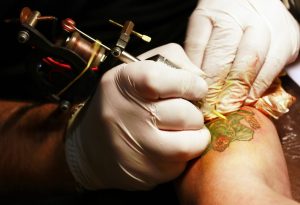
Getting a tattoo is a big decision; a decision that people usually put a lot of feeling and thought into before choosing one that feels right. For this reason, it is devastating to end up with a bad ink job, or worse, one that causes a person health complications and more. Many tattoo enthusiasts ask about tattoo shop’s liability in the case that a tattoo job goes wrong. Is a shop or artist legally accountable for a bad tattoo or injuries that result from it? The answer mainly depends on the question of negligence.
Was the tattoo parlor negligent in any way, and did that negligence cause a client personal injury or harm? This is the agenda that the law uses to identify whether or not a tattoo parlor is liable for a client’s damages.
Potential Risks and Complications
There are several risks that can arise from getting a tattoo, as there are with any type of process or procedure that involves bleeding or blood. If anything unsterilized gets into the blood stream, it can cause infections, disease, and more. If a needle is contaminated or unsterilized, it can be the means of infecting a person’s blood stream in this way. On top of disease and infection, other risks are possible as well.
Tattoo Parlor Liability
Personal Injury Lawyers 317-881-2700
Before a person gets their tattoo, they are asked to sign a consent form notifying them of all the possible risks that could take place. Because of this form, tattoo parlors are not entirely responsible for infections and other health complications that arise following an ink job. But this doesn’t mean they can’t be held liable at all. If something goes wrong after giving a tattoo to a client, the parlor can be legally liable under certain circumstances. If the artist or shop was negligent in anyway, and this negligence led to a client’s injury, then there would be a valid claim against them.
Here are some examples of possible tattoo parlor negligence:
• Failing to Inquire about a Client’s Allergies or Medical History
• Not Using Sterile Needles
• Improper Care and Upkeep of Equipment and Tools
• Failing to Use Proper Protective Equipment
• Working Under the Influence of Drugs and Alcohol
• Failing to Give Proper After-Care Instructions
• And More
It is important to discuss tattoo parlor legal claims with a licensed personal injury attorney. Tattoo parlors that have been guilty of personal injuries to clients often combat accusations of negligence by blaming the client in any way. They will argue that the client was in some way negligent and did not follow after-care instructions properly. Although this is often true, there are cases where a client is innocent and the parlor is the negligent party. To make this distinction accurately, it is highly recommended to outsource professional legal counsel. Most personal injury lawyers will even listen to your case, free of charge, and determine whether or not you have a valid claim.
Craven, Hoover, and Blazek P.C.
Personal Injury Lawyers 317-881-2700
Call Craven, Hoover, and Blazek P.C. at 317-881-2700 for information about tattoo shop lawsuits in Indianapolis, Indiana. Personal injury attorneys, Daniel Craven, Ralph Hoover, and Keith Blazek retain extensive knowledge and experience in accident law, litigation, and trial. We offer free initial consultations and never collect lawyer fees unless we win your settlement. Call 317-881-2700 to make an appointment with an Indianapolis personal injury lawyer, today.
There have been several recent reports regarding serious side effects caused by prescription drug use and treatment. Although most medications are helpful to patients, and can even save lives, some prescription meds have the potential to cause severe side effects; such as discomfort, medical complications, and even death. If you or a loved one has taken any prescription drugs that have caused serious or life-threatening side effects, you may be entitled to compensation for your damages.
It is important to consult a licensed Indianapolis product liability lawyer for accurate answers to your legal questions, and to receive trusted professional guidance for pursuing a lawsuit.
Prescription Drugs that Can Potentially Cause Serious Side Effects
Below is a list of several prescription medications that have been reported by patients to cause serious and potentially fatal side effects when consumed. If you have taken any of the listed medications below, consult a physician to reassure you are not in harm’s way. If you have taken one or more of the below listed drugs, and have experienced severe side effects, also consult a personal injury attorney. They retain the proper experience, knowledge, and resources to investigate a potential product liability claim or personal injury case for victims of prescription drug side effects.
Here are some prescription drugs and side effect-scenarios recently reported by the Federal Drug Administration (FDA):
Pradaxa
A blood thinning medication. Said to have caused excessive bleeding and even internal hemorrhaging in some users. This drug was meant to be a “perfect substitution” for a drug called Coumadin, but it is in fact a very dangerous drug.
Xarelto
Also a blood thinning medication. Meant to be an alternative to a drug called Warfarin. In contrast to Warfarin, Xarelto doesn’t have an antidote for its anti-clotting mechanism in the case of an emergency. This makes it a very risky and dangerous drug.
Byetta
An injectable medication meant to treat Type II Diabetes. It works in the gastrointestinal tract to increase the production of insulin in the gut. Has been reported with several complications. Similar meds include Victoza and Januvia.
Januvia
Manufactured by Merck Pharmaceuticals to also treat Type II Diabetes. Although the FDA approved this drug in 2006, it has been reported causing several medical complications since its public reveal in 2007.
GranuFlo
A dialysis medication for kidney disease. The FDA issued a Class I product recall, the most serious classes of recalls for medical products, because this drug is too dangerous and can cause death.
NaturaLyte
Also a dialysis medication that was CLASS I recalled by the FDA in 2012 for its dangerous side effects, including death.
Craven, Hoover, and Blazek P.C.
Personal Injury Lawyers 317-881-2700
Call Craven, Hoover, and Blazek P.C. at 317-881-2700 to speak with a licensed product liability lawyer in Indianapolis, Indiana. Attorney, Daniel Craven, can help you or your family recover compensation for a loved one’s death or personal injury after taking one of the above medications, or other harmful drug. We offer free initial consultations and never collect lawyer fees unless we win your settlement. Call 317-881-2700 to learn more about filing a product liability lawsuit in Indianapolis, IN today.
Social media is vastly popular all across the world. It can be a great outlet for personal thoughts, creativity, and emotions; however, when it comes to filing a personal injury claim, social media can be your case’s biggest threat. Once involved in an accident caused by another’s negligence, it is important to follow a certain series of steps to protect yourself.
Seeking immediate medical attention, filing a police report, never admitting any fault, and hiring a personal injury attorney are all part of the plan; but relinquishing details or making statements concerning your accident, online, is not.
Continue reading to learn some common social media mistakes to avoid so to not jeopardize your accident claim.
Personal Injury Lawsuits
Social media can quickly sabotage a personal injury lawsuit in several ways. With the new rise of various social media portals and websites, we are still learning how they affect other aspects of our lives. We must understand that social media can now be used as evidence against individuals. For example, an employer can reprimand an employee that calls in sick to work, and then posts pictures of themselves at the beach the same day. The same idea can be applied to lawsuits and trial. Social media pictures and posts can sometimes be used as evidence in a court of law. Here are the three most common mistakes personal injury victims can make after filing a lawsuit against a negligent party:
Disclosing Confidential Requisites of Settlements
Many lawsuits that settle out of court will require both parties to sign a non-disclosure agreement. This agreement is used to prevent either party, or family and friends of each party, to say anything about the opposing party. Leaking or revealing confidential terms of settlements and trial details can be illegal under this agreement. Many people do not think about their social media sites as a means of breaking such agreements, but they are indeed. It is mandatory to refrain from mentioning anything about a lawsuit or settlement, online or anywhere else.
Posting Incriminating Footage or Photography
Videos, pictures, and even blogs can be incriminating in a personal injury lawsuit. For instance, if a person is pursuing a slip and fall lawsuit after suffering a broken pelvis at work, the might not want to post a video of themselves practicing their golf swing anytime soon. The opposing insurance company or counsel will surely use this as evidence against an injury-compensation claim. Photos and pictures can also jeopardize an injury case.
Making Aggressive or Threatening Statements
It is very common for people to express negative and angry feelings online and on social media portals; however, in a personal injury case, this is a big mistake that can cost a person their case. Making threatening or intimidating statements about the opposing party is a bad idea. This is especially true for corporations. Although online social media posting is legal, it can gravely hurt a victim’s chances of recovering remuneration for their damages in a personal injury accident. It will only guarantee a case going to trial; where such videos, photos, and postings can be used against them in a court of law.
Personal Injury Law Firm
Indianapolis Personal Injury Lawyers 317-881-2700
Call Craven, Hoover, and Blazek P.C. at 317-881-2700 for more information about our personal injury law firm in Indianapolis, Indiana. Attorneys Daniel Craven, Ralph Hoover, and Keith Blazek are highly accomplished and well-versed in personal injury law. We offer free initial consultations to assess victims’ cases and determine their eligibility for compensation. We never collect attorney fees unless we prevail for you! Trust us to obtain full and fair compensation for a recent personal injury suffered at the hands of another’s negligence. Call 317-881-2700 and discuss
your personal injury with a licensed accident
lawyer in Indianapolis, IN today.