How Do I Sue a Store for My Injuries?

After being injured or suffering an accident at a retail store, it is important to learn your rights to compensation and legal protection, regardless of the extent of your damages and losses. Continue reading for a basic review on what you need to know about retail store lawsuits and personal injury claims, including and how to get started on your personal injury claim.

Indianapolis Slip and Fall Lawyers 317-881-2700

A Store’s Liability

Retail stores, like all public and private properties, have a duty of reasonable care to keep their environments free of hazards and unsafe conditions. In the case where a retail store neglects to uphold their legal standard of care, and as a result a person is injured on their premises, they could be held legally liable for the victim’s damages and losses and their insurance carrier would be responsible for paying any judgment or settlement on behalf of the retail store.

Under tort law, this legal principle is known as premise liability. The type or extent of liability a retail store can be subjected to really depends on broad spectrum of factors, especially whether or not the victim was invited onto the property, licensed to enter the property, or trespassed onto the property. The law classifies customers and guests as invitees, whether paying or not, therefore under law, all customers are entitled to protection under a reasonable care standard from harm while on the store property.

A property’s “premise” is defined as inside and outside of a property, including sidewalks, parking lots, and gates, staircases, parking garages, and more.  Where the lines are drawn is fact sensitive. Cases of premise liability can involve various types of accidents and injuries. The most common accidents are slip, trip, and fall accidents. Other common types of premise liability accidents include structural hazards, orthopedic injuries, burn injuries, violence and assault, food poisoning, animal attacks, pedestrian accidents, swimming pool accidents, and more.

Retail Store Accident Claims

If you were injured on the property of a retail store as a result of their negligence, you are entitled to certain legal rights, including compensation for your hospital bills, medical expenses, time lost at work, pain, suffering, and much more if caused as a result of the store’s failure to use reasonable care. Your first step to getting your accident claim started is to contact a seasoned personal injury lawyer in Indianapolis for an initial consultation.

During your initial consultation, you will discuss several points of your claim with an experienced attorney who can guide you on the best track toward financial recovery. Since first consultations are free, you do not have to worry about paying anything out of pocket to learn more about your legal rights. See our blog, “What to Bring to a Personal Injury Consultation” for details on how to prepare for your first meeting with an accident lawyer.

Top-Rated Accident Attorneys at Your Service

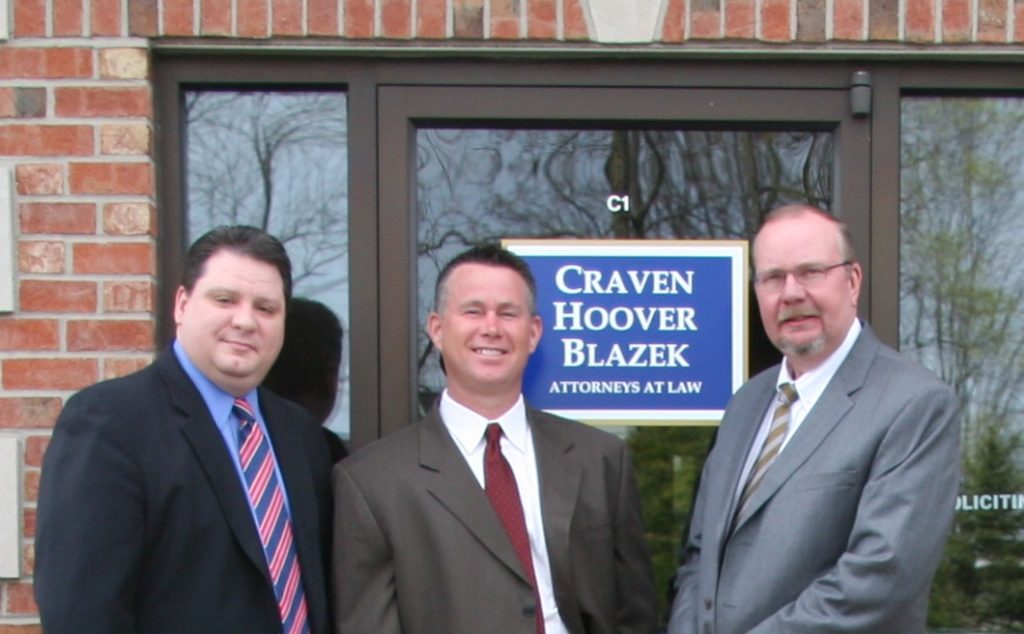
Call The Law Office of Craven, Hoover, and Blazek P.C. at 317-881-2700 to make a personal injury claim in Indiana. Our seasoned Indianapolis personal injury attorneys maintain a concentrated focus on accident law, and retain extensive trial and litigation experience with a written track record of success.  We have also successfully represented premises liability cases for big box stores like Walmart, Lowes, and Menards. Not only do we offer free initial consultations, we never collect lawyer fees unless we recover a settlement or judgment for you. Get started by scheduling your consultation, today.


Indianapolis Personal Injury Lawyers 317-881-2700

Common Examples of Negligent Supervision of Employees

Making a claim for negligent supervision is a common legal remedy used to compensate victims who were seriously injured or killed as a result of another’s failure to uphold their legal responsibility to carefully supervise a person. Those who are often given such responsibility over others include teachers, coaches, daycare providers, babysitters, youth group leaders, camp counselors, foster parents, nannies, and even custodial and non-custodial parents.

Although most cases of negligent supervision involve children and the elderly, it is possible for an employer to have similar liability for their staffs. Continue reading to learn some examples of employer negligent supervision, including what you should do if you are a victim of such carelessness.

Negligent Supervision Lawyer 317-881-2700

Negligent Supervision of Employees

Negligent supervision of employees occurs when an employer or manager fails to ensure that their staff is properly adhering to all company policies, regulations, and safety standards. This responsibility includes avoiding wrongful behaviors themselves, as well as preventing wrongful actions of their employees. If an employer does not take the proper steps or precautions to ensure these standards, and as a result, an employee or customer is injured, they can be held liable for all damage and losses resulting from the accident under the legal principle of negligent supervision.

Examples of Employee Negligent Supervision:

❖ An employer fails to provide and ensure proper training for jobs that require using dangerous weapons, chemicals, tools, or machinery.  Also if they fail to properly supervise the use of such objects.

❖ An employer allows or ignores sexual advances or harassment of another employee.

❖ An employer allows an employee to drive or operate machinery while under the influence of drugs or alcohol.

❖ An employer is responsible for monitoring an employee that works from a satellite office or at home, and that employee is conducting company-related scams or personal scams on company time or while using company property.

❖ An employer chooses to ignore acts of violence or threats in the workplace, or dismisses complaints from co-workers about such behavior.

❖ An employer allows a convicted child sex offender to be alone with minors.

Proving Negligence

As a victim of an accident that resulted from someone else’s disregard to supervise, you have the burden of proving their negligence. There are four elements to proving negligence in a personal injury case. It must be proven that:

➊ The defendant had a duty of care, or legal obligation to monitor the victim.

➋ The defendant failed to uphold their duty of care.

➌ The failure to uphold their duty of care caused the victim to suffer damages.

➍ The injury that occurred as a result of employer negligence was reasonably foreseeable.

In most situations, if a victim can prove that all four of these elements are true, they likely have a basis for a negligent supervision claim. Always talk to a licensed Indiana personal injury lawyer for advice on pursing a claim for negligent supervision. You could be entitled to compensation for your damages and losses.

Indianapolis Negligent Supervision Lawyers

Call Craven, Hoover, and Blazek P.C. at 317-881-2700 to schedule a free consultation with a licensed Indianapolis personal injury attorney who can determine the best strategies for your case. Not only does our law firm offer free consultations, we never collect lawyer fees unless we prevail for you! Call 317-881-2700 to get started on your financial recovery, today.  We represent injured persons throughout Indiana.

Indianapolis Personal Injury Lawyers 317-881-2700

Common Slip and Fall Code Violations

Here in Indiana, all entities and persons are legally required to construct and maintain their properties at a certain level of safety. This means that any place that welcomes the general public, such as office buildings, grocery stores, movie theaters, hotels, public parks, and malls, must take the proper actions, inactions, and precautions to ensure there are not any dangerous conditions on their premises. This legal principle is known as premise liability, and it is what you will want to learn more about in the case that you or someone you love is injured as a result of a municipal code violation.

Code violations are serious, as you have probably heard stories about accidents that happen when something is not “up to code” or within legal standards. One type of accident that tends to occur more often as a result of code violations are slip, trip, and fall accidents. Continue reading to review some of the most common slip and fall code violations seen in personal injury cases, as well as, what to do if you’ve been injured as a result of inadequate building codes in Indianapolis.

Indianapolis Premise Liability Attorneys 317-881-2700

Indiana Building Code Violations

⚖ Here in Indiana, you can peruse a comprehensive list of building codes by downloading the Indiana Amendments of IBC 13 document.

Common Slip and Fall Code Violations

There are several types of code violations; thousands in fact. But when it comes to slip, trip, and fall accidents, some of the most common violations behind them include:

✒ Missing or broken hand rails on stairs and slopes;
✒ Crumbled, warped, or rotted stairs;
✒ Unleveled curbs;
✒ Insufficient lighting (stairs, sidewalks, streets, etc.);
✒ No security for slick surfaces (slip-resistant mats, wet floors signs, etc.);
✒ Broken or missing downspouts that cause pooled water or ice patches;
✒ Insufficient or incorrect maintenance of elevators and escalators;
✒ Unmarked construction zones;
✒ Unmanaged ice and snow accumulations;
✒ Torn or ripped carpeting;
✒ Grease or chemical spills;

Premise Liability

A premise liability, slip and fall case will depend on several factors. But one of the most influential will be whether or not the property owner knew or should have known about the hazard that caused the accident, and whether or not the hazard was something that should have been reasonably foreseen to cause injury to a person.

For example, a landlord for an apartment building is informed that the lighting in the stairwell has gone out. The landlord fails to replace the light bulbs within a reasonable amount of time, and as a result, an elderly tenant trips and falls down them on their way to their apartment unit, and suffers serious injuries. In this case, the landlord would likely be held responsible for all damages and losses resulting from the tenant’s accident and subsequent injuries. This includes hospital bills, medical expenses, lost wages, pain and suffering, and more.

How to Get Legal Help For Your Slip and Fall Claim

If you or someone you loved was recently injured in a slip and fall accident, contact the Law Office of Craven, Hoover, and Blazek P.C. at 317-881-2700 before the Indiana statute of limitations runs out for your claim. Our Indianapolis slip and fall lawyers work hard to recover full and fair compensation for all injury victims.  We have even successfully represented premises liability cases for big box stores like Walmart, Lowes, and Menards. Contact us today to schedule a free initial consultation with a licensed and experienced premise liability attorney who can help you recover financially from a slip and fall accident.

Indianapolis Personal Injury Lawyers 317-881-2700

Who’s Liable for a Drowning Accident in a Private Swimming Pool?

Having a swimming pool on your property is a terrific luxury, but it also comes with a great deal of responsibility. Aside from regular maintenance and cleaning, pools encompass a wide scope of legal responsibilities as well. Not only is it important to understand your legal liability in owning a private swimming pool, it is also important to do what it takes to protect yourself from such liability.

If you do not take the proper precautions to ensure accidental drowning and other swimming pool-related accidents do not take place on your property, you could be held legally responsible for all subsequent damages and losses suffered by the victim and their family. Continue reading to learn what you need to know about swimming pool safety and liability.

Indianapolis Personal Injury Attorneys
Indianapolis Personal Injury Attorneys 317-881-2700

Swimming Pool Laws

There are laws set forth in every state governing both private and public swimming pools, from simple permit and license regulations, to zoning laws, construction, and more. These laws differ among each state, so it is strongly encouraged to review your county’s swimming pool laws before installing one on your property or visiting another’s swimming pool. Here in Indiana, there are several laws regarding swimming pools. For instance, pools must be at least 10 feet away from any other building or house, and must remain in the side or back yard of a private residence.

Swimming Pool Accidents and Liability

Common swimming pool accidents than an owner would be held liable for include drowning, orthopedic injuries, slip and fall accidents, concussions, and even electrocution accidents. Here in Indiana, the owner of a private swimming pool is the party liable for any accidents that happen on their property, whether they are present and supervising the use of the pool at the time of the incident or not. Not only must a swimming pool owner take the proper precautions to ensure accidents do not take place on their property while they are home, they must also protect the possibility of trespassers or those who use their pool without permission.

You see, a pool owner might also be found liable for an accident in their swimming pool if they did not take the proper actions to lock their pool up from the outside public. In the case that a group of kids use a private swimming pool, and someone drowns, the owner could be held liable if the gate was not locked, even though they did not give the kids permission to use their pool. In fact, a similar situation could also fall under attractive nuisance laws, which hold an owner liable in the case that their pool is visible to the public and has features that attract trespassers, such as twisting slides, giant figurines, or cascading waterfalls. This also includes pools with easy-access or within public view.

For these reasons, most states have ordinances that require pool owners to install fencing around their property. Posting a sign is not usually enough to evade liability in a swimming pool accident, so pool owners should take other precautions as well, such as:

☑ Having high fences that lock from within;
☑ Monitoring alcohol consumption among guests;
☑ Supervising kids and minors at all times;
☑ Installing motion sensing lighting outside;
☑ Installing video surveillance;
☑ Adhering to all state and federal laws governing private pools;

How to Make a Swimming Pool Accident Claim

If you are a victim of a swimming pool accident in Indiana, contact the Law Office of Craven, Hoover, and Blazek P.C. at 317-881-2700 as soon as possible. Our seasoned personal injury attorneys offer free initial consultations to sit down and assess your case. If we feel that you are entitled to compensation for your injuries, we begin working on your case immediately, without charging any upfront fees. If we do not prevail for you, you will not owe our law firm any payment. We are the strong voice and immediate action you need for your personal injury lawsuit.

Indianapolis Personal Injury Lawyers 317-881-2700

Helpful Legal Information for Knee Injury Victims in Indiana

Knee injuries are serious medical matters as is, but when they occur as a result of another’s negligence, they can also turn into serious legal matters. If you are a victim of a recent negligent knee injury, you may be entitled to compensation to cover your hospital bills, medical expenses, lost wages, pain suffering, and other damages and losses that resulted from your accident. Your first step is to have your case evaluated by a skilled Indiana personal injury lawyer who can help you understand your rights and determine the best course of action for your claim.

Continue reading to learn more about knee injury claims, including how to get started as soon as today.

Indianapolis Knee Injury Lawyer 317-881-2700

Common Types of Knee Injuries

Knees are one of the most important parts of our body, and unfortunately, they are also quite vulnerable to injury. The severity of knees injuries rests on a vast scope, from minor strains and swelling, to ligament tears, orthopedic fractures, and much more. You will know the scope of your knee injury as a victim because of the amount of pain, money loss, medical attention, inconvenience, and decreased quality of life you experience as a result of your injuries.

Some of the most common types of serious knee injuries include the following:

❖ Arthritis
❖ Blunt Force Impacts
❖ Broken Knee
❖ Cartilage Injuries
❖ Dislocated Knees
❖ Fractured Patella
❖ Knee Fractures
❖ Meniscus Tears
❖ Muscle Tears
❖ Ripped Tendons
❖ PCL Tears (Posterior Cruciate Ligament)
❖ Severe Knee Trauma
❖ Synovitis (Inflammation)
❖ Tibial Plateau Fractures
❖ Torn Knee Ligaments

Recovering From a Knee Injury

Knee injuries are medically treated in a number of ways depending on the extent of damage. Some common treatments for knee injuries include surgery, bed rest, physical therapy, and more. The recovery time also differs among victims, however, most knee injuries typically require long-term rehabilitation. This period of time can greatly affect a victim’s life, especially when it comes to finances. Not only do knee injuries result in hospital bills and medical expenses, they also lead to time off work, which lowers the monthly expected income family’s rely on for mortgage, groceries, fuel, and more.

Starting Your Knee Injury Claim

Because of the potential physical, emotional, and financial impact a serious knee injury can have on a victim’s life, it is vital to retain professional legal representation to protect your rights to being compensated for your losses. The negligent party that caused your knee injury accident, whether a person, manufacturer, or business, may be liable for your damages and losses due to legal principles like premise liability, medical malpractice, negligence, comparative fault, and more. An experienced personal injury lawyer is the helping hand you need to get back you on your feet after a knee injury.

Indianapolis Knee Injury Lawyers Who Can Help

Contact the Law Office of Craven, Hoover, and Blazek P.C. at 317-881-2700 to speak with a licensed knee injury lawyer in Indianapolis, Indiana. We understand the serious nature of knee injuries, which is why we work hard to recover the full and fair amount of compensation you truly deserve. Call our office today to schedule a free initial consultation to discuss your knee injury case that occurred anywhere in Indiana.

Indianapolis Personal Injury Lawyers 317-881-2700

How Does the Restatement of Torts Define a Possessor of Land?

As a personal injury victim that was hurt on someone else’s property, you are likely filled with an endless list of questions about making a claim and your rights to compensation. One of the most frequently asked questions about premise liability cases has to do with liability. Victims and pending defendants alike both want to know who is responsible for the damages and losses that result from such accidents. A good place to start would be to learn about the Restatement of Torts, and how it defines a possessor of land, considering they are the ones typically held accountable in premise liability cases.

Continue reading to learn how The Restatement of Torts defines a possessor of land, and how it can relate to a premise liability case.

Indianapolis Personal Injury Lawyers 317-881-2700
Legal law concept image, scales of justice lit by golden light.

The American Restatement of Torts

The American Restatement of Torts is a treatise that summarizes the general principles of common law in the United States. Created and issued by the American Law Institute in 1965, the treatise currently has 4 separate volumes. The first two volumes were published in 1965; the third volume was published in 1977, and the last was published in 1979. The volumes pertinent to tort law can be found in the Second Restatements of the Law series.

The American Restatement of Torts defines a possessor of land as:

“(a) A person who is in occupation of the land with intent to control it or

(b) A person who has been in occupation of land with intent to control it, if no other person has subsequently occupied it with intent to control it, or

(c) A person who is entitled to immediate occupation of the land, if no other person is in possession under Clauses (a) and (b).  Risk v. Shilling, 569 N.E.2d 646,647 (Ind. 1991).  (Restatement (Second) of Torts § 328 E (1965).”

What You Really Need to Know

Like most personal injury cases, premise liability cases can range in complexity, so understanding your rights and the best way to protect them is something that is vital to your case. But there is no need to feel stressed or overwhelmed; so long as you have a skilled personal injury lawyer representing your case, you will not need to know all of the complexities of tort law, nor any complicated legal terms and principles.

Trusted Indiana Personal Injury Lawyers

Call The Law Office of Craven, Hoover, and Blazek P.C. at 317-881-2700 to discuss your recent accident with a seasoned Indianapolis personal injury lawyer, and learn the best course of action for your claim. We are ready, willing and able to help you recover the full and fair compensation you deserve. We offer free initial consultations and never collect lawyer fees unless we prevail for you.

Indianapolis Personal Injury Lawyers 317-881-2700

Were You Injured at a Store After Falling on Ice or Snow?

Premise liability is a staple principle of tort law. If you were recently shopping at a local store that did not take the proper precautions to protect its patrons from falling on snow and ice, or being involved in an accident as a result of neglected snow and ice removal, you could be entitled to certain compensation for your related damages and losses.

Continue reading to learn more about premise liability in Indiana, including how to get started evaluating your potential personal injury case.

Indianapolis Slip and Fall Lawyers 317-881-2700

Basics of Premise Liability

Premise liability refers to an area of the law that holds property owners legally responsible for any harm or damages caused to people who are on their premises. For clarity, a property’s “premise” is defined as inside and outside the property, sometimes including sidewalks and access property. Furthermore, factors of premise liability differ depending on whether the injured person was invited onto the property, licensed to enter the property, or trespassed onto the property.

Situations like structural hazards, violence and assault, food poisoning, animal attacks, swimming pool accidents, and bonfires, are general examples of premise liability cases, however, one of the most prevalent types of premise liability cases involve slip and fall accidents. In the case of snow and ice, if a store owner does not properly manage the removal of the accumulation on their premises, it can result in slippery walkways outside, slippery floors inside, obstructed fire escapes, unleveled surfaces, car and pedestrian accidents, and other hazardous conditions.

If a property owner is aware of unsafe conditions or should have been aware, and allows the unsafe conditions to continue by failing to eliminate all hazards, they are putting visitors and customers at risk of being injured. In such cases, if a person is involved in an accident caused by a property owner’s negligence, and as a result of the accident injuries occur, the property owner could be held legally liable for that person’s related damages and losses, such as hospital bills, medical expenses, lost work wages, pain, suffering, and more.

Premise Liability Organizations

Important organizations related to premise liability law in Indiana are the National Association of Insurance Commissioners (NAIC) and the National Center for Injury Prevention and Control (NCIPC). 

Indiana Slip and Fall Attorneys

Slip, trips, and fall cases are some of the most complex, thus requiring the attention of a seasoned personal injury law firm. If you were recently injured after falling on snow, ice, or any other hazard, it is vital that you contact a licensed Indiana slip and fall attorney as soon as possible to learn your rights to compensation.

Personal Injury Lawyers 317-881-2700
Indianapolis Personal Injury Lawyers 317-881-2700

At the Law Office of Craven, Hoover, and Blazek P.C., we offer free initial consultations to get you started on the right path toward financial recovery. There is no out-of-pocket obligation to pay unless we recover a settlement for you. We have also successfully represented premises liability cases for big box stores like Walmart, Lowes, and Menards. Call 317-881-2700 to schedule your introductory appointment with a skilled and knowledgeable accident lawyer you can trust.

Important Liability Laws for Hosting a Party With Alcohol

Personal Injury Lawyers 317-881-2700

Personal Injury Lawyers 317-881-2700

When it comes to your liability as a party host who serves alcohol to guests, the laws vary from state to state. Some states claim no liability, some claim liability, and some others do not even have laws that regard the subject at all. Indiana happens to be a state that does assign liability to social hosts.

If you let guests drink and drive after leaving your New Year’s Eve party, you could be liable for any damages or losses they caused to others on the road. If this is something you are concerned about, continue reading to learn how to be a responsible party host and how to protect yourself from being liable for drunk driving accidents.

Social Host Liability

The phrase, “social host liability” is a term that describes a person being held legally accountable for the actions of an intoxicated guest who became intoxicated by indulging in the alcoholic beverages served at their party. It is your duty as a party host to serve alcohol responsibly to guests. Not only is this for everyone’s safety, but it is also to avoid legal accountability. The most common scenarios are drunk driving and wrongful death accidents, but property damage, assault, and other incidents are known to occur as well.

If a guest at your party drinks too much alcohol, and then they leave and cause harm to another person or property, the victims of the accident can pursue a lawsuit against you since you provided the alcohol to the guest. This is actually very common. In fact, it is possible for party hosts to face criminal charges depending on the severity of the accident and subsequent losses experienced by the victims.

Laws Vary From State to State

As mentioned, some states have laws governing social host liability, while others do not. States that have laws regarding the subject either assign or absolve part hosts of liability, and some states do not even have laws pertaining to social host liability. For example, California and New York are “No Liability” states. This means party hosts are not responsible for the actions of their intoxicated guests, so long as they are adults, because these states do not put the blame on the furnishing of alcohol, but rather, the consumption.

States like New Jersey have specific social party host laws regarding intoxicated driving. They put liability on party hosts under certain circumstances, such as serving an already “visibly intoxicated” guest and more. Furthermore, states like North Carolina do not have any laws or ordinances that address social party host liability. However, victims of drunk driving accidents have been successful at pursing negligence lawsuits against hosts that over-serve guests and then allow them to drive.

Minors

In all 50 states, serving alcohol to a minor, whether knowingly or not, imposes all sorts of serious liability on a party host. Not only can a host be financially responsible for any damages, losses, or injuries caused by an intoxicated minor, they can also be criminally charged.

Dram Shop Laws

Even if a person hosts a party at a public location, most states have Dram Shop laws in order. These laws hold establishments that serve alcohol liable for the actions of their intoxicated patrons. However, the circumstances to which these liabilities apply are very specific and vary among states. If a patron is overserved and injures someone, the victim can pursue a lawsuit against the drunk driver and the establishment.

Indianapolis Personal Injury Law Firm

Personal Injury Lawyers 317-881-2700

Personal Injury Lawyers 317-881-2700

Call Craven, Hoover, and Blazek P.C. at 317-881-2700 for personal injury claims in Indianapolis, Indiana. We offer free initial consultations and never collect lawyer fees unless they win your claim. Call our office today to determine your eligibility for personal injury compensation.