
What are Interrogatories in a Car Accident Claim?

If you were recently injured in a car accident that was not your fault, you will likely be making a personal injury claim against the negligent party. In some cases, these kinds of claims must go to trial. If they do, you will become familiar with a term known as “interrogatories”, which will be a vital factor to your overall injury case.

Continue reading to learn more about interrogatories, including how it may affect your car accident lawsuit.

Indianapolis Car Accident Lawyers 317-881-2700

Indianapolis Car Accident Lawyers 317-881-2700

The Discovery Phase

When a car accident lawsuit is set into motion, a complaint and answer are filed with the court. Once this occurs, the discovery phase can begin. During this phase, both the plaintiff party (you) and the defendant party (the party being sued) will exchange information about the facts of the accident. There are two main methods the court system uses to obtain this type of information: depositions and interrogatories.

Depositions are formal, recorded interviews under oath used to learn what a person knows pertaining to the case in question, and as evidence for later use during the trial. Either parties in a lawsuit can have anyone provide a deposition 20 days after a lawsuit is filed.

Interrogatories are a little different, but are used for much of the same purpose. Rather than a formal interview in person, interrogatories are a set of written questions that each party sends to the other. Each party must fill out the entire list in writing, under oath, and within a limited period of time (usually between 20 and 40 days depending on the state).

Although they are not always phrased in the form of questions, interrogatories always pertain to specific factors surrounding the case, such as reckless driving, distracted driving, and intoxicated driving. Since it is common for both parties to have different versions of what happened in an accident, they are designed specifically to get both sides of the story so that each party can prepare their case before trial.

What to Expect on the Form

The number of questions and requests on an interrogatory form is generally limited to 25 or so; however, it is possible for a court to approve more questions. Here are some examples of what you might see on an interrogatory form:

State the make, model, year, and current registrant of the vehicle you were in at the time of the accident.

State the company, address, and policy number of the insurance for the vehicle that was involved in the accident.

State the exact location and time of the car accident.

State where you were traveling to and from when the car accident occurred.

List the names and contact information of any witnesses to the accident.

In your own words, how did the accident occur?

How fast were you driving when the accident occurred?

In the 24 hours prior to the accident, did you consume any alcohol? If so, which kind and how much?

Were you on any medications when the accident occurred? If so, state the name, dosage, and prescribing doctor of the medication.

As a driver, how many car accidents have you been involved in over the past 10 years? List the dates, nature of accident, and legal outcome for each one.

List all of the traffic violations you have been cited for in the last 10 years.

List all of the physical evidence or documents you know of regarding the accident, including photographs, sketches, diagrams, and reports.

Where to Get Started

Contact a licensed and experienced Indianapolis car accident attorney to make a personal injury claim. They have the knowledge and resources to navigate your case in a way that recovers the full and fair compensation you deserve after being injured in a car accident by a negligent driver.

Indianapolis Car Accident Attorneys
Personal Injury Law Firm 317-881-2700

Personal Injury Law Firm
317-881-2700
Call Craven, Hoover, and Blazek P.C. at 317-881-2700 for help with car accident injury claims in Indianapolis, Indiana. Here at our personal injury law firm, we are eager to help injured victims recover the full and fair compensation they deserve. We offer free initial consultations and never collect lawyer fees unless we prevail for you. Contact us to get started in your financial recovery, today.

Recent Missouri Duck Boat Accident May Have Been Caused By a Design Flaw

Could the fatalities that resulted from a recent duck boat ride accident in Missouri been prevented if certain safety recommendations had not been ignored?

Indiana Boat Accident Lawyers 317-881-2700

Indiana Boat Accident Lawyers
317-881-2700

Duck Boat Accidents

What originated as a form of supply conveyance in Normandy during World War II, has now evolved into a popular tourism loop all along the coasts of the United States. From Boston to Seattle, and everywhere in between, duck boat rides have been around for decades, providing views of a city’s skyline from land and sea in the form of land-to-water amphibious vehicular rides.

But throughout the years of their operation, accidents and fatalities have not been a stranger to the industry. In fact, nearly 40 victims have lost their lives in duck boat accidents in the United States over the last 20 years. This number includes a 2010 duck boat accident that killed 2 victims in Philadelphia after colliding with a barge on the Delaware River, another 2015 accident in Seattle that killed 5 students, and many more like them.

The Miss Majestic Tragedy

In May of 1999, a tragic duck boating accident in Hot Springs, Arkansas took the lives of 13 victims aboard the Miss Majestic. According to the National Transportation Safety Board (NTSB), the cause of the accident was deemed to be a result of inadequate maintenance of the vessel. Three years following the tragedy, the NTSB issued a report suggesting a wide range of safety recommendations and precautions for duck boat operators.

Among the long list of recommendations, canopy removal was one of them since it prevented passengers from escaping the vessel, especially if wearing a life preserver jacket. Another notable recommendation was adding extra buoyancy protection to prevent the boats from sinking in the case of a flood or leak. Unfortunately, many of these safety recommendations have been ignored for the past 2 decades. This has been made blatantly apparent by the most recent duck boat accident that tragically took the lives of at least 17 victims in Branson, Missouri last week.

July 19th Missouri Duck Boat Accident

The company, Ride the Ducks Branson, sent a traditional, canopy-style duck boat into Table Rock Lake, which eventually capsized after being caught in a serious storm that produced 5-foot waves and 60 mph winds. Although there were life vests for everyone on board, once the boat began to sink, passengers were unable to escape.

According to NTSB Member, Earl Weener, 16 passengers and 1 crew member died from drowning. Many onlookers and authorities believe this to be a result of a disregarded design flaw. Duck boats are narrow and sit very low to the ground; these features, coupled with their overhead canopies, could be the reason why so many victims have lost their lives. Jim Hall, a former NTSB chairman during the 1999 accident, stated, “”I don’t think those vehicles were designed for the recreational use they’re being used for (…) they’re not safe.”

Duck Boat Regulations

The U.S. Coast Guard, one of the agencies that regulates the duck boat industry, admits that they set some degree of parameters on the vessels, like certificates of inspection and certified route authorization, but not much else. As for the National Highway Traffic Safety Administration (NHTSA), who also regulates their travel on the road, they had no official statement regarding any duck boat bans or federal regulations that may be in the works now that so many accidents have surfaced. There are currently no federal requirements for duck boats. Although the NTSB can give recommendations, they do not have any regulatory authority to enforce them

Settlements for Victims

On road and water, duck boats have proven to be dangerous and negligent in nature. Not only are they too wide for roads and lack the same degree of maneuverability as standard vehicles, they are too narrow for rough waters and pose safety hazards with their snare-like canopies. It seems as though courts and juries agree; after all, the 2010 Philadelphia duck boating accident lead to an injury settlement of $17 million.

Indiana Boat Accident Victims

For the Indiana family who lost their loved ones in the recent Missouri duck boating accident, and for all other boat accident victims, The Law Office of Craven, Hoover, and Blazek P.C. is here for you.

Personal Injury Lawyers 317-881-2700

Indianapolis Personal Injury Lawyers 317-881-2700

One of our own seasoned personal injury lawyers, Ralph Hoover, has one of the largest boating accident verdicts in the state. We will work around the clock to ensure you receive the full and fair compensation you deserve after being injured in a boat accident, or suffering the loss of your loved ones in a wrongful death boat accident. Contact us at 317-881-2700 to schedule a free consultation. We never collect lawyer fees unless we prevail for you.

The Costs of a Personal Injury Lawsuit

When it is time to look for a reputable personal injury law firm to represent you in your accident claim, your first concern may be money. Fortunately, accident attorneys are on your side in terms of economic recovery; their primary goal is to recover the full and fair compensation you deserve after being injured in an accident. However, their services are not free, which means you can expect to pay lawyer fees. Furthermore, there are additional costs that you may incur in a personal injury lawsuit aside from lawyer fees.

Continue reading to learn which costs you are likely to incur in a personal injury lawsuit and who to talk to about making an accident claim.

Personal Injury Lawyers 317-881-2700

Personal Injury Lawyers 317-881-2700

Consultation Fees

Most personal injury law firms offer free initial consultations so they can determine whether or not a client has a strong case. This is because these firms work on contingency. This means they only get paid if they recover a settlement for you. If they do not believe they can recover a judgement in your favor, they will not take on the case, so there is no reason to charge a client for an initial consultation.

Contingency Fees

A personal injury lawyer gets paid a percentage of the money you are awarded in judgment, either after the trial or in settlement of your case before trial. This percentage is discussed and outlined for a client when an accident lawyer decides to take on their case. From the time they take on your case to the time of trial or settlement, you do not have to pay them as you go for additional meetings or time spent working on your case. However, once you receive your judgement, you must pay out the percentage they are owed, as outlined in your contract.

Additional Fees

After you pay your lawyer fees, there are additional fees that may be owed. You do not pay these fees out of pocket, or even as the case progresses; instead, these fees are paid out of your settlement after you have paid the lawyer fee. Personal injury lawyers may or may not front medical costs; it depends on the bar rules in your state.

The most common fees you might expect to pay in a personal injury lawsuit include:

Copies of Records and Reports (i.e. medical records, police reports, etc.)
Legal Research Costs
Court Costs (i.e. Filing Fee, Deposition Fees, etc.)
Investigators Fees
Expert Witness Fees
Office Expenses (i.e. Copying, Faxes, etc.)

It is vital to talk to a trusted Indianapolis personal injury law firm right away about your accident claim. They can help you choose the best course of action for financial recovery. They have the knowledge and resources to answer your questions about legal concepts and claim procedures, as well as, provide up-to-date information you can trust.

Indianapolis Personal Injury Claims

Personal Injury Law Firm 317-881-2700

Personal Injury Law Firm
317-881-2700

Call The Law Office of Craven, Hoover, and Blazek P.C. at 317-881-2700 to make a personal injury claim in Indianapolis, Indiana. Our licensed attorneys are eager to help you recover the full and fair compensation you deserve after being injured in an accident caused by another party. We offer free initial consultations and never collect lawyer fees unless we prevail for you.

The Top 10 Most Dangerous Summer Toys for 2018

A reputable and publically recognized consumer group called W.A.T.C.H., Inc. has released their 2018 safety report that includes this summer’s most dangerous toys. If your child is injured as a result of a defective product, contact a licensed personal injury law firm right away for help with making a claim.

Continue reading to learn more about W.A.T.C.H. and which toys they have deemed “unsafe” for this summer.

Child Injury Attorneys 317-881-2700

Child Injury Attorneys 317-881-2700

World Against Toys Causing Harm, Inc.

World Against Toys Causing Harm, Inc. (W.A.T.C.H.) is a consumer group that specializes in research that supports prevention against toy-related injuries. It is a Massachusetts non-profit corporation dedicated to children’s causes, including raising awareness about unsafe children’s products, such as playground equipment, toys, furniture, clothing, and more. It was founded by Edward M. Swartz (1934-2010), who spent most of his career as a nationally-known trial lawyer and child safety consumer advocate.

Please visit their website at https://toysafety.org to learn more about their cause, review safety warnings, and much more.

Dangerous Toys and Playgrounds

According to W.A.T.C.H., the majority of child deaths that occur as a result of a defective or dangerous toy happen during the summer. In fact, these same reports show that emergency rooms treat 2.5 million injured children in the summer, every year. According to Centers for Disease Control and Prevention (CDC), emergency rooms treat more than 200,000 children ages 14 and younger for playground-related injuries. Furthermore, a 2017 report released by the U.S. Consumer Product Safety Commission (CPSC) estimates there were 174,100 toy-related emergency department-treated injuries and 7 deaths in 2016 to children younger than 15 years old.

Although the Toy Industry Association (TIA) insists that all toys for sale in the United States are sent through some of the sternest safety requirements in the world, the consumer advocates at W.A.T.C.H. disagree, stating, “Most people have no awareness of the lack of adequate mandatory pre-market safety testing of toys and children’s products in contrast to the rigid rules that exist for food and drugs.”

2018 Unsafe Toy Warning

In a recent press release held at Franciscan Children’s Hospital in Boston, MA on June 21st, World Against Toys Causing Harm, Inc. Consumer Advocates, Joan E. Siff (President) and James A. Swartz (trial attorney and Director) disclosed information to parents, guardians, and caregivers about the top 10 “Summer Safety Traps” for 2018.
These toys have the potential to cause a wide array of serious injuries and fatalities, including high falls, blunt force trauma, eye injuries, drowning, head injuries, choking injuries, and various orthopedic injuries. Here are the top 10 safety concerns they have listed for this summer:

Water Balloon Slingshots

High-Powered Water Guns and Guns with Projectile Ammunition

Backyard Swimming Pools (Above-Ground and In-Ground)

Backyard Water Slides

Shallow Water: Baby Pools, Garden Buckets, and Pool Covers

Bounce Houses and Backyard Trampolines

Low Riding Wheeled Toys (Big Wheels & Other Plastic Tricycles)

All-Terrain Vehicles (ATV’s)

Lawn Darts

Check out the actual W.A.T.C.H. press release for more information regarding this list.

Child Injury Claims

Contact a seasoned Indianapolis personal injury lawyer for information about receiving compensation after your child has been seriously injured or killed by a defective product or unsafe toy. They will tell you everything you need to know about making a child injury claim, and help you recover the full and fair compensation you deserve.

Indianapolis Personal Injury Lawyers Who Can Help

Personal Injury Lawyers 317-881-2700

Personal Injury Lawyers 317-881-2700

Call Craven, Hoover, and Blazek P.C. at 317-881-2700 to schedule a free consultation with a licensed Indianapolis personal injury attorney who can determine the best strategies for your case. Not only does our law firm offer free consultations, we never collect lawyer fees unless we prevail for you! Call 317-881-2700 to get started on your financial recovery, today.

Common Terminology in a Personal Injury Claim

A personal injury is harm or damage incurred as a result of another’s negligence or other conduct. This includes physical injuries like broken bones, concussions, lacerations, wounds, burns, internal organ damage, back and neck injuries, head injuries, slip and falls, and wrongful death. It may also include mental and emotional harm, such as damage to one’s reputation in the case of slander or defamation. Sexual harassment and discrimination are other examples of mental and emotional harm.

Continue reading to familiarize yourself with some common personal injury claim terms that will help you better understand your case. Always talk to a seasoned Indianapolis personal injury lawyer to get professional advice and assistance with making an injury claim.

Personal Injury Lawyers 317-881-2700

Personal Injury Lawyers
317-881-2700


Tort A wrongful or immoral act that causes another person injury or harm. Often times, you will hear personal injury law referred to as “tort law.”

Accident An unintentional and unanticipated event that causes harm to a person, a person’s reputation, or their property.

Negligence Failure to possess or demonstrate a level of care, expected by all persons under law, which protects another person, reputation, or property from harm or foreseeable and unreasonable risks.

Damages Economic compensation that is awarded by a court in a civil action to a party who has been injured through the wrongful conduct of another party.

Pain and Suffering The physical and/or mental distress experienced by a victim after being injured in an accident.

Liability In tort law, the term “liability” refers to the legal responsibility for one’s acts or omissions.

Plaintiff The party, or group of individuals, bringing forth a lawsuit. Also referred to as a claimant.

Defendant The person or entity that is being presented with a lawsuit from the plaintiff. The party supposedly liable for the plaintiffs’ injuries and damages.

Party A participant in a lawsuit. This may include the person (plaintiff or defendant), their insurance company, and their attorney.

Claimant Also referred to as the “plaintiff”, it is generally the party who brings forth a lawsuit.

Tortfeasor The tortfeasor is the actual person who demonstrated negligence that caused someone harm or damage (also referred to as the “at-fault party”). In some cases, it is the defendant rather than the actual at-fault person. For example, in the case of a minor, the parents might be the defendants, while the juvenile is the actual tortfeasor.

Lawyer The licensed legal party that represents a claimant or a defendant. Sometimes one person, and other times, a small team of people.

Judge A pubic officer that is appointed to hear and decide legal cases in a court of law.

Jury A small group of selected individuals that assist a judge in identifying the guilty party in more complex lawsuits.

Answer The pleading filed by the defendant or opposing party in response to the claimant’s allegations and requests, revealing their position in the case.

Complaint A pleading or formal expression of grievance filed in the appropriate court by the plaintiff.

First Party Insurance The claimant’s insurance company.

Third Party Insurance The defendant’s insurance company.

Third Party Claim A personal injury claim that is filed with the insurance company of another person or entity. They are brought forth by individuals who were purportedly injured or harmed by another party.

Adjuster An individual appointed by an insurance company to handle and investigate a claim. Their purpose is usually to coordinate a settlement that doesn’t require the insurance company to pay out, or pay-out as little as possible.

Indianapolis Personal Injury Lawyers You Can Trust

Personal Injury Law Firm 317-881-2700
Personal Injury Law Firm
317-881-2700

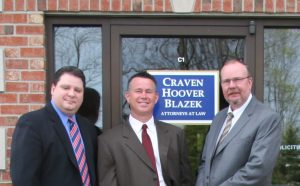
Call The Law Office of Craven, Hoover, and Blazek P.C. at 317-881-2700 to make a personal injury claim in Indianapolis, Indiana. Attorneys Daniel Craven, Ralph Hoover, and Keith Blazek are eager to help you recover the full and fair compensation you deserve after being injured in an accident caused by another party. We offer free initial consultations and never collect lawyer fees unless we prevail for you.

FAQS About Concussion Injury Claims

Head Injury Lawyers 317-881-2700

Head Injury Lawyers 317-881-2700

Concussions are a mild traumatic brain injury (MTBI) normally caused by a sudden direct blow, blunt force trauma, or impact to the head. Concussions can also be caused when there is no direct blow to the head but where the brain impacts the skull because the brain, which is encased in the skull, can be jerked and shaken inside as a result of the impact or a change of forces. In fact, the word “concussion” means “to shake violently” in Latin. This loose meaning can give you an idea of what the brain experiences to cause a concussion.

Although it is the least serious type of brain injury a person can suffer, mild brain injuries can lead to somatic, cognitive, behavioral, emotional, and physical complications. If you or someone you love has recently suffered a head injury and concussion as a result of another person’s negligence, your best course of action would be to seek medical attention right away. Brain injuries are complex, and symptoms can sometimes show weeks, even months, later. Do not wait to see if you are okay; have a medical professional look you over to ensure you are not in any immediate danger.

Once you have received the proper medical attention, you will likely be making a claim with the negligent party’s insurance company to seek compensation for your losses and damages. The insurance company will most likely offer an insufficient amount of compensation to cover your hospital bills, medical expense (past, current, and future), lost wages, and more, and you need to consult a seasoned Indianapolis personal injury lawyer as soon as possible. Hiring an attorney as soon as possible is the best course of action. In the meantime, take a look at the frequently asked questions about concussion injury claims for a better understanding of what you can expect.

Do I Have a Concussion?

There are several symptoms a person may experience after suffering a concussion. These symptoms vary from mild to serious depending on the severity of the impact. The most common symptoms of having a mild traumatic brain injury are headache, bruising, blood vessel damage, nerve damage, amnesia, disorientation, mental confusion, nausea or vomiting, trouble sleeping, fatigue, poor balance, irritability, vision issues, mild depression, ringing in the ears (tinnitus), or sensitivity to light.

What Will the Doctor Do to Check for a Concussion?

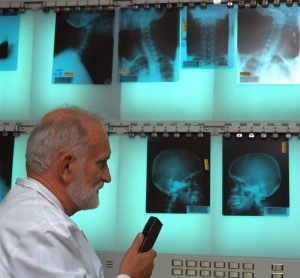
Immediately following a serious head injury, it is standard for a doctor to order a CT scan (cranial computerized tomography) to take a closer look at the integrity of your brain and skull. Later on, they may also order an MRI (magnetic resonance imaging) to identify and monitor any changes in the brain, and potentially diagnose any conditions that develop as a result of the concussion. Furthermore, computerized assessments like baseline tests and post-injury tests are used to measure reaction time, memory capacity, speed of mental processing, and executive functioning of the brain.

How is a Concussion Treated?

The severity of a person’s concussion will determine the level of treatment required. Mild concussions can sometimes be treated with bed rest, fluids, and over-the-counter pain relievers, like Acetaminophen. If the head injury resulted in a wound, numbing cream like Lidocaine can be applied, as well as ice packs, to relieve pain, swelling, and redness.

How Long Does it Take for a Concussion to Heal?

Again, the amount of time it takes for a concussion to heal depends on the severity of the impact, the subsequent injuries caused to the head, neck, spinal cord, and brain, and many more factors.

Are There Different Kinds of Concussions?

Medical authorities use a grading system to define the different types of concussions: Grade One, Grade Two, and Grade Three. Grade One concussions are mild head injuries in which symptoms do not last more than 15 minutes and unconsciousness does not occur. Grade Two concussions are moderate head injuries in which symptoms remain past 15 minutes and unconsciousness does not occur. Grade Three concussions are severe head injuries in which symptoms are or seem to be, persistent and unconsciousness results, whether for a few seconds, hours, or days.

Who Should I Discuss My Head Injury Case With?

Personal Injury Attorney Indianapolis

Personal Injury Attorneys 317-881-2700

Contact the Law Office of Craven, Hoover, and Blazek P.C. at 317-881-2700 to better understand your rights in a concussion injury accident lawsuit in Indiana. Our seasoned personal injury lawyers want our clients to be able to focus on rest and recovery, rather than their legal case. Sustaining a serious head injury or concussion is traumatic, and we understand the difficulties a head injury victim and their families face. Our dedicated and experienced Indianapolis concussion injury lawyers will make sure all liable parties are held responsible for their negligence regarding your concussion personal injuries.

A Brief Explanation of Compensatory and Punitive Damages

Personal Injury Law Firm  317-881-2700
Personal Injury Law Firm
317-881-2700
In tort law, there are 2 main categories of damages that can be awarded in a personal injury case: compensatory damages and punitive damages. The chief objective of such damages is to restore an injured victim’s quality of life back to the way it was before they were involved in an accident. Continue reading to learn more about each category of damages, as well as, what to do if you were recently denied sufficient compensation to cover your losses after being injured in a serious accident.

Compensatory Damages

Compensatory damages are meant to restore a victim’s losses that were incurred as a result of a defendant’s wrongful conduct or negligence. Types of losses that fit this category include property damage, hospital bills, current and future medical expenses, lost wages, prolonged physical therapy, permanent disfigurement or scarring, loss of consortium, reduced quality of life, loss of enjoyment of life, pain and suffering, mental anguish, and more. The most common accidents that result in compensatory damages being awarded are generally those that involve carelessness and negligent, such as car accidents, slip and fall accidents, and product defects.

Punitive Damages

Cases in which a defendant’s conduct was especially egregious, a court may award a victim with punitive damages. These are generally reserved for those who deserve penalty or punishment for an outrageously negligent or illegal act that harmed another person. An at-fault party in this type of case would likely face criminal prosecution too. Not only will courts use punitive damages to punish a defendant, they may also award them to set an example for the rest of the community. Common examples of such cases include drunk driving accidents, wrongful deaths, and medical malpractice.

Nominal Damages

Aside from the standard compensatory and punitive damages awarded in a personal injury lawsuit, there is a third category that is not as common called nominal damages. Nominal damages are small sums of money that are sometimes awarded to injured victims who have not incurred a significant economic loss or injury, but did experience an invasion of rights. Although minimal in funds in most cases, these damages are still important because they allow injured victims to pursue legal recompense for an immoral act against them, even if the act didn’t cause any financial repercussions. A court may award nominal damages to a plaintiff simply to show that the plaintiff is right and the defendant is wrong. They can be as low as 1 dollar since they are really meant to prove a point.

An Indianapolis Personal Injury Law Firm You Can Trust

Personal Injury Law Firm 317-881-2700

Personal Injury Law Firm
317-881-2700

Call Craven, Hoover, and Blazek P.C. at 317-881-2700 for help making a personal injury claim in Indianapolis, Indiana. Our seasoned accident attorneys are eager to recover the full and fair compensation you deserve. We offer free initial consultations and never collect lawyer fees unless we prevail for you.

What are the Two Types of Causation in the Law?

According to Wikipedia.com, the legal concept of “causation” can be defined as “a means of connecting conduct with a resulting effect, typically an injury.” In the law, there are two separate types of causation: proximate cause and cause-in-fact. This concept is important in personal injury law since the top priority for every injury case is to prove that a defendant was negligent, and that their negligent actions caused a victim harm. However, a victim must be able to provide sufficient evident of both types of causation, as well as various other facts, in order to win their case.

Continue reading to learn more about proximate cause and cause-in-fact, and where to get free information regarding your potential injury claim.

Personal Injury Law Firm 317-881-2700

Personal Injury Law Firm
317-881-2700

Cause-in-Fact

Also referred to as “actual cause”, cause-in-fact is the principle of showing evidence that proves a defendant’s actions “caused” a victim’s injuries, and ensuing damages and losses. For instance, if you were injured by a drunk driver while driving your vehicle, you would have to show evidence that proves their misconduct (operating a vehicle while intoxicated) was a direct cause of the accident, which subsequently caused your injuries.

To determine cause-in-fact, the “But-For” test is often used. Here is an example of how to apply the “But-For” test to the above scenario: “But for driving while intoxicated, the accident would not have taken place.”

Proximate Cause

Proximate cause is a complicated legal concept. Essentially, proximate cause exists if a victim’s injuries were foreseeable. It supports the notion that a defendant should have reasonably anticipated that their actions could cause a victim harm. Taking into consideration the above-mentioned example, a driver should have reasonably foreseen that operating a motor vehicle while intoxicated can cause an accident that injures another person.

Talk to an Accident Lawyer Today

If you were recently injured in an accident that was not your fault, it can help having a legal professional navigate your claim for you. To learn more about your potential injury claim, talk to a licensed Indianapolis accident lawyer as soon as possible, before the statutes of limitations runs out. They have the knowledge and resources to answer your questions about legal concepts and claim procedures, as well as, provide up-to-date information you can trust.

Indianapolis Personal Injury Representation

Personal Injury Lawyers 317-881-2700

Indianapolis Personal Injury Lawyers 317-881-2700

Call Craven, Hoover, and Blazek P.C. at 317-881-2700 when you need to make a personal injury claim in Indianapolis, Indiana. Here at our law firm, we are eager to help injured victims recover the full and fair compensation they deserve. We offer free initial consultations and never collect lawyer fees unless we win your claim. Contact us today to get started.

Who is Liable for Independent Contractor Commercial Construction Injuries?

When an independent contractor, or one of their employees, is injured on the job at a commercial construction site, it is common for people to think that the liability for damages and losses falls onto the contractor; however, others believe the liability should fall onto the business owner who contracted the work.

If you are having construction work done to your place of business, it is wise to understand your role in the chance that a private contractor is injured while working. If you are an independent contractor who was recently injured on a commercial job, it is vital that you contact a licensed Indianapolis accident attorney as soon as possible to discuss your options for making a claim.

In the meantime, continue reading to learn who the courts generally find responsible for independent contractor accidents and injuries in Indiana.

Construction Site Accident Claims 317-881-2700

Construction Site Accident Claims 317-881-2700


Legal liability can be quite unclear in the case of an independent contractor accident. The laws of liability vary from state to state, and differ greatly from case to case. It is important to discuss your questions and concerns with a licensed personal injury law firm for professional advice and personalized answers unique to your case.

Gross Negligence

There are some examples of when legal responsibility is less uncertain in the case if an injured independent contractor. A common example is when a business owner is guilty of “gross negligence.” This means that a business owner used unreasonable and/or deliberate misconduct that directly caused the contractor harm.

For instance, a business owner may exhibit gross negligence if they hire a private roofing contractor to inspect their roof, but fails to inform them that the roof is incredibly weak and unstable. As a result, the contractor falls through the roof and suffers serious injuries. In such a case, a court could find that the business owner was clearly and exceptionally negligent by failing to disclose the true nature of the roof.

If a court finds a business owner grossly negligent, the business owner could be liable for the damages and losses incurred by the victim, including hospital bills, medical expenses, unemployment reimbursement, prolonged physical therapy, and much more. Learning the difference between gross negligence and standard negligence can help you better understand this legal concept.

Punitive Damages

In special cases of egregiously offensive misconduct or flagrant negligence, a court could award an injured independent contractor “punitive damages.” Also known as “exemplary damages”, punitive damages are more intended to reprimand the wrong-doer rather than award the victim (although the victim still receives monetary compensation). Learning about the common types of damages awarded for victims of injury will help you understand these kinds of cases and more.

Independent Contractor Licenses and Insurance

In the case that a business owner hires an independent contractor who has a contractor license, the contractor themselves could be responsible for any injuries they (or their employees) sustain on the job. When hiring a private contractor, it is vital to ensure they have a current contractors license by actually viewing the license and/or requesting the license number to look up. Word of mouth is not enough to absolve a business owner’s legal responsibility in the case of an accident.

In some cases, even if a contractor has a license, a business owner could still be liable for injuries sustained by the contractor or their employees. This can happen if a contractor does not carry insurance that covers bodily injuries and workers’ compensation for lost wages. For these reasons, it is important to ensure that a private contractor retains the proper insurance coverage for property damage and bodily injury.

Independent Contractor Injury Claims

Personal Injury Law Firm 317-881-2700

Personal Injury Law Firm
317-881-2700

Call The Law Office of Craven, Hoover, and Blazek P.C. at 317-881-2700 if you were recently injured on the job as an independent contractor in Indiana. You can speak with a seasoned Indianapolis construction accident lawyer about recovering compensation for your losses and damages. We offer free initial consultations to discuss your claim, and never collect lawyer fees unless we prevail for you!

Am I Liable if My Dog Bites Someone?

If your pooch bites another person or animal, you could be held liable for the damages and losses caused by the accident. Continue reading to learn more about dog bite liability in Indiana, and who to talk to if you were recently injured in a dog attack.

Indianapolis Dog Bite Lawyers 317-881-2700

Indianapolis Dog Bite Lawyers 317-881-2700


Dog is “man’s best friend”; however, they are still animals, and real-life descendants of wild animals. This means that their behavior can be defensive and unpredictable at times. Even if your dog is well-behaved and has never bitten anyone before, they can still be capable of an attack, especially if they are provoked, frightened, or under certain duress.

As a dog owner, it is important to fully-understand your responsibility to prevent your pet from harming others. If your dog does cause injury to another person or pet, you could be faced with a personal injury claim or lawsuit; and if you do not have the proper insurance coverage, you could be forced to pay the settlement out of your personal funds.

State Liability Laws

Although they differ from state to state, most have established regulations and protocols pertaining to pet owner liability and dog attacks. A person’s liability as a pet owner will differ from case to case depending on many factors, including where they live and where the attack occurred. Overall, there are three fundamental types of legal principles that states have adopted to use in such cases. These include strict liability, one bite rule, and negligence.

Strict Liability – States like Michigan, New Jersey, and California follow the strict liability principle. This means that dog owners are 100% liable for any injuries, losses, and damages caused by their pet. There are virtually no exceptions to this rule, even if a dog has never attacked before and the pet owner took precautions to prevent attacks (fencing, gates, electric collars, warning signs, etc.). The only exceptions are circumstances of intrusion, provocation, or abuse.

One Dog Bite Rule – States like New York, Georgia, and Texas follow the “one dog bite” rule. This rule decrees that dog owners may not be fully-liable for injuries or damages caused by their dog if it was the first time their dog has ever bitten, and there was no reason to suspect that their dog was unsafe or aggressive. It is like a one-time “get out of jail free” card for a pet owner. However, there are many variables that influence a person’s liability under these circumstances, so they differ greatly from case to case. For instance, one exception to this rule could be if a pet owner was somehow negligent in connection to the attack.

Negligence – Every state has negligence laws that pertain to a person’s liability in the case that they cause harm to another person. If a person was negligent in some way, and as a result a person is injured, they can be held liable for any damages and losses caused by the accident. This can apply to dog bite attacks if a pet owner’s negligence gives their dog an opportunity to injure another person. For example, not adhering to local leash laws or failing to maintain the integrity of property fencing. Again, these cases vary greatly from state to state, and depend on a wide range of factors.

Indiana is a “One Dog Bite” State

In Indiana, the law follows a “one dog bite” rule, as well as a negligence rule. Under the first principle, dog owners may not be liable for any injuries, losses, and damages caused by their pet if there is no history of dog bites or attacks. However, if a pet owner exhibits negligence, and as a result, their dog bites someone, they could be held “strictly liable” for all the damages and losses incurred to the dog bite victim as a result of the accident, regardless if it was the first time the dog has ever bitten.

The Indiana Code 15-20-1-3 dictates that no matter what a dog’s history is, if it attacks or bites someone, the owner of the dog is entirely responsible for the accident, as well as, liable for the injured person’s losses and damages.

Were You a Recent Dog Bite Victim?

If you were recently attacked or bitten by a dog, contact a licensed Indianapolis personal injury lawyer right away. In Indiana, victims of personal injury accidents have two years from the time of the accident to legally make a claim and have a court hear their case. Be sure to act within this time-frame in order to recover the full and fair compensation you deserve.

What to Do After a Dog Attack:

Obtain medical treatment for wounds.
Get the names and contact information of the dog’s owners.
Call the police and file a report.
Decide if you need to seek mental health care for trauma.
Call an Indianapolis personal injury law firm for legal representation.

Who to Trust With Your Dog Bite Claim

Personal Injury Law Firm 317-881-2700

Personal Injury Law Firm
317-881-2700

Call The Law office of Craven, Hoover, and Blazek P.C. at 317-881-2700 to make a dog bite personal injury claim in Indiana. Our seasoned Indianapolis personal injury lawyers are eager to recover the full and fair compensation you deserve. Not only does our law firm offer free consultations, we never collect lawyer fees unless we prevail for you!