As
a personal injury victim that was hurt on someone else’s property, you are
likely filled with an endless list of questions about making a claim and your
rights to compensation. One of the most frequently asked questions about
premise liability cases has to do with liability. Victims and pending
defendants alike both want to know who is responsible for the damages and
losses that result from such accidents. A
good place to start would be to learn about the Restatement of Torts, and how
it defines a possessor of land, considering they are the ones typically held
accountable in premise liability cases.
Continue
reading to learn how The Restatement of Torts defines a possessor of land, and
how it can relate to a premise liability case.
Legal law concept image, scales of justice lit by golden light.
The
American Restatement of Torts
The
American Restatement of Torts is a treatise that summarizes the general principles
of common law in the United States. Created and issued by the American Law
Institute in 1965, the treatise currently has 4 separate volumes. The first two
volumes were published in 1965; the third volume was published in 1977, and the
last was published in 1979. The volumes pertinent to tort law can be found in
the Second Restatements of the Law series.
The
American Restatement of Torts defines a possessor of land as:
“(a) A person who is in
occupation of the land with intent to control it or
(b) A person who has been in
occupation of land with intent to control it, if no other person has
subsequently occupied it with intent to control it, or
(c) A person who is entitled to
immediate occupation of the land, if no other person is in possession under
Clauses (a) and (b). Risk v. Shilling, 569 N.E.2d 646,647 (Ind.
1991). (Restatement (Second) of Torts § 328 E (1965).”
What You Really Need to Know
Like most personal injury cases, premise liability
cases can range in complexity, so understanding your rights and the best way to
protect them is something that is vital to your case. But there is no need to
feel stressed or overwhelmed; so long as you have a skilled personal injury
lawyer representing your case, you will not need to know all of the
complexities of tort law, nor any complicated legal terms and principles.
Trusted Indiana Personal Injury Lawyers
Call The Law Office of Craven, Hoover, and Blazek P.C. at 317-881-2700 to discuss your recent accident with a seasoned Indianapolis personal injury lawyer, and learn the best course of action for your claim. We are ready, willing and able to help you recover the full and fair compensation you deserve. We offer free initial consultations and never collect lawyer fees unless we prevail for you.
Did you recently experience a traumatic fit of food
poisoning at a local restaurant? If so, you may feel quite betrayed by the
establishment since their duty is to ensure their food is safe to consume. For
this reason, you may feel compelled to make a personal injury claim and recover
compensation for your hospital bills, medical expenses, and the wages you lost
from missing work due to your illness. However, in order for food poisoning to
be a valid claim, certain facts must be in order.
Continue reading to learn more about this particular food
borne illness, and how it might lead to a valid personal injury case or claim.
Personal Injury Lawyers 317-881-2700
A person gets foodborne illnesses by ingesting either food
or beverage that has been contaminated with bacteria, parasites, virus, or
toxins. This is generally a result of poor or improper growing, shipping, or
handling of food products. Common types of illnesses contracted in this way
include E. Coli, Hepatitis A, Listeria, Salmonella, Botulism, Norovirus, and
Campylobacter.
Foodborne illnesses like this can cause a person several
types of damages, from lost wages at work, to medical bills, and more. So when
a person suffers from this type of illnesses after eating out at a restaurant
or another person’s home, you can understand why there is a relative question
regarding personal injury claims as well.
Severity of Illness
The severity of the affects largely influences the chances
of having a valid personal injury claim for food poisoning. The standard
symptoms of eating tainted food include nausea, abdominal cramping, headache,
and diarrhea; while more serious cases include symptoms like vomiting,
diarrhea, high fever, loss of speech, difficulty breathing or swallowing, dehydration,
and in rare cases, even death.
The less serious cases of food borne illness are not likely
great candidates for an injury claim, since these can be treated with ample
fluids and rest. The body will simply eliminate everything and then fluids can
be restored. This usually takes around one to three days.
More severe cases might involve doctor visits, hospital
stays, prescription medication, prolonged rehabilitation, time off work, and
more. This is where a licensed personal injury lawyer can come into play, and help
victims recover full and fair compensation for their damages.
Legal Claims
If you or a loved one becomes ill from eating food at a professional
establishment or another person’s home, it is important to deal with the health
concerns first. Once you are treated by a licensed medical professional, be
sure to follow all instructions handed down from them. It is also helpful to
save the contaminated food for testing, if possible. It is recommended to keep
a daily journal detailing your symptoms and struggles.
Indiana Personal Injury Lawyers Who Can Help
Call the Law Office of Craven, Hoover, and Blazek P.C. at 317-881-2700 to schedule a free initial consultation with a licensed personal injury attorney in Indianapolis, Indiana. Seasoned lawyers, Daniel Craven, Ralph Hoover, and Keith Blazek, are motivated to help you recover the full and fair compensation you deserve after experiencing a severe food-borne illness in a local restaurant. Call 317-881-2700 to get started today.
After being involved in a car accident that was not your fault, it is important to see a doctor immediately to confirm, treat, and record any subsequent injuries. However, car accident injuries are tricky since they can show up right away, days later, or both. In the case that you experience any delayed injuries or symptoms after a car accident, it is vital that you go back to the doctor for more medical care. Some delayed car accident symptoms can be indications of something much more serious.
Continue reading to learn the top 6 delayed car accident symptoms that should always be taken seriously.
Whiplash Injury Lawyers 317-881-2700
Headache
Headaches are a common symptom of various circumstances.
From allergies and the common cold, to loud noises, stress, poor diet, and lack
of sleep, headaches are generally nothing to be too concerned about. However,
experiencing debilitating or ongoing headaches after a car accident is
something to pay attention to. It could be a sign of whiplash, concussion,
blood clots, or even brain damage. See a doctor right away if this happens to
you.
Neck/Shoulder Pain
Neck and shoulder pain is another common delayed car
accident symptom that should always be taken seriously. Although it is normal to
feel a little sore after a car accident, even a minor one, experiencing
persistent or worsening neck and shoulder pain could be a sign of whiplash or
spinal injuries. Call your doctor and set an appointment if your neck and
shoulders are very painful.
Back Pain
Similar to the neck and shoulder area, the muscles in the
back can experience some major trauma in a car accident. A little soreness or
stiffness in the back could be perfectly normal, and not much to worry about;
but if back pain becomes worse or debilitating after a car accident, it could
indicate whiplash, spinal injuries, or injured ligaments.
Abdominal Pain
You would not necessarily connect abdominal pain and car
accident injuries together, but it happens to be a common delayed symptom. If
you feel pain in your abdomen after a car accident, it could possibly mean that
you have internal bleeding. Immediately go to the hospital if this happens to
you.
Numbness or Bruising
Numbness and bruising are also common delayed car accident
symptoms that can indicate something more serious. If you are experiencing
excessive or painful numbness, bruising, or discoloration in the skin, it could
be caused by a herniated disk, spinal injury, and more. Make an appointment
with your doctor if this happens to you.
Emotional Distress
Emotional distress after a car accident is more common in
serious accidents. If you are feeling depressed, anxious, angry, or having
trouble controlling your emotions, it could potentially be caused by a
concussion, brain damage, or even PTSD. It is important to discuss these
feelings with your doctor as soon as possible after being involved in a car
accident.
Indianapolis Car Accident Lawyers Who Can Help
Call The Law office of Craven, Hoover, and Blazek P.C. at 317-881-2700 to make a car accident injury claim in Indiana. Our seasoned Indianapolis car accident lawyers are ready and able to recover the full and fair compensation you deserve. Not only does our law firm offer free consultations, we never collect lawyer fees unless we prevail for you!
When it comes to tort law, negligence is the most
common type of tort. Negligence is failing to use the reasonable care that a
reasonably prudent person would use. You see, in our country, the law expects
individuals to abide by a specific code of conduct and adhere to a legal duty
to behave in a certain way in order to decrease the potentially of harming
others. When individuals break this code of conduct, whether intentional or
unintentional, consequences may be in order.
So what does this mean for you? If you were injured in
an accident, regardless of what kind, and the accident was caused by another’s
misconduct or wrongdoing or negligence, you could potentially bring about a
tort claim against the at-fault party. In legalese, these are referred to as personal
injury claims, which are meant to compensate victims for their losses and
damages that resulted from the accident. Examples of damages and losses may
include lost wages from work, medical expenses, hospital bills, pain, suffering,
mental anguish, loss of consortium, prolonged physical therapy, permanent
disfigurement, and much more.
Under civil litigation, tort law is the largest category, which governs a wide range of cases. However, under tort law, all personal injury cases fit into one of three primary categories: intentional torts, unintentional torts, and strict liability. Continue reading to learn the difference between the two, as well as, who to call for trusted legal advice regarding your personal injury claim.
Indianapolis Personal Injury Attorneys
317-881-2700
A tort is a wrongful action or non-action that causes
another person harm. In personal injury cases, the harm is usually physical,
but can also be mental and emotional. A tortfeasor is the individual or entity
that commits a tort, whether intentional or not. Tortfeasors can be individual
people, companies, manufacturers, schools, businesses, retailers, and more. Now
that you have reviewed the fundamentals of tort law, you can better understand
the difference among the three primary categories. Below are brief explanations
of intentional torts, unintentional torts, and strict liability.
Intentional Torts:
When an individual or entity intentionally behaves in
a way that causes another person harm, it is categorized as an intentional
tort. Intentional torts can come with both criminal and civil ramifications
for the at-fault party, all of which vary from state to state, but may include
mandated court orders, fines, restitution, probation, jail, travel
restrictions, bans, money damages and more.
Common examples of intentional torts include assault,
battery, defamation of character, fraud, invasion of privacy, false
imprisonment, conversion (taking someone else’s property and converting it to
their own), trespass to chattel (interference with personal property), trespass
to land (using someone’s personal property without consent), deliberate
infliction of emotional distress, and more.
Unintentional Torts:
When an individual or entity unintentionally or
inadvertently behaves in a way that causes another person harm, it is categorized
as an unintentional tort. Unintentional torts are based around
negligence, which even though can be accidental, can still be punishable under
civil law. Ramifications usually involve recompense or restitution. Common
examples of unintentional torts include car accidents, slip and falls, medical
malpractice, dog bites, and workplace accidents.
Strict Liability:
Also referred to as “absolute” liability, this legal
principle applies to individuals or entities regardless of intent, and imposes
liability without the need of direct fault. The most common example of strict
liability are product defect lawsuits. In such cases, the injured victim need
only demonstrate that their injuries were a direct result of the defectiveness
of the product to get the law on their side. Intention does not play a role in
cases of strict liability.
Where to Find Trusted Legal Advice
Call The Law Office of Craven, Hoover, and Blazek P.C. at 317-881-2700 for trusted personal injury representation in Indianapolis, Indiana and throughout the State of Indiana. Our seasoned accident attorneys work hard to ensure our clients’ rights to compensation. We offer free initial consultations to access your case and determine your eligibility for remuneration; and we never collect attorney fees unless we prevail for you!
If you are considering making a personal injury claim
in Indiana, or have already begun the process, here are some important terms
and definitions that will help you understand your case. If you have questions
about accident claims, contact a seasoned Indianapolis personal injury law firm
for trusted advice.
Personal Injury Lawyers
317-881-2700
Adjuster:
The adjuster is a person that is employed or hired by
an insurance company to possibly settle a personal injury claim. Their primary
objective is to avoid paying any sort of remuneration if possible, or pay out
as little as possible.
Civil Statute of Limitations:
In all cases of filing a civil claim against another
person or entity, there is a legal time limit to do so called a “statute of
limitations.” In Indiana, you can find some details regarding civil statute of
limitations in Title 34, Article 11, Chapter 2 of the Indiana Code book.
Claimant:
The claimant is the person filing the personal injury
claim. This can be one person, the victim, or the family of a victim. Once a
claim is filed in a court of law, the claimant become the plaintiff.
First Party Insurance:
As we already know, the term “party” refers to either
the plaintiff side or the defendant side. Well, first party is always the
plaintiff side, in particular, their insurance company. A plaintiff might file
a claim with their insurance company for more money for damages or possibly an
uninsured claim when the defendant does not have liability coverage.
Gross Negligence Claims:
Recklessness can be colloquially-defined as
unreasonable and/or deliberate misconduct of a person. It is an act that upsets
or alarms our society’s morals.
Liability:
The term liability refers to one’s obligation or
responsibility. For example, if a drunk driver causes another driver injury,
the drunk driver and/or their insurance company is liable for the victim’s
damages. They are the ones who will pay for the injured victim’s claim.
Malfeasance:
Malfeasance is an intentional illegal action or
wrongdoing that causes another person harm.
Misfeasance:
Misfeasance is a term used to describe a lawful act
that is improperly performed, either by negligence or intention, causing harm
to another person.
Negligence:
Almost every personal injury case is based on the
legal principle of negligence. Under this principle, if a person or company’s
negligent actions causes another person harm, they can be held legally
responsible for the victim’s damages and losses.
Nonfeasance:
Nonfeasance is a term used to describe “a deliberate
or neglectful failure to act” where action is required, that directly results
in or allows another person to be harmed or injured. A person is liable or
guilty of nonfeasance usually under three circumstances: 1) the person had a
duty of care to the victim, 2) they failed to act on their duty of care, or 3) the
act resulted in the victim’s injuries.
Party:
The term “party” refers to either the defendant’s side
or the plaintiff’s side.
Personal Injury:
A personal injury is any type of harm or damage done
to a person either physically, mentally, or emotionally as a result of another
person or entity’s negligence. Personal injuries take place when another person
or entity (i.e. people, businesses, corporations, enterprises, companies,
organizations, workplaces, etc.) demonstrates carelessness or negligence in a situation
that subsequently causes injury or damage to another person.
PIP Insurance:
Personal injury protection insurance is a type of
medical payments coverage for drivers and passengers who are injured in a motor
vehicle accident. Under this policy, all or a portion of medical expenses and
hospital bills (driver and passengers) are paid for no matter who is to blame
for an auto accident. No-fault accident states require this type of insurance
coverage.
Third Party Claim:
Different from third party insurance, a third party
claim is when a person files an additional claim against a separate entity
involved in causing their injuries. For example, if a person is severely
assaulted at work, they can possibly file a worker’s compensation claim (first
party claim) with the company’s insurance provider, and then they can file a
third party claim against the person who assaulted them at work.
Third Party Insurance:
This is a defendant’s insurance company. It is
commonly the insurance companies that pay out compensations or negotiates
recompense in personal injury cases.
Tort:
Torts are civil wrong-doings, or immoral
behaviors and actions against civilians.
Tortfeasor:
Also referred to as the “At-Fault Party”, the tortfeasor is the actual person who was negligent and caused someone harm or damage. They can also be the defendant if they are the ones being sued. In the case of a minor, the parents might be the defendants, while the juvenile is the actual tortfeasor.
Indiana Personal Injury Law Office:
Call Craven, Hoover, and Blazek P.C. at 317-881-2700 for information about personal injury lawsuits in Indianapolis, Indiana. Daniel Craven, Ralph Hoover, and Keith Blazek are seasoned accident attorneys that can fight to recover compensation for your losses. We offer free initial consultations and never collect lawyer fees unless we win a settlement. Call 317-881-2700 to schedule your free consultation with an Indianapolis personal injury lawyer, today.
When facing criminal charges, the Indiana judicial
system gives most defendants the choice of accepting a public defender, free of
charge. In contrast, civil litigation does not offer free counsel under law,
which includes personal injury cases. However, this does not mean you, as a
victim of a negligent accident, would have to pay a lump sum of cash upfront
for personal injury lawyer services.
Continue reading to learn what you need to know about
paying for accident representation in Indiana, including which Indianapolis
personal injury law firm to trust with your claim.
Indianapolis Personal Injury Lawyers
317-881-2700
Common Law Firm Payment Arrangements
Common payment arrangements used by lawyers include
flat rates, hourly rates, retainers, and contingent fees. Flat rate fees are
generally arranged for basic and simple legal services, like divorces and
wills. Hourly fees are the most common payment arrangement for lawyers, and
vary in price depending on the lawyer’s experience; they can be anywhere from
$50 to $1,000 per hour or more, however, it varies among law firms. Retainers
are used for certain cases and charged upfront before services are rendered. As
clients are billed, the amount is deducted from the retainer as the case
proceeds.
Contingency Fee Basis
When you begin your search for a personal injury law
firm, you will likely come across the phrase, “contingency-fee basis”, which is
very important to understand when setting aside a budget for a potential
lawsuit. Working on contingent basically means that the lawyers do not get paid
unless they recover a settlement for you. Most law firms that practice personal
injury law use this pricing model. Lawyers who work on contingency will not
require any upfront lawyer fees, however, you will be responsible for paying
other fees, such as court costs, filing fees, and similar pecuniary
obligations. However, the Law Office of Craven, Hoover, and Blazek P.C. will
not require up front payment of fees, court costs, etc… See our blog, “How Much
Does it Cost to Hire an Accident Lawyer?” to learn more.
Paying Your Personal Injury Lawyer
When a personal injury lawyer successfully recovers a
settlement, the client will then owe them for their services. The way a law
firm collects their fees will vary, but most often, a pre-determined percentage
is deducted from the final settlement as their payment. On contingency, if a
law firm does not recover a settlement or judgment for a client, there are no
attorney fees, with the exception being if the attorney obtained an offer and
then the client tried to settle the case without their attorney.
Normally, accident lawyers collect one third of the settlement recovered,
but again, this can vary depending on the law firm and the type the case.
Where Can I Find a Contingency Fee Personal Injury Lawyer in Indiana?
Contact the Law Office of Craven, Hoover, and Blazek P.C. at 317-881-2700 for personal injury claims in Indianapolis and throughout Indiana. We offer free initial consultations and never collect lawyer fees unless we are successful with your claim. Call our office today to determine your eligibility for personal injury compensation in Indiana.
Although not common, in a personal injury case, there
are times when it might make more sense for a claimant to accept a lower
settlement than what they believe they are owed. It is important to hire a
seasoned personal injury law firm to represent your accident claim in order to
obtain the fullest and fairest amount of compensation for your damages and
losses. With a skilled and experienced law firm in your corner, you do not have
to be concerned about low settlement offers. However, it may help to learn what
circumstances could lead some claimants to agree to lower compensation.
Continue reading to learn these scenarios, and where
get professional legal advice regarding your personal injury claim.
Indianapolis Personal Injury Lawyers
317-881-2700
Low Settlement Offers
It is never recommended to take a low offer when
making a claim against someone who has caused you serious injuries and damages.
In every case, you should always negotiate for the best settlement possible,
however, there are times when it does occur because it is the more sensible
option compared to taking a claim to trial. Here are three common examples of
when this might happen:
☛ The claimant’s case is weak or uncertain because they
may not have enough evidence to prove all of the elements of their case in
court. They would be better offer accepting whatever offer is put on the table
before a lawsuit is considered, otherwise, they could walk away with nothing in
the end.
☛ The claimant’s injuries and ultimate losses are minor, small, or fairly minimal. For instance, a claim should be intended to recover compensation for losses like medical bills, lost wages, pain, suffering, and similar consequences. If their damages and losses do not mount up to much, and/or their injuries are insignificant, a lower offer is likely the best option.
☛ The claimant’s settlement offer is at the maximum of the policy limits, so no more can be paid out even if the settlement seems too low. For example, if the opposing party’s liability insurance policy is set at a maximum of $25,000, and that is the settlement they offer, a claimant is not likely to get more than that even if they are awarded a larger amount in court. Large corporations are an exception to this since they tend to have more money and assets outside of their insurance policies; but a private party may not have the assets to pay out more, even if ordered to in court. In any event, defendants can also file for bankruptcy which can significantly negatively affect any chance of any recovery above and beyond liability insurance policy limits.
Keep in mind that once a claimant accepts an offer,
there is no turning back. This means that in the case that their injuries
worsen or their damages add up in cost later on, they cannot make another claim
for more compensation. Be sure to have a licensed personal injury lawyer
working your claim as soon as possible after the injury or death occurs to
ensure your rights to compensation are fully protected and executed.
Where to Get Trusted Legal Advice
Call The Law Office of Craven, Hoover, and Blazek P.C. at 317-881-2700 to make a personal injury claim in Indianapolis, Indiana and anywhere else throughout the State of Indiana. We are well-versed and experienced in several practice areas, from slip and fall accident claims, to car accidents, big truck accidents, workers’ compensation, wrongful death, and much more. When you walk into our office for your free consultation, you will instantly feel confident that you are in good hands. Call 317-881-2700 to get started, today.
Now that the weather finally permits, golfers all
across the state are getting their golf gear ready for the season. And maybe this
year you will finally decide to walk the course rather than ride! But if this
resolution falls through, there is no need to get down on yourself; after all,
a golf cart allows you to get even more rounds in per day! But before you hop
on a golf kart, whether you are driving or riding along, it is important to
know where you stand in terms of legal liability and rights.
Many golf courses offer carts to ride, which do not
require specialized permit or license to operate. In fact, here in Indiana, you
can operate a golf cart if you are 16 years old with a valid drivers’ license.
In addition to having a valid drivers’ license, golf cart operators must obey
all Indiana traffic and driving laws, which also apply in the case of an
accident.
Continue reading to learn more about golf cart
accidents and liability in Indiana.
Golf Cart Accident Claims 317-881-2700
Golf Cart Safety and Statistics
Golf carts are safe; right? After all, teenagers are
legally allowed to operate them under lenient conditions. But golf carts can
pose several risks, and even fatalities. According to the Consumer Products
Safety Commission (CPSC), roughly 15,000 people in the United States suffer
injuries related to golf carts per year, and some injuries even result in
dozens of deaths. The most common types of golf cart accidents involve
collisions, tip-overs, and throws, all of which can result in a wide spectrum
of orthopedic, muscle, and flesh injuries. The CPSC further reports that nearly
40% of these golf cart-related injuries are sustained as a result of someone
falling out of a moving golf cart.
Although golf carts are just as dangerous as a
standard motor vehicle, in comparison, there are significantly fewer laws and
regulations governing them. For instance, golf carts are not required to have
seat belts, airbags, and other vital safety features, which paints a picture of
how serious injuries can be if an accident does occur. Fortunately, there are
laws in place that do protect those injured in golf cart-related accidents, so
long as they are not at-fault for their injuries.
There are many people or entities that can be held
legally liable in the case of a golf cart accident. Common at-fault parties
include other golfers, club staff members, course managers, club owner, cart
manufacturer, and more. If you were injured in a golf cart accident as a result
of someone else’s negligence, it is vital to contact an Indianapolis personal
injury law firm as soon as possible. You may be eligible for remuneration to
cover hospital bills, medical expenses, lost wages, and more.
Indianapolis Personal Injury Lawyers
Contact the law office of Craven, Hoover, and Blazek P.C. at 317-881-2700 to file a personal injury claim in Indianapolis, Indiana. Seasoned accident attorneys, Daniel Craven, Ralph Hoover, and Keith Blazek, can help you recover the full and fair compensation you deserve after suffering a golf cart injury. We offer free initial consultations and never collect attorney fees unless we prevail for you. We represent clients throughout the State of Indiana. Call 317-881-2700 to schedule an appointment with our Indianapolis personal injury lawyers, today.
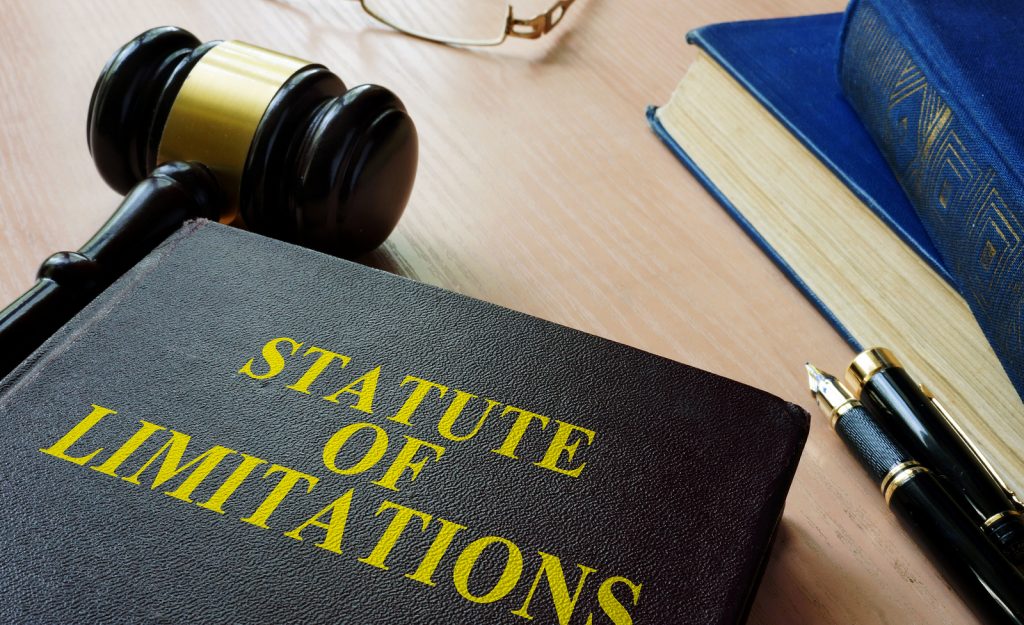
Were you seriously injured in an accident that was not
your fault, and now you are afraid you’ve missed your deadline to file a claim
for compensation? If so, there is some important information about personal
injury statute of limitations you need to know before moving forward.
Indianapolis Personal Injury Attorneys
317-881-2700
What are Statute of Limitations?
Statute of limitations are a type of state or federal ordinance or law that sets a time frame in which a person can bring forth legal proceedings in order to enforce their rights, either in criminal or civil court. Personal injury claims are brought forth in civil court. The purpose of such laws is to thwart fraudulent claims brought into action after all evidence is lost or gone. After a long period of time, evidence is lost and witness testimony can be weakened by missing persons or faulty memories.
Although criminal statute of limitations are generally longer, as much as five years or more, most personal injury claims retain an average statute of limitations of 2 years or less, depending on the details of the case. As for Indiana, you can find some specifics regarding civil statute of limitations in Title 34, Article 11, Chapter 2 of the Indiana Code book. In addition, claims against political subdivisions or the state should be made immediately.
Missed Deadlines
If a person misses the deadline to make a personal
injury claim, there are usually no other alternatives and their case will
likely be dismissed. However, on rare occasions, the statute of limitations may
be extended under special circumstances. Basically, if there are legal grounds
for extended or altering the statute of limitations for a civil claim, they may
be granted.
These exceptions vary from state to state; each state
has their own set of rules and procedures for such extensions. For this reason,
if you have questions or concerns about making a personal injury claim on time,
it is vital that you consult with a seasoned Indianapolis personal injury
lawyer for professional guidance.
Common Exceptions to Limitations Statute
In legal terms, extending a statute of limitations
deadline is referred to as “tolling” the running of the statute’s clock. This
is more like pausing the clock, rather than extending the deadline. And
although the action of tolling the clock is rare, and the laws that governs it
varies among states, there are some cases in which it does occur.
Granted extensions to the statute of limitations
deadline may be given to personal injury victims who were minors at the time of
the accident, or legally incapacitated (or declared legally incompetent).
Extensions might also be approved if the at-fault party fled or hid from the
state after the accident, or unlawfully attempted to conceal the occurrence of
the accident or the role they played in causing injuries to the victim.
Talk to a Personal Injury Attorney Today
Contact the Law Office of Craven, Hoover, and Blazek P.C. at 317-881-2700 to discuss the best course of action for your Indianapolis personal injury claim. Our seasoned lawyers can recover the full and fair compensation you deserve for your resulting damages and losses, including hospital bills, medical expenses, pain and suffering, lost wages, and more. Additionally, we offer free initial consultations and never collect attorney fees unless we prevail for you. Call today to schedule your consultation.
Motor vehicle accidents are all too common throughout the country, and happen for a large number of reasons. Sometimes, nature interferes and there is not much drivers can do to protect themselves from an accident or collision. But mostly, car accidents occur as a result of some degree of carelessness, whether at the fault of the driver, or someone else. According to the Association for Safe International Road Travel (ASIRT), nearly 1.25 million people are killed in road crashes every year, which averages out to 3,287 deaths per day, and an additional 20 to 50 million are seriously injured or disabled.
Annual Car Accident Statistics
Here in Indiana, the statistics for annual car accidents are
not much different. According to statistics gathered by the U.S. Department of
Transportation (USDOT) and National Highway Traffic Safety Administration
(NHTSA), the total number of motor vehicle accidents have increased by 10%
since 2005, with a 44% increase in motorcycle accidents.
What can we do to reduce the number of road crashes in our state? To start, we can commit to safer driving habits, and increase our awareness on the road for other reckless drivers. Continue reading to learn what the Indiana Criminal Justice Institute (ICJI) says are the top causes for motor vehicle accidents in Indiana, as well as, what to do if you are negligently injured by a careless driver.
Indianapolis Car Accident Attorneys 317-881-2700
Top Causes of Car Accidents Include, but are not limited to:
Impaired Driving – Driving under the influence of alcohol, drugs, or a controlled substance is considered impaired driving under Indiana state law. According to the NHTSA’s Fatality Analysis Reporting System (FARS), 22% of all traffic-related fatalities were caused by impaired drivers.
Reckless Driving – Reckless driving is a common cause for motor vehicle accidents, and includes any form of driving that is dangerous or irresponsible. The most common examples of reckless driving that has led to car accidents in Indiana are speeding, failing to yield, tailgating, unsafe passing, changing lanes without looking, ignoring road signs, and driving the wrong way on a one-way road.
Distracted Driving – Distracted driving causes several car accidents each year in Indiana. The Traffic Safety Division reports that recently, nearly 500 traffic accidents were caused by cell phone distractions. Examples that cause accidents include texting, eating, reaching for kids or items in the back seat, reading, cell phone talking, and pets.
Fatigued Driving – Fatigued and drowsy driving are similar to both distracted driving and impaired driving since it takes a driver’s focus away from the road. According to the Traffic Safety Division, fatigued driving recently caused over 1,600 accidents.
Backing Up – Unsafely backing up is another common cause for serious car accidents, especially among pedestrians and children. Although newer model vehicles have technologies such as cameras and alarms, which help drivers see behind them, these accidents can still occur when drivers do not use the proper precautions when reversing their vehicles.
Additional Causes:
➝ Automobile Manufacturer Defects
➝ Pedestrian Negligence
➝ Defective Stoplights
➝ Unsafe Road Conditions
➝ Missing or Obstructed Road Signs
Recover Compensation After a Car Accident Injury
Indianapolis Personal Injury Lawyers
317-881-2700
If you were injured in a car accident as a result of another’s careless, please contact the Law Office of Craven, Hoover, and Blazek P.C. at 317-881-2700 to schedule a free initial consultation with a licensed car accident attorney who can help. You may be entitled to compensation for your related losses and damages, such as medical expenses, hospital bills, lost wages from work, pain and suffering, and much more. We never collect lawyer fees unless we recover a settlement for you. Get started today by scheduling your free consultation.