
A fall at a retail store can turn an ordinary errand into a life-altering event. If you’ve been injured at a big box store in Indianapolis, understanding your legal rights under Indiana law is the first step toward protecting yourself—and your recovery.
Indiana law requires big box stores to keep their premises reasonably safe for shoppers. If a dangerous condition caused your fall and the store knew—or should have known—about it, you may have a valid negligence claim.
You have two years from the date of injury to file suit under Indiana Code § 34-11-2-4. However, acting quickly and consulting a personal injury lawyer gives you the best shot at fair compensation and you should contact at attorney as soon as possible after your fall as evidence quickly disappears and is not retained, especially surveillance video.

Common Causes of Slip and Fall Accidents in Retail
Big box stores present a wide range of hazards, many of which are entirely preventable.
The most common culprits include:
- Wet or slippery floors — from spills, leaks, or recently mopped surfaces left without warning signs
- Uneven or damaged flooring — cracked tiles, warped mats, or transitions between surfaces
- Debris or merchandise in aisles — boxes, pallets, or products left where customers walk
- Inadequate lighting — especially in storage areas, parking lots, or seasonal sections
- Torn or unsecured carpeting or floor mats — especially around doorways or high-traffic areas
- Exposed cords or wires — from electronic displays, vending machines, or damaged equipment
- Icy or wet entryways — particularly dangerous during Indiana winters
These aren’t freak accidents. They’re the result of inadequate maintenance, poor inspection routines, or simple negligence—and the law holds stores accountable for them.
Proving Negligence Under Indiana Law
To win a slip and fall claim or trip and fall claim in Indiana, you must establish four core elements: duty, breach of duty, causation, and damages.
Duty of Care
As a shopper at a big box store, you’re classified as an invitee under Indiana premises liability law. That means the store owes you the highest duty of care among all visitor categories. As the Indiana Supreme Court confirmed in Burrell v. Meads (1991), adopting Restatement (Second) of Torts § 343, a property owner is liable for harm caused to invitees by a condition on the premises when the owner “knows or by the exercise of reasonable care would discover the condition, and should realize that it involves an unreasonable risk of harm.”
Notice
This is where many slip and fall claims are won or lost. You must show the store had either:
- Actual knowledge — a manager or employee knew about the hazard, or
- Constructive knowledge — the condition existed long enough that a reasonably careful store would have found and fixed it
Surveillance footage, maintenance logs, prior incident reports, and employee and witness testimony are all critical in establishing this.
Comparative Fault
Even if you bear some responsibility for the fall, Indiana’s modified comparative fault system (IC 34-51-2-5 and -6) allows you to recover damages—as long as your share of fault doesn’t exceed 50%. If you’re found 51% or more at fault, you’re barred from any recovery. Your damages are simply reduced proportionately by your percentage of fault below that threshold.
The Open and Obvious Rule
Stores sometimes argue that a hazard was “open and obvious” and therefore not their problem. Under Indiana law, this defense doesn’t automatically shield them from liability. If the store knew visitors might be distracted—for instance, shoppers looking at shelves rather than the floor—or if you couldn’t reasonably avoid the hazard, the store may still be held responsible.
In addition, the Indiana Supreme Court stated in Douglass, “factual circumstances may exist in which a court may find that a landowner’s failure to take precautions or to warn may constitute a breach of duty because it was reasonably foreseeable that the invitee could suffer harm despite knowledge or obviousness of the risk. . . .” Douglass v. Irvin, 549 N.E.2d 368, 370 (Ind. 1990) (emphasis added). This means that the comparative knowledge of the landowner and injured party are compared in “open and obvious” situations and each case and its facts have to be determined on a case by case basis.
Steps to Take Immediately After a Fall
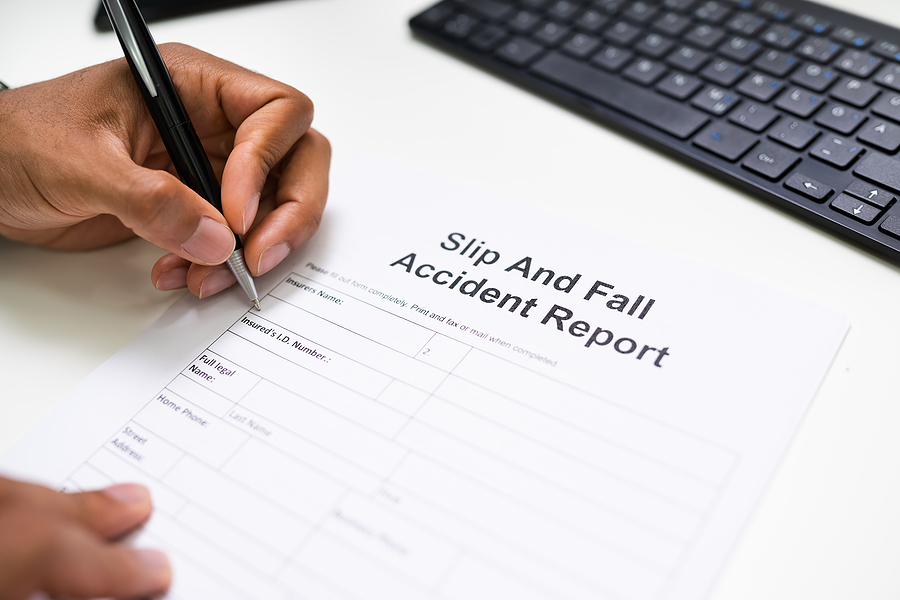
What you do in the minutes and hours after a fall can significantly affect your claim.
- Seek medical attention right away. Even if you feel relatively fine, some injuries don’t surface immediately. Medical records also serve as crucial evidence.
- Report the incident to store management. Ask for a written incident report and get a copy before you leave.
- Document the scene. Photograph and video the hazard, any warning signs (or lack thereof), your injuries, and the surrounding area.
- Collect witness information. Names and contact details from anyone who saw the fall can be invaluable later.
- Preserve your clothing and footwear. The defense may try to argue your shoes contributed to the fall—don’t discard anything.
- Avoid giving recorded statements to store representatives or their insurance company without legal counsel.
- Contact a personal injury attorney. The sooner you act, the better your evidence and legal position. Contact our Indianapolis law firm now to book a slip and fall case review.
Understanding Your Right to Compensation
A successful slip and fall claim can recover two categories of damages.
Economic damages cover out-of-pocket losses, including:
- Medical bills, both current and future
- Lost wages and reduced earning capacity
- Costs of rehabilitation or in-home care
Non-economic damages compensate for losses that aren’t easily quantified, including:
- Pain and suffering
- Emotional distress
- Loss of enjoyment of life or physical disability
- Scars or other disfigurement
The value of your claim depends on the severity of your injuries, the strength of the evidence against the store, and your share of comparative fault, if any.
Don’t wait. Under IC 34-11-2-4, Indiana’spersonal injury statute of limitations gives you two years from the date of your fall to file a lawsuit. Miss that window and your claim is legally extinguished—regardless of how serious your injuries are.
Ready to find out what your case is worth? Contact a local personal injury attorney in Indianapolis for a free consultation today.
How a Local Personal Injury Lawyer Can Help
Slip and fall claims and trip and fall claims against large retailers are rarely straightforward. Big box stores and other retail stores carry significant insurance coverage and employ legal teams experienced at minimizing payouts—or denying claims entirely.
A local Indianapolis personal injury attorney can:
- Investigate quickly, before surveillance footage is overwritten or evidence disappears
- Establish notice, by obtaining maintenance records, inspection logs, and other incident reports through discovery
- Counter comparative fault arguments designed to shift blame onto you
- Accurately value your claim, accounting for future medical expenses and non-economic damages you might otherwise overlook
- Negotiate from a position of strength, or take your case to trial if a full and fair settlement isn’t offered
Most personal injury lawyers handle these cases on a contingency fee basis—you pay nothing upfront and only owe fees if you win.
Book a free, no-obligation consultation with Craven, Hoover & Blazek, P.C. and get clear answers about your case.
Frequently Asked Questions
How long do I have to file a slip and fall lawsuit in Indiana?
Two years from the date of your injury, under IC 34-11-2-4. There are limited exceptions—for example, if you were a minor at the time or the injury was discovered later—but these are narrow. Consult an attorney as soon as possible to avoid losing your right to sue.
What if I was partly at fault for the fall?
You can still recover compensation under Indiana’s modified comparative fault rule, provided your share of fault is 50% or less. Your damages will be reduced proportionately. If you’re found 51% or more at fault, you’re barred from any recovery.
Does the store have to not put up a wet floor sign for me to have a claim?
Not necessarily. The absence of a warning sign is strong evidence, but it’s not the only way to prove negligence. What matters is whether the store had actual or constructive knowledge of the hazard and failed to act on it.
What if the dangerous condition was obvious?
An open and obvious condition is not an automatic defense for the store in Indiana. Courts consider it one factor among many. If the store had reason to believe visitors wouldn’t notice the hazard—or couldn’t or might not avoid it—the store may still be liable.
What evidence should I try to gather?
Photographs and video of the scene, witness contact information, a copy of the incident report, your medical records, and any surveillance footage you can request. Act quickly—stores often overwrite video footage within 30 to 72 hours. It is best to hire an attorney immediately and they will help with obtaining the necessary evidence.
What if I didn’t see a doctor right away?
This can complicate your claim, as insurers often argue your injuries weren’t serious or weren’t caused by the fall. Seek medical care as soon as possible and explain the full history of your symptoms to your doctor.
Quick Recap:
- Big box store shoppers and retail store shoppers are invitees under Indiana law, owed the highest duty of care
- Stores can be held liable when they have actual or constructive notice of a dangerous condition
- Constructive notice means the hazard existed long enough that a reasonable inspection would have caught it
- Indiana’s modified comparative fault rule reduces—but doesn’t eliminate—recovery if you’re partly at fault, unless you exceed 50%
- The “open and obvious” doctrine is not a complete defense in Indiana
- You have two years to file a personal injury lawsuit (IC 34-11-2-4)
- Acting fast preserves evidence and strengthens your case
- Most personal injury attorneys work on contingency—no upfront cost to you
YOUR NEXT STEP STARTS HERE
A fall at a big box store or other retail store can have lasting consequences—physically, financially, and emotionally. The good news is that Indiana law gives injured shoppers real tools to hold negligent retailers accountable. But the clock starts the moment you hit the ground.
Contact an experienced Indianapolis personal injury lawyer at Craven, Hoover & Blazek, P.C. for a free consultation today. Get honest answers, understand your options, and take the first step toward the compensation you deserve.
Related Post: Slip & Fall at an Indy Big Box Store? Here’s What’s Next